

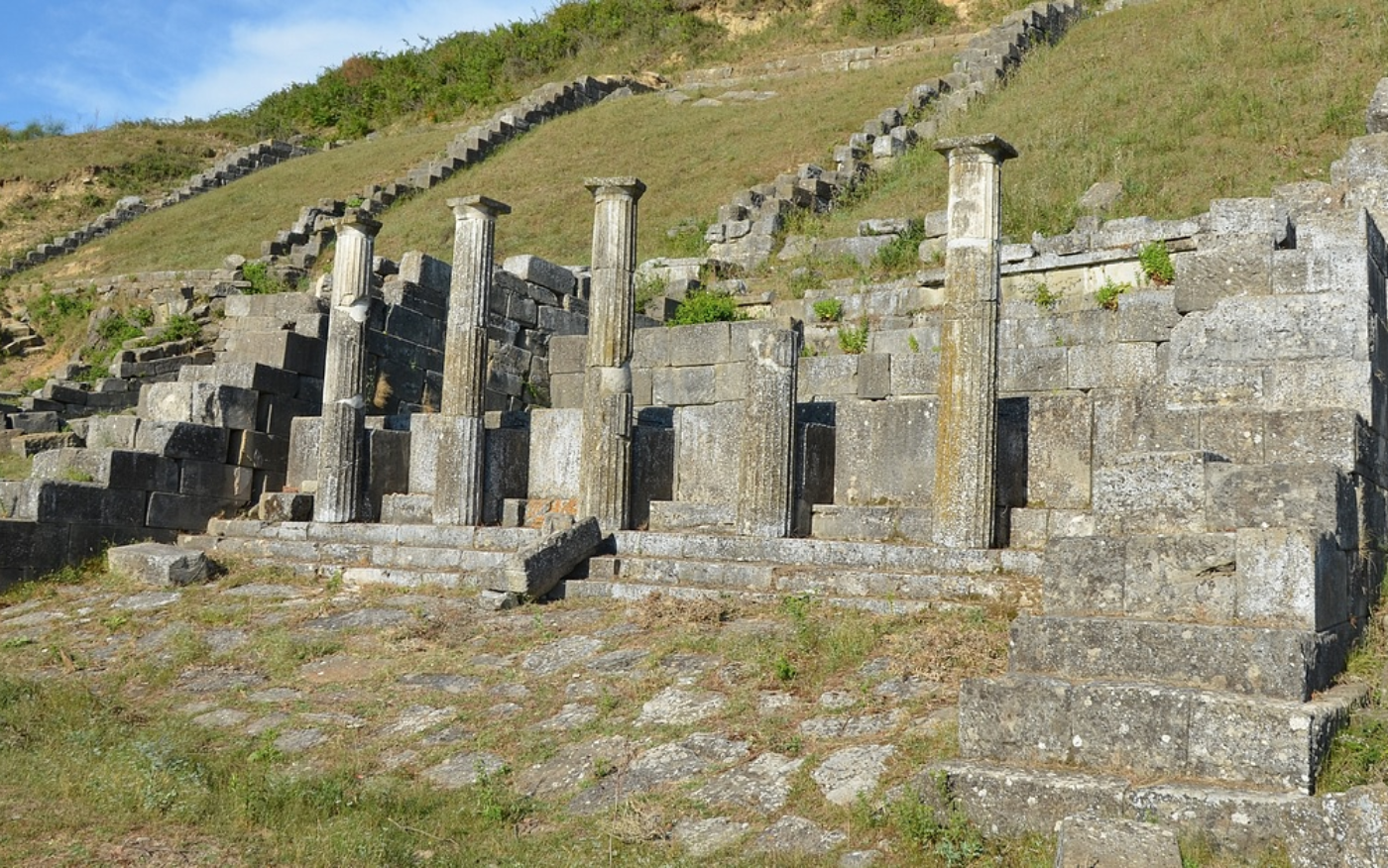
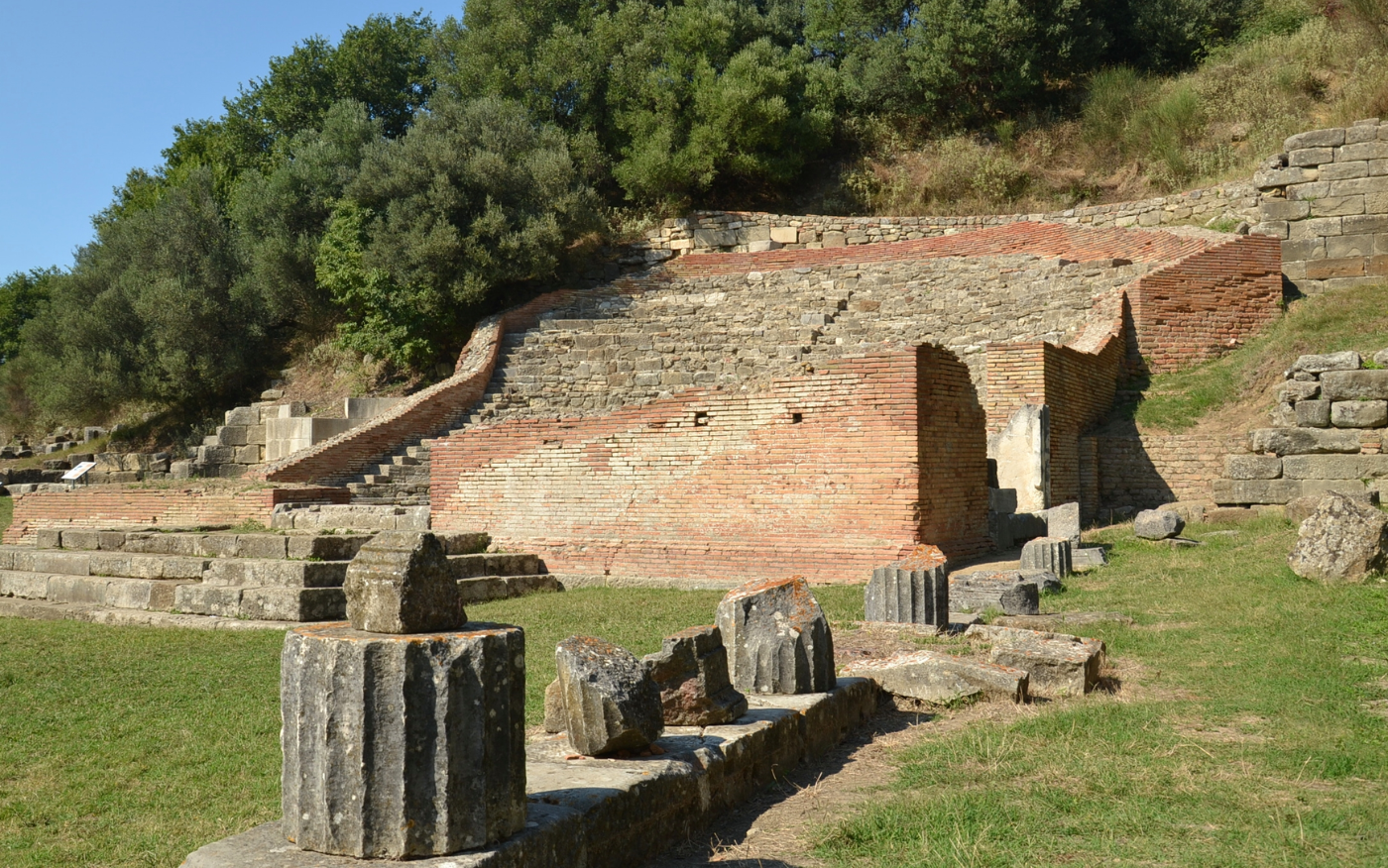
Apollonia (Apolonia) is an ancient Greek and Illyrian archaeological park in southwestern Albania, set on a hillside above the Myzeqe plain near the village of Pojan, about 12 km west of Fier and roughly 2 hours south of Tirana. Founded in 588 BC by Greek colonists from Corfu and Corinth, it grew into one of the largest and most important cities on the Adriatic, with an estimated population of 60,000 at its peak, before its harbour silted up and the city was slowly abandoned. Today the site combines scattered Greek and Roman ruins, an obelisk-like monument, a theatre, and a Byzantine-era monastery housing one of Albania's best small museums. Most travellers spend two to three hours here as a half-day trip from Fier, Vlora, or Berat. Best months: April to June and September to October.
Apollonia rewards a certain kind of traveller, one who prefers ruins scattered across open countryside to roped-off monuments in a city centre. This was once a city Cicero singled out as great and important, a place where the Roman emperor Augustus is said to have studied philosophy as a young man, and where tens of thousands once lived off a strategic harbour and valuable asphalt deposits used to caulk ships. Almost none of that remains obvious at first glance, and that's precisely the appeal: walking the same ground the Via Egnatia once passed within a kilometre of, with Hermann's tortoises moving unhurried through the grass and the Myzeqe plain rolling out toward the coast.
The other reason Apollonia belongs on a well-built Albania itinerary is the monastery. The Byzantine-era Monastery of Saint Mary, built directly into the archaeological park, now houses a small museum that repeat visitors and locals alike often rate above Albania's National History Museum in Tirana for the quality and rarity of its antiquities. For travellers building a luxury Albania itinerary, Apollonia pairs naturally with Berat, the Karavasta Lagoon, or a private day trip out of Vlora, giving a full day of ancient history, wetland scenery, and monastic architecture without ever feeling crowded.
Apollonia's ruins are spread across an open hillside rather than concentrated in one dense core, so the visit is as much a countryside walk as a monument tour. Among the highlights:
The Odeon, a small theatre used for performances and civic gatherings, one of the best-preserved structures on the site.
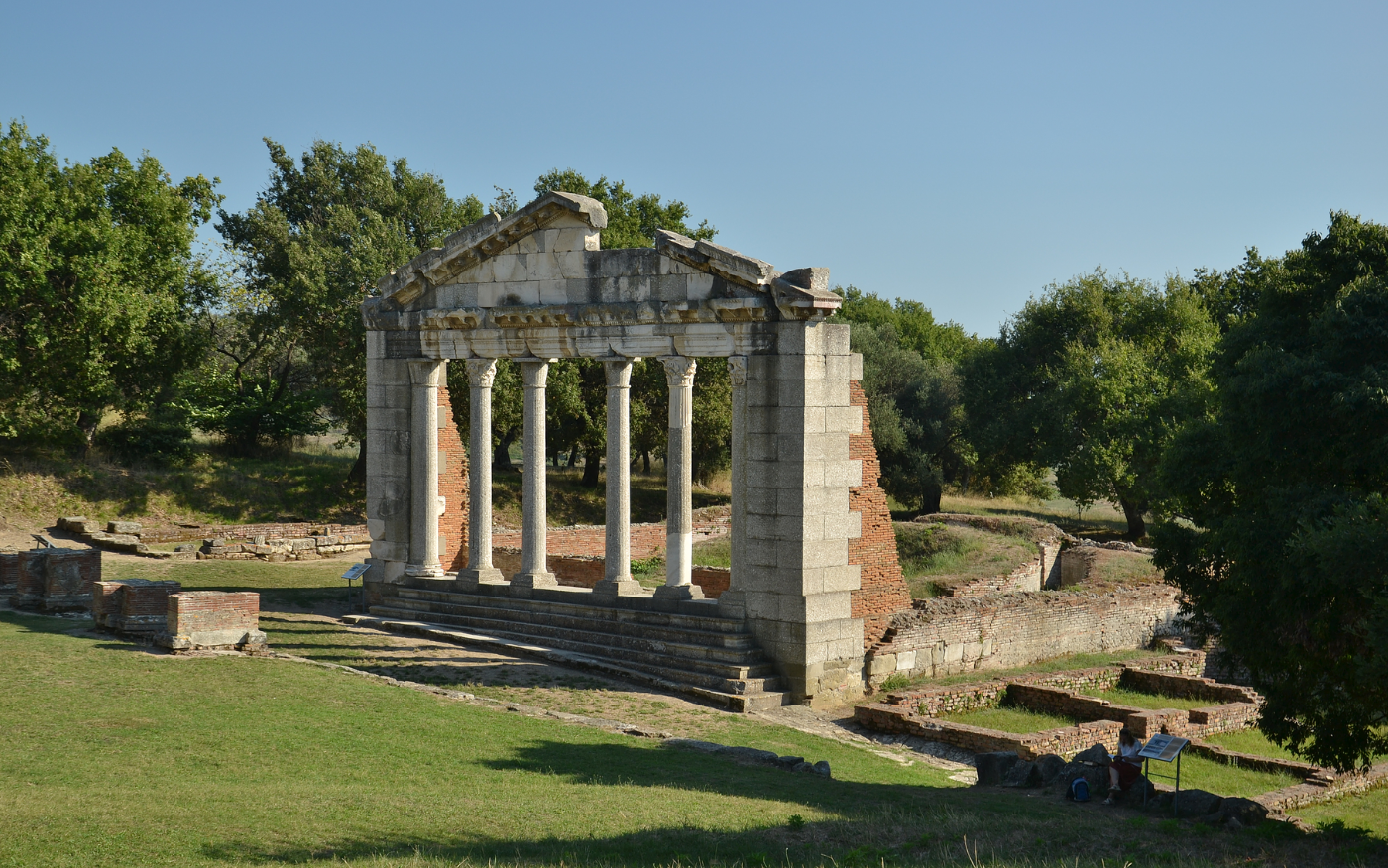
The Monument of the Agonothetes (sometimes called the Bouleuterion or the "obelisk"), a striking two-storey monument built to commemorate the presidents of athletic games, and one of the most photographed single structures at Apollonia.
The Portico of a former temple, along with the remains of a library, a Nymphaeum (an elaborately decorated fountain), and a Roman-era villa with an impluvium, the central rain-catching basin typical of Roman atrium houses.
Sections of the city walls and street grid, giving a sense of the scale of a city that, at its height, ranked among the largest on the Adriatic.
Because the site sits about a kilometre from the ancient Via Egnatia, the Roman road linking the Adriatic to Byzantium, Apollonia also functioned as a key waypoint on one of antiquity's great trade and military routes, a detail that helps explain why a relatively small modern village once supported a city of tens of thousands.
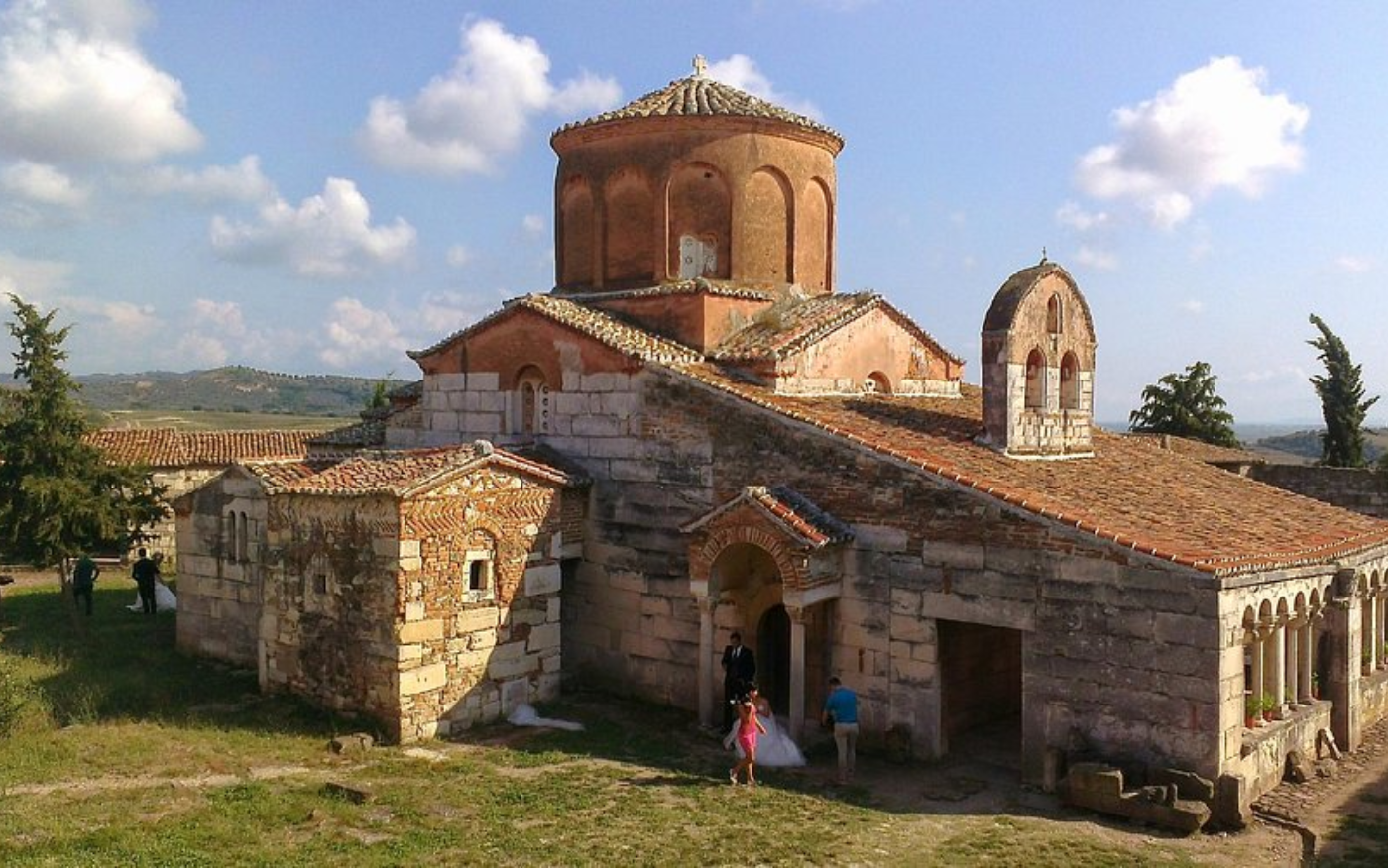
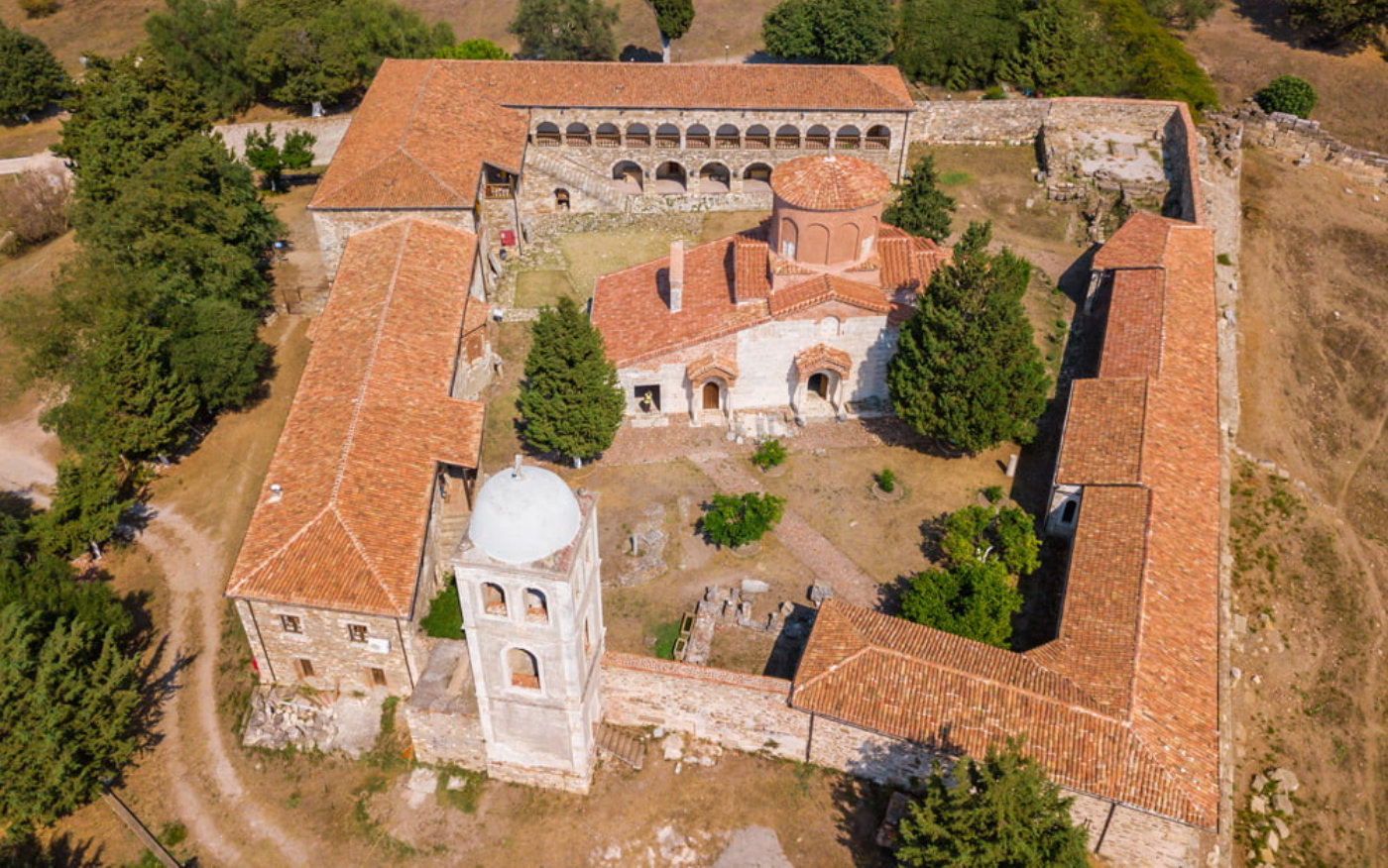
At the heart of the park stands the Monastery of Saint Mary, a striking blend of eastern and western religious and architectural traditions, with intricately carved stonework at its entrance. The monastery buildings now house the Apollonia Archaeological Museum, and it's genuinely one of the most rewarding small museums in the country: expect finds spanning the Greek and Roman periods, sculpture, ceramics, and everyday objects excavated directly from the surrounding ruins, displayed with a level of quality that surprises most first-time visitors.
Practical note: entrance fees and hours have shifted in recent years following a 2025 re-tariffication, and currently sit somewhere in the range of 300 to 600 lekë for adults, generally with the museum included in that single ticket, though some sources still note a separate museum charge, so it's worth confirming at the gate. The park typically opens daily, roughly 9:00 am to 6:00 pm in the warmer months and shorter hours in winter, closed on Mondays at some points in the season. Payment is cash only, in lekë, and the nearest ATMs are in Fier, about 12 km away, so bring enough cash before you arrive.
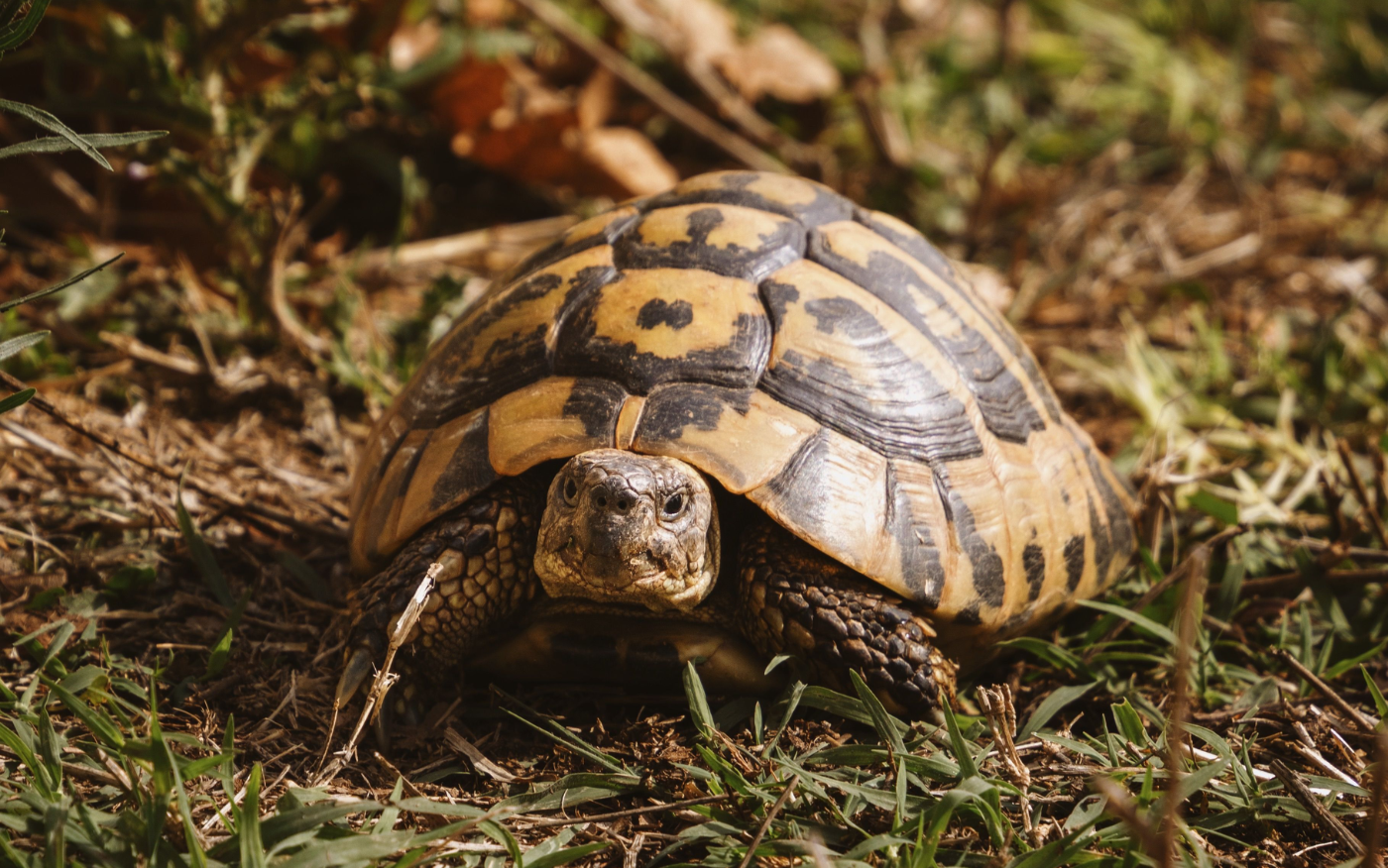
Apollonia isn't only a historical site, it's also a quiet pocket of countryside. The grounds are home to the endangered Hermann's tortoise, and the open hillside setting above the Myzeqe plain makes for a genuinely peaceful walk between monuments, a contrast to busier archaeological parks elsewhere in the country. Bring water, sunscreen, and comfortable shoes, since there's little shade and not much nearby beyond a single restaurant at the site.
Apollonia is rarely visited alone, and most travel operators build it into a longer loop through southwestern Albania.
Ardenica Monastery, a short drive away, is the classic half-day pairing with Apollonia. This hilltop monastery was the site of national hero Skanderbeg's 1451 marriage and holds notable frescoes by the Zografi brothers, with a modest entrance fee and a setting on the Myzeqe plain that mirrors Apollonia's own.
Berat, Albania's UNESCO "city of a thousand windows," about an hour east, making a natural full-day combination of ancient ruins and Ottoman old town.
The Karavasta Lagoon, a UNESCO biosphere reserve known for its population of Dalmatian pelicans, often combined with Apollonia on tours heading toward Vlora and the coast.
Byllis, roughly 45 km southeast, a larger and less-visited Illyrian hilltop city with a 7,500-seat theatre and well-preserved Justinianic walls, for travellers who want to go deeper into Albania's ancient sites on the same trip.
There is little dining directly at the site beyond a single on-site restaurant, so most travellers eat in Fier or time their visit around a meal in Berat or Vlora. When available locally, expect simple, hearty Albanian country cooking, grilled meats, fresh vegetables from the Myzeqe plain, and good bread, best enjoyed slowly after a morning spent walking the ruins.
April–June: mild temperatures and green surroundings, the most comfortable season for walking an exposed, largely shadeless site.
July–August: hot, with little shelter from the sun across the open hillside; an early morning visit is strongly recommended.
September–October: warm, clear light and thinner crowds, a strong choice for photography around the Monument of the Agonothetes and the theatre.
November–March: quiet, with reduced hours, but a genuinely atmospheric, empty version of the site for travellers who don't mind cooler weather.
From Tirana: about 2 hours by car, heading south toward Fier and then following signs to Pojan; a bus from Tirana to Fier takes roughly 2.5 hours, after which a taxi covers the final stretch to the site.
From Fier: about 12 km, roughly a 20-minute drive on well-maintained roads; taxis are readily available from the town centre.
From Vlora: around 40 minutes by car, making Apollonia an easy half-day trip for travellers based on the coast.
From Berat: about an hour by road, the natural pairing for a full day combining ancient ruins with Albania's UNESCO old town.
Getting around the site: entirely on foot, across open, largely flat but occasionally uneven terrain; there is minimal shade, so plan accordingly.
Apollonia itself has no accommodation on site, so travellers typically base themselves in Fier for a simple, practical stay, or in Berat or Vlora for a more scenic overnight combined with other sights. Most visitors treat Apollonia as a half-day stop within a longer southwestern Albania loop rather than an overnight destination in its own right.
A quick visit: for travellers pressed for time, most of the highlights sit close to the entrance, and a focused walk through the museum plus the nearest ruins can be done in under an hour.
A proper half-day: two to three hours lets you walk the full site at an easy pace, explore the museum thoroughly, and enjoy the setting rather than rush it.
A full day: pair with Ardenica Monastery or extend into Berat, giving a complete day of ancient and medieval Albanian history.
We build private and small-group day trips to Apollonia year-round, licensed local guides, combined routing with Ardenica Monastery, Berat, and the Karavasta Lagoon, and hotel selection in Fier, Berat, or Vlora. [Browse our Albania tours] · [See Berat hotels] · [Request a custom itinerary]
Yes. Apollonia was once one of the largest cities on the Adriatic and today offers open, uncrowded Greek and Roman ruins alongside a Byzantine monastery museum that many visitors rate among the best small museums in Albania, all set in a peaceful countryside landscape.
Apollonia is known for its Greek and Roman ruins, including the Odeon theatre and the Monument of the Agonothetes, its role as a major ancient Adriatic trade city founded in 588 BC, and the Monastery of Saint Mary, whose museum holds an exceptional collection of antiquities.
About 2 hours by car, and roughly 2.5 hours by bus via Fier, with a short taxi ride from Fier to the site itself.
Yes, and it's typically done as a half-day stop, two to three hours, within a larger day trip that also includes Ardenica Monastery, Berat, or the Karavasta Lagoon.
Entrance fees have changed in recent years and currently range from roughly 300 to 600 lekë for adults, generally including the on-site museum, with reduced rates for students and children. Payment is cash only, in lekë, so plan accordingly since the nearest ATMs are in Fier.
April to June and September to October, for mild weather and comfortable walking conditions across an open, largely shadeless site.
Yes. It's most commonly combined with Ardenica Monastery for a classic half-day pairing, or extended into a full day with Berat, and it also fits naturally into coastal itineraries through Vlora and the Karavasta Lagoon.
Yes. It's a quiet, well-maintained archaeological park with no significant safety concerns. The main practical considerations are sun exposure due to limited shade and uneven ground underfoot.
