

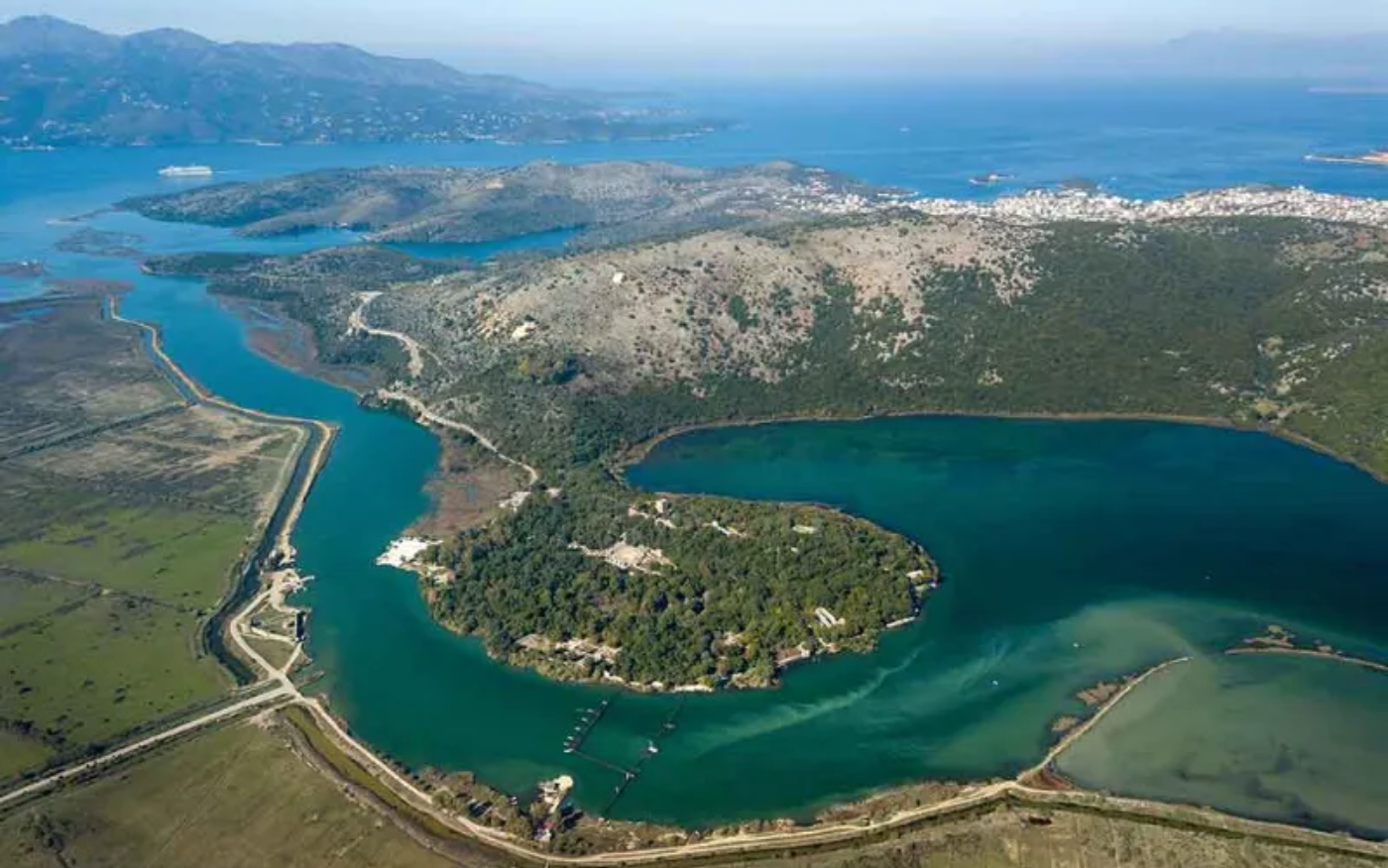
Butrint (Butrinti) is a UNESCO World Heritage archaeological park in far southern Albania, set on a forested peninsula where Lake Butrint meets the Vivari Channel and the Ionian Sea, about 17 to 18 km south of Saranda and a short hop from Ksamil and the Greek island of Corfu. It is Albania's largest and most important archaeological site, layered with Greek, Roman, Byzantine, and Venetian ruins, an ancient theatre, a mosaic-floored baptistery, and a hilltop castle museum, all wrapped inside a wetland nature reserve. Most travellers spend two to three hours here as a half-day trip from Saranda or Ksamil, often combined with the Blue Eye Spring or a beach afternoon. Best months: April to June and September to October.
Most ruins ask you to imagine the landscape that once surrounded them. Butrint doesn't, because that landscape never left. The same wetlands, forests, and channel that made this a strategic harbour two and a half thousand years ago are still here, and the ruins now sit under a canopy of eucalyptus, oak, and wild bay, with turtles drifting through flooded stage floors and 246 recorded bird species moving through the marshes around the site. It is one of the few archaeological parks in the Mediterranean where the nature is as much a part of the visit as the stone.
Butrint's real draw is depth rather than scale, a compact site where you can trace continuous occupation from a Greek sanctuary, through a Roman city, into a major early-Christian centre, and finally an Ottoman and Venetian fortress, without leaving a single forested loop. For travellers building a luxury Albania itinerary, Butrint pairs naturally with a private guide, a stay in Saranda or Ksamil, and a boat crossing across the channel to see the Venetian and Ali Pasha castles that once guarded the same strategic passage toward Corfu.
The archaeological park is organised as a single shaded, roughly circular walking route, with 24 marked points of interest along the way. Allow two to three hours to walk it properly.
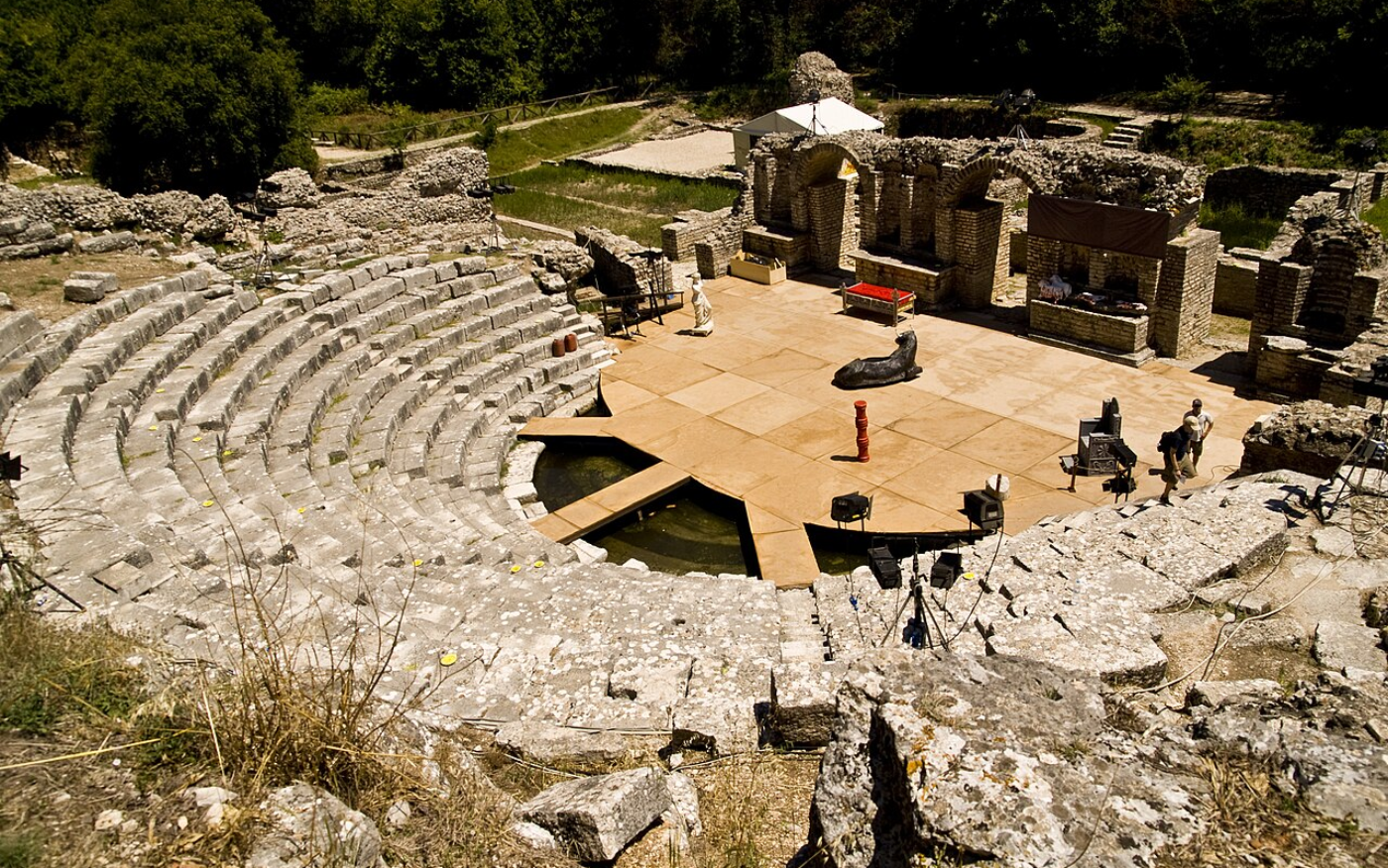
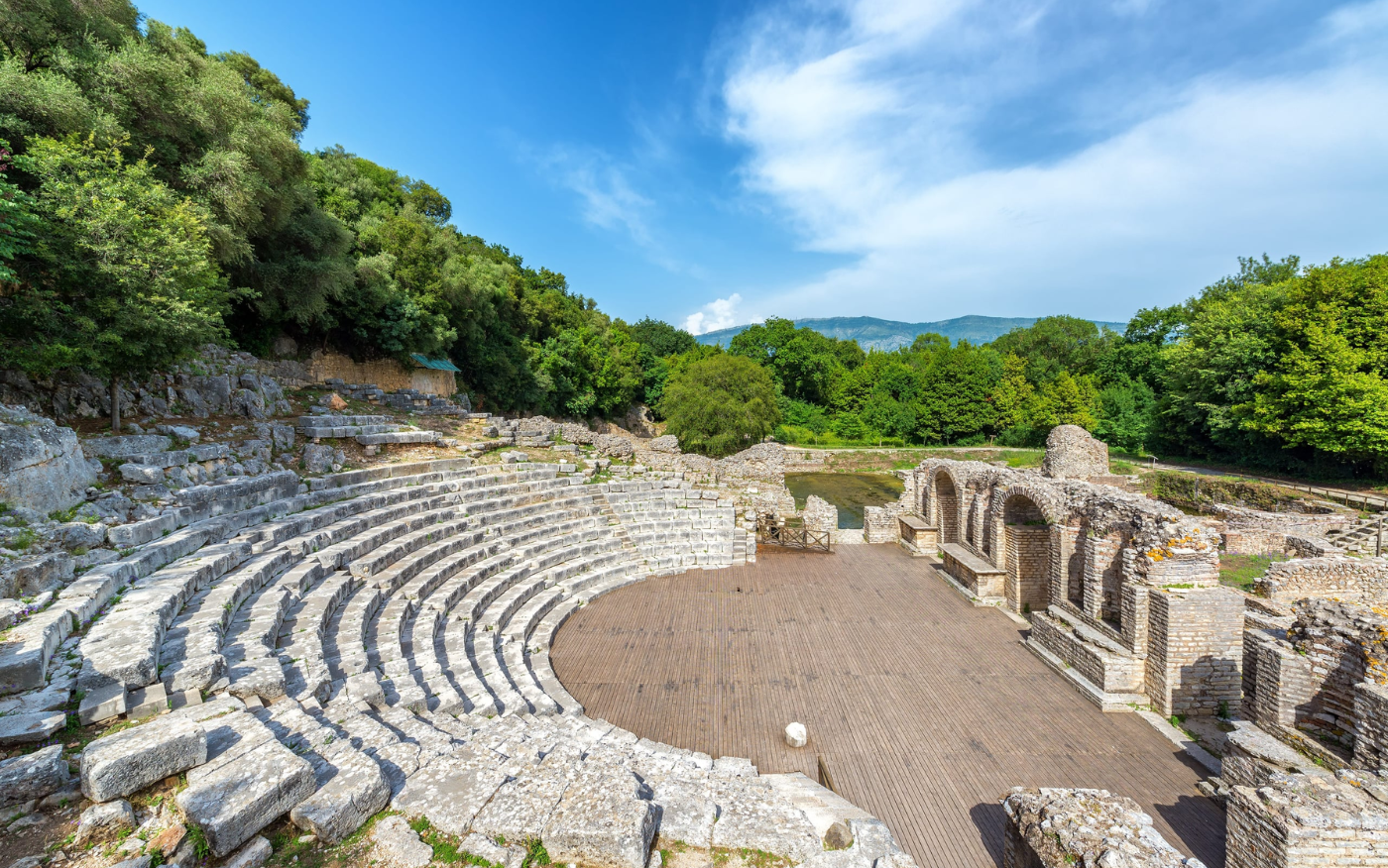
The Greek Theatre, built in the 3rd century BC beside the Sanctuary of Asclepius, the god of healing, and later expanded by the Romans to seat around 1,500 spectators. Limestone seats still carry the carved names of more than 150 freed slaves, and subterranean water often floods the lower stage in summer, turning it into an unplanned wildlife pool. Early morning light here is considered the best for photography.
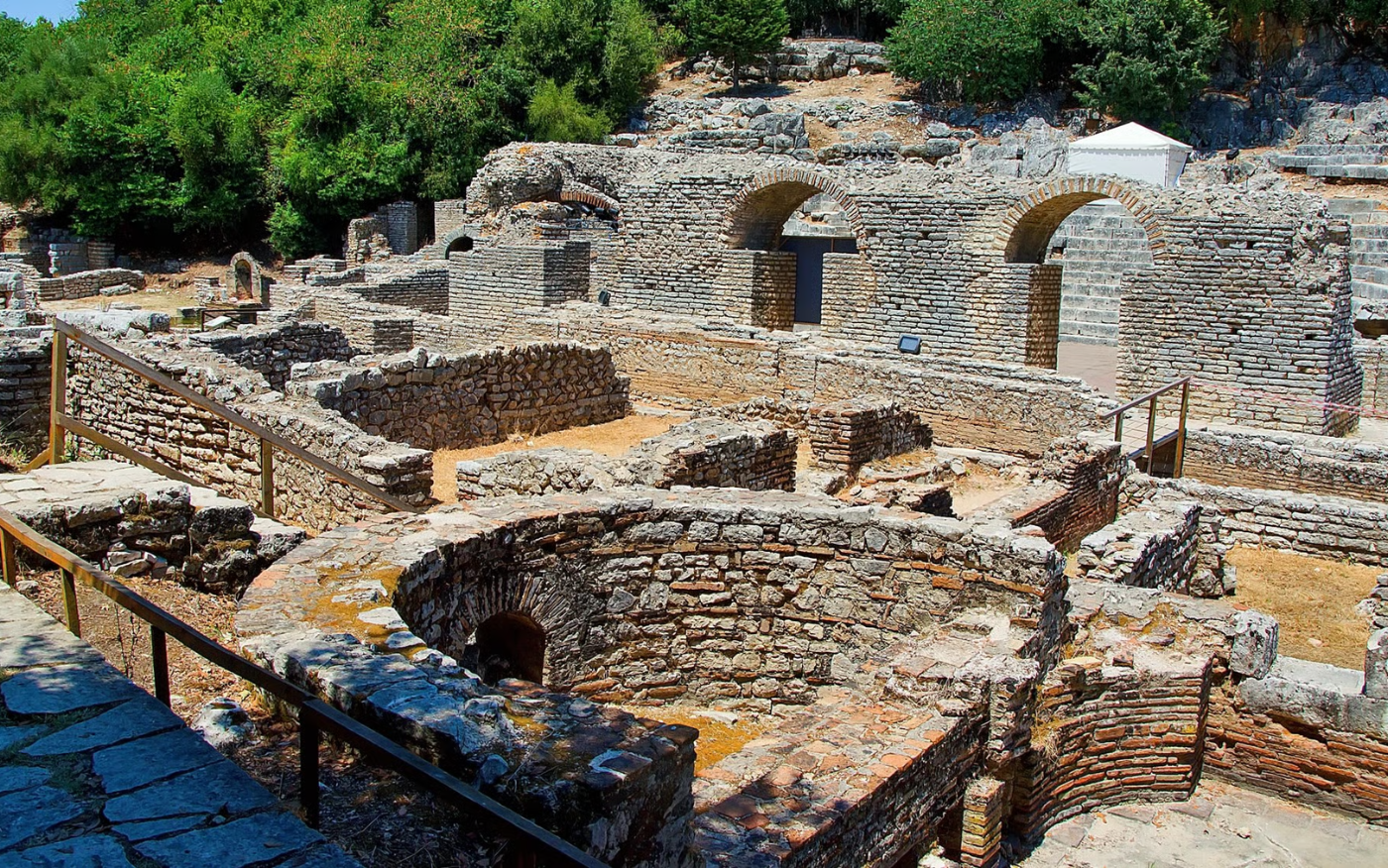
The Roman Forum and Baths, with geometric floor mosaics deliberately kept covered in soil to protect them from the humidity that has preserved them for over 1,600 years.
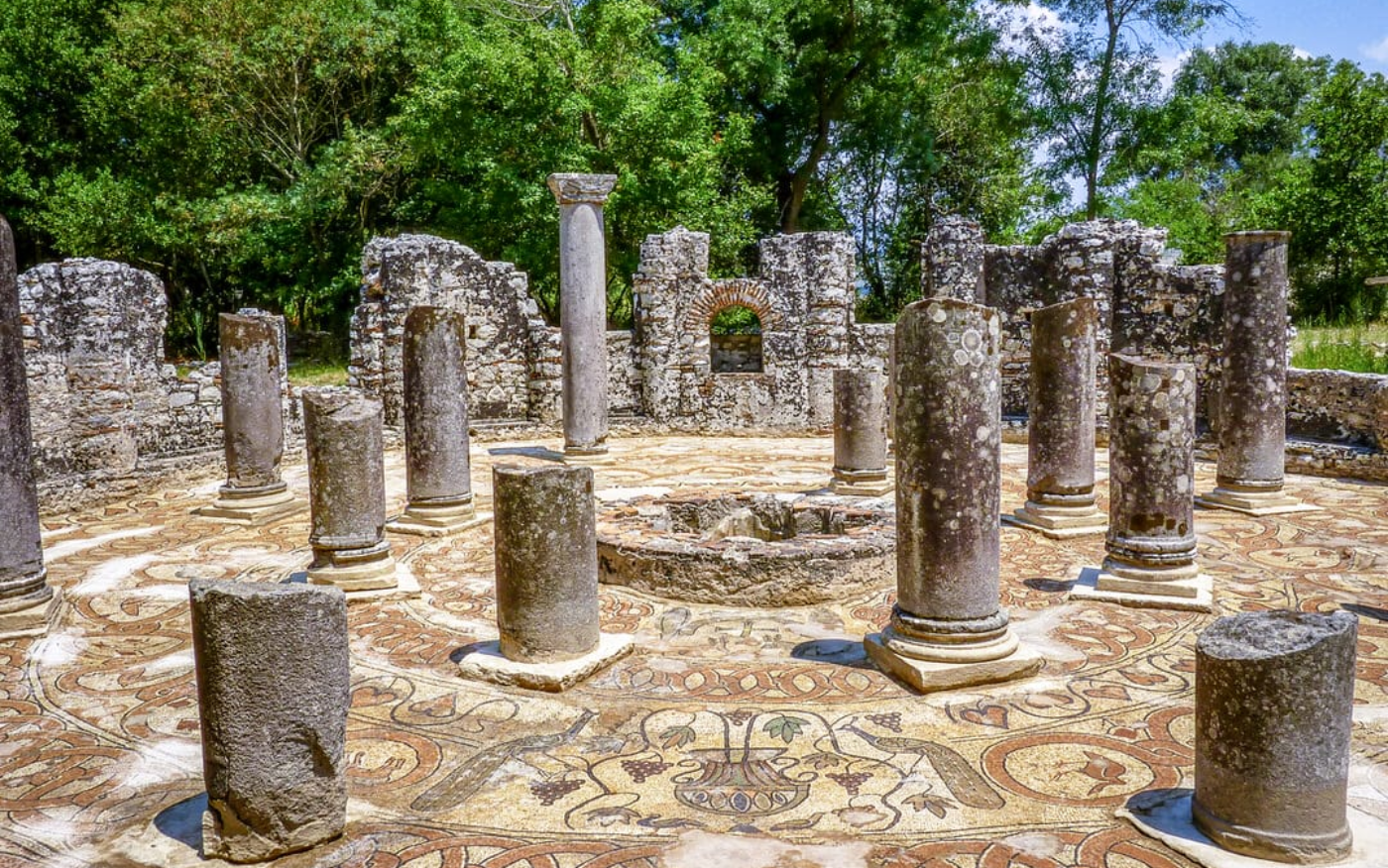
The Baptistery, a 6th-century Byzantine structure with a circular pool and an intricate eight-ring mosaic floor that rivals the finest early-Christian artwork found in Ravenna or Constantinople, one of the largest baptisteries known from the early Byzantine world.
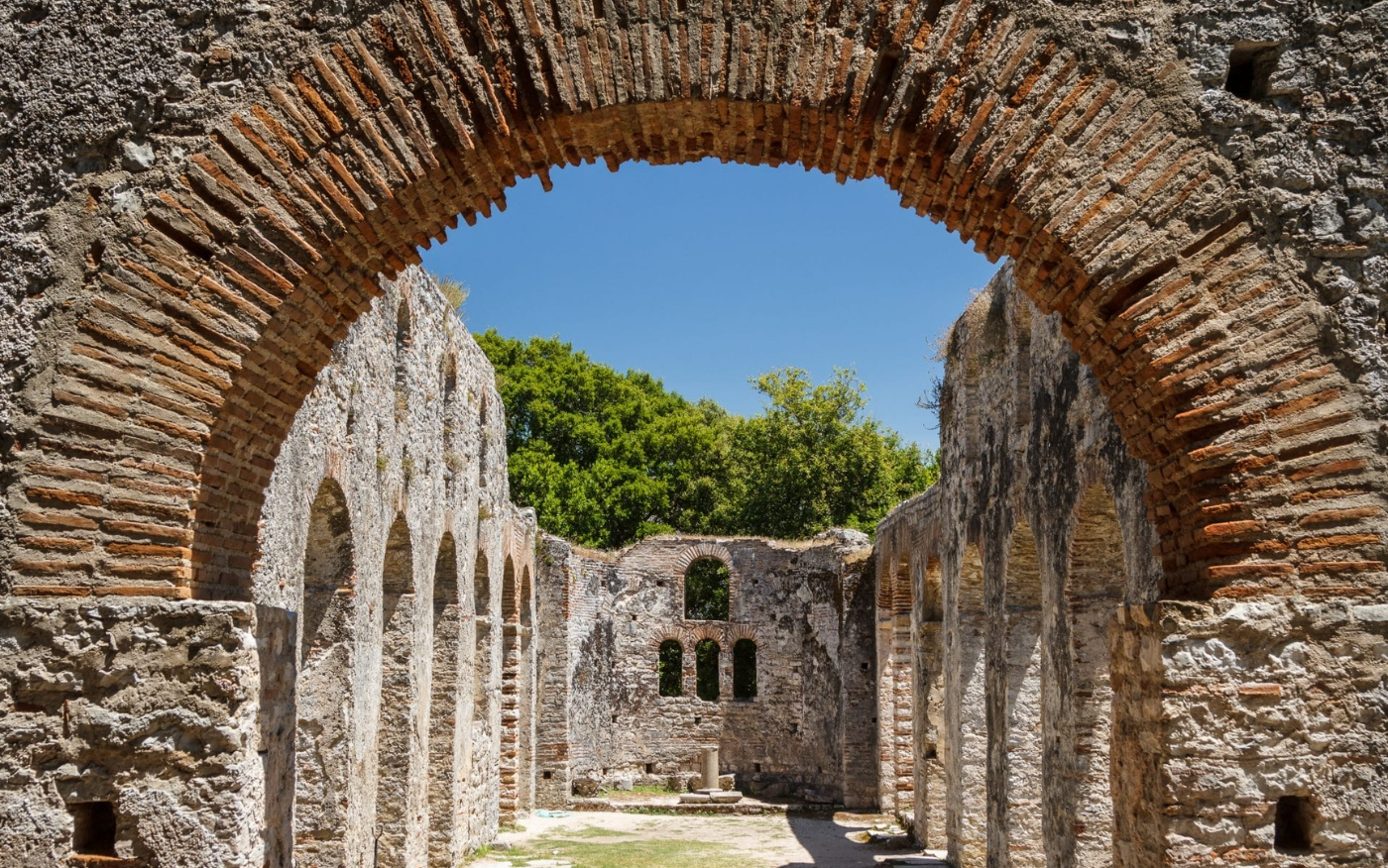
The Great Basilica, an early-6th-century Christian church later rebuilt in the Middle Ages, with towering stone arches still standing.
The Lion Gate and the city's defensive walls, following the outer perimeter of the ancient settlement along the water's edge.
Practical note: Butrint is generally open daily, with summer hours running roughly 8:30 am to 8:00 pm (last entry around 6:00 pm) from April to October, and shorter winter hours from November to March. The standard adult ticket runs around 1,000 lekë (about €10), with reduced rates for students and groups and free entry for children under 12; both cash (lekë or euros) and cards are typically accepted at the gate, though hours and prices can shift seasonally, so it's worth confirming before you go.
At the top of the site, a walk uphill leads to the Venetian Castle, built in the 15th century to guard the narrow Vivari Channel separating Albania from Corfu, a strategic chokepoint that shaped five centuries of shifting military control here. The castle now houses Butrint's small on-site museum, covering the layered history of the site from antiquity through the Ottoman period, and its terrace gives one of the best overall views of the ruins, the channel, and the lake beyond.
Across the water, the Triangular Castle and, further along the channel, Ali Pasha's Castle at Butrint, both visible from the site, once worked in tandem with the Venetian Castle to control ship passage in and out of the lake, a reminder that this quiet wetland was, for centuries, one of the most fought-over stretches of coastline in the region.
Much of what makes Butrint distinctive is the water around it rather than the stone within it. Lake Butrint connects to the Ionian Sea via the Vivari Channel, creating a brackish wetland ecosystem that has supported human settlement, and a thriving mussel industry, for thousands of years. The lake's famous cultured mussels, harvested along the channel between Ksamil and Butrint, are a genuine local specialty, and lakeside restaurants along that same road serve them steamed in white wine, garlic, and herbs, a natural way to end a visit to the ruins.
Because Butrint sits so close to the coast, it's rarely visited in isolation. It combines easily with:
Ksamil, just a 5-minute drive north, known for its white-sand beaches and small offshore islands, an easy add-on for an afternoon swim after the ruins.
Saranda, about 30 to 40 minutes north, the main coastal hub for the Albanian Riviera and the usual overnight base for visiting Butrint.
The Blue Eye Spring (Syri i Kaltër), a striking karst spring often paired with Butrint on the same guided day trip.
Corfu, Greece, a short ferry crossing from Saranda, making Butrint a natural stop for travellers routing between the two countries.
The signature dish here is mussels, specifically the Mussels of Butrint, farmed in the channel and served at lakeside restaurants along the road between Ksamil and Butrint, typically steamed in white wine, garlic, and herbs. Beyond the mussels, expect fresh grilled fish, olive oil, and the general seafood-forward cooking of the Albanian Riviera, best enjoyed at a table overlooking the water rather than rushed between ruins.
April–June: comfortable temperatures, green surroundings, and good conditions for the full shaded walking loop without summer crowds.
July–August: hot and the busiest period, since most visitors are combining Butrint with Riviera beach time. The dense tree canopy helps with shade, but an early morning visit is still the most comfortable option.
September–October: warm, clear light, and thinner crowds, a strong choice for photography at the theatre and baptistery.
November–March: quiet, with shorter opening hours and a more solitary, atmospheric visit, ideal for travellers who prefer ruins without the crowds.
From Saranda: about 17 km, roughly 30 to 40 minutes by road. A direct public bus runs from the Saranda ferry terminal via Ksamil to Butrint roughly every 30 minutes to an hour, taking about 35 minutes and costing a few hundred lekë each way. A private transfer or guided tour is the more comfortable option, especially if combining Butrint with the Blue Eye Spring the same day.
From Ksamil: about 5 km, a 10-minute drive or a short bus ride, the closest and easiest access point.
From Himara: about 70 km, just over 1.5 hours, an easy day trip for travellers based further up the Riviera.
From Corfu, Greece: a ferry or hydrofoil crossing to Saranda (roughly 30 to 50 minutes), followed by the short road transfer to Butrint, a popular route for travellers combining both countries.
Getting around the site: entirely on foot, along a shaded, mostly flat but sometimes uneven stone path; comfortable walking shoes are recommended.
Butrint itself has no hotels, since the entire peninsula is protected parkland, so travellers base themselves in Saranda or Ksamil. Saranda offers the widest range of hotels, restaurants, and ferry connections to Corfu, while Ksamil is the better choice for travellers prioritising beach time, being just minutes from both the ruins and some of Albania's best-known beaches.
A half-day: two to three hours is enough to walk the full loop, the theatre, baptistery, basilica, gates, and castle museum, at an unhurried pace, comfortably combined with a beach stop in Ksamil the same day.
A full day: add the Blue Eye Spring, a lakeside mussel lunch, and time to properly explore the castle museum and the views across the channel.
We build private and small-group day trips to Butrint year-round, licensed local guides, skip-the-line entry, and full combinations with the Blue Eye Spring, Ksamil's beaches, and Saranda. [Browse our Albania tours] · [See Saranda hotels] · [Request a custom itinerary]
Yes. Butrint is Albania's largest and most important archaeological site, a UNESCO World Heritage Park layered with Greek, Roman, Byzantine, and Venetian ruins set inside a forested wetland nature reserve, and it's easily combined with a day at the beach in nearby Ksamil.
Butrint is known for its 3rd-century BC Greek theatre, its 6th-century Byzantine baptistery with an intricate mosaic floor, the Great Basilica, and a hilltop Venetian castle guarding the Vivari Channel toward Corfu, all set within a UNESCO-listed wetland national park.
About 17 to 18 km, roughly 30 to 40 minutes by car, bus, or private transfer.
Yes, and it's almost always visited that way. Most travellers spend two to three hours at the site as part of a half-day or full-day trip from Saranda or Ksamil, often combined with the Blue Eye Spring or a beach afternoon.
The standard adult ticket costs around 1,000 lekë (about €10), with reduced tickets for students and groups and free entry for children under 12. Both cash and card are generally accepted at the gate, though it's worth confirming current prices before visiting.
April to June and September to October, for mild weather, comfortable walking conditions along the shaded ruins, and lighter crowds than peak summer.
Yes. A ferry or hydrofoil connects Corfu and Saranda in roughly 30 to 50 minutes, making Butrint an easy stop for travellers crossing between the two countries.
Yes. The site is well-maintained, family-friendly, and thoroughly geared toward tourism. The main practical cautions are uneven stone paths underfoot and mosquito exposure near the wetlands in warmer months, so insect repellent is worth packing.
