

Shkodra (also spelled Shkodër or Scutari) is northern Albania's cultural capital, set where the Buna, Drin, and Kir rivers meet the shores of Lake Shkodra, the largest lake in the Balkans. It is one of Albania's oldest continuously inhabited cities, famous for Rozafa Castle, the Venetian-style boulevard of Kolë Idromeno Street, the Marubi National Museum of Photography, and its role as the main gateway to the Albanian Alps, Theth, Valbonë, and the Lake Koman Ferry. Most travellers spend one to three nights, visit the castle and old town, cycle out to Shiroka and Mesi Bridge, and use Shkodra as their launch point for a multi-day trip into the mountains. Best months: April to June and September to October.
Some cities are destinations. Shkodra is a hinge point, and that is exactly its appeal. It is old enough that locals will casually mention "2,000 years" the way other cities mention a century, and it is young enough in spirit that its evening corso down Kolë Idromeno Street fills with students, cyclists, and espresso drinkers well past dark. This is Albania's bicycle capital, a flat, walkable city where people still commute by two wheels the way much of the Balkans once did, and it carries a distinct northern character, Catholic bell towers, Ottoman minarets, and Venetian facades sharing the same short walk.
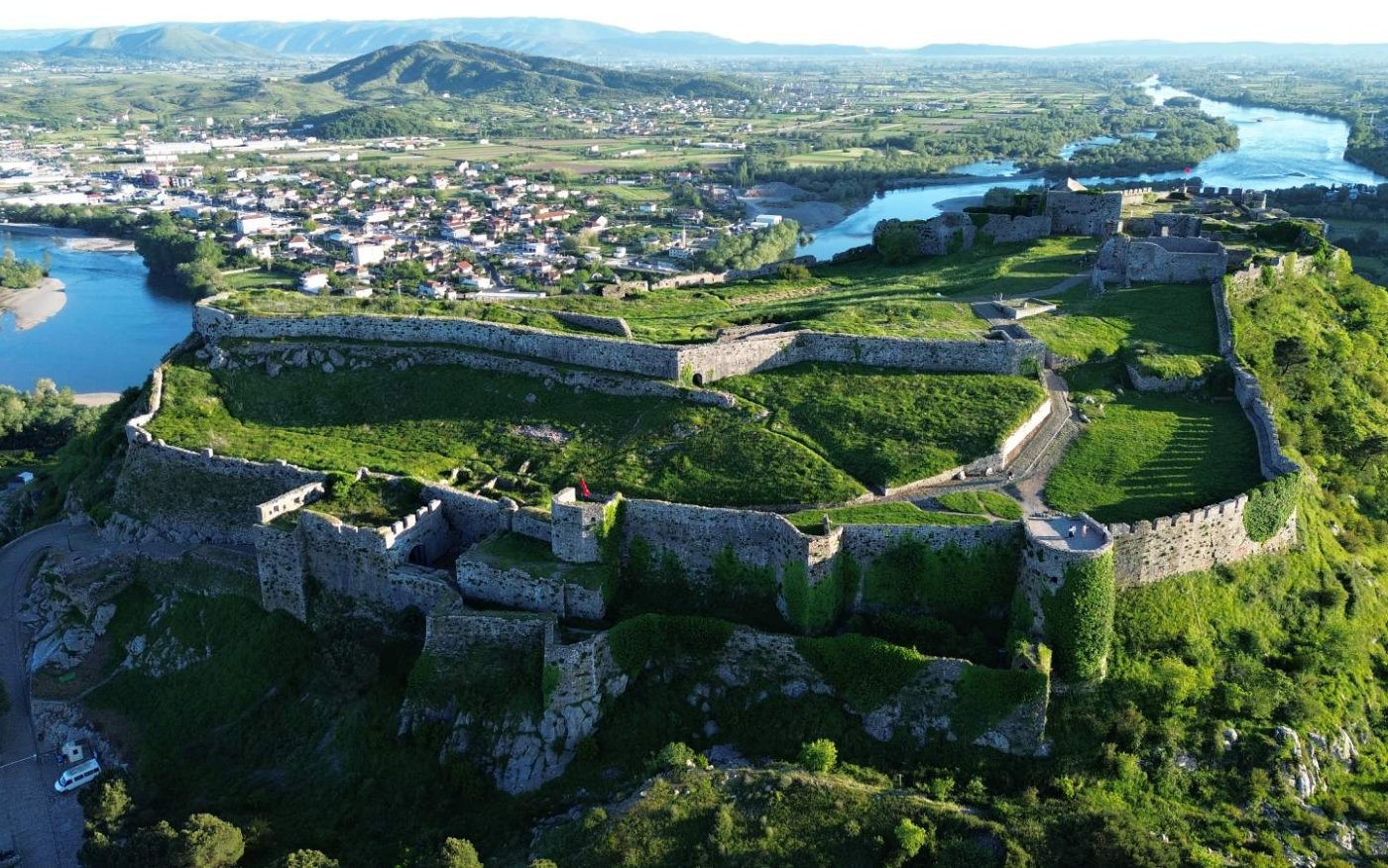
The setting is what pulls it onto every northern Albania itinerary. Rozafa Castle sits on a rocky hill above the confluence of three rivers, with Lake Shkodra opening out toward Montenegro on one side and the jagged wall of the Albanian Alps rising on the other. For travellers building a luxury Albania itinerary, Shkodra is the essential link between Tirana, the Adriatic coast, and the high mountains, the last real city before the road climbs into Theth, Valbonë, and the fjord-like Lake Koman Ferry crossing.
Rozafa Castle (Kalaja e Rozafës) crowns a 113-metre hill about 3 km south of the city centre, at the meeting point of the Buna and Drin rivers. The site's history reaches back roughly 4,000 years to a Bronze Age settlement on the same hilltop, later followed by an Illyrian fortress; between the first two citadel gates, visitors can still make out the Illyrian "Cyclopean walls," huge interlocking stone blocks dating to around 350 BC. Most of the visible masonry today is Venetian, layered over the Illyrian core, and the Ottomans finally took the fortress after a long siege in 1478–79.
The castle is inseparable from Albania's most famous legend. Every Albanian grows up with the story of three brothers building the castle, only to find each morning that whatever they raised the day before had collapsed overnight. The solution, an old builder told them, was to wall a woman into the foundations. The youngest brother's wife, Rozafa, agreed to the sacrifice on the condition that one eye, one breast, and one arm be left exposed, so she could still see, feed, and comfort the child she was leaving behind. The castle has carried her name ever since.
Inside the walls, do not skip:
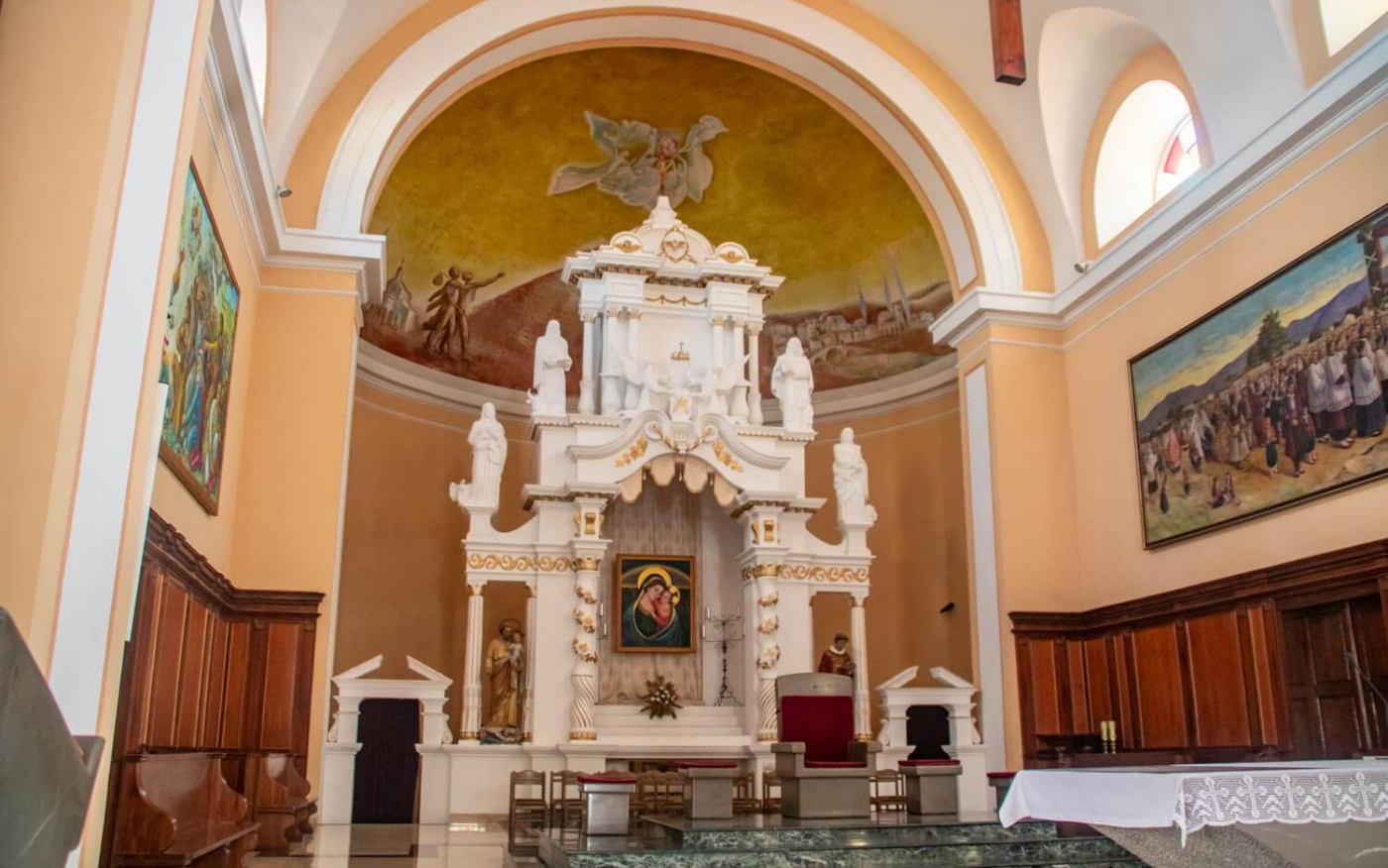
The Church of St. Stephen, built in the early 14th century and later converted into a mosque, with a minaret added, after the Ottoman conquest, the clearest single monument to the site's layered history.
The small castle museum, housed in a restored building, covering the Illyrian origins, the major sieges, and the Rozafa legend in more depth.
The rampart walk itself, which delivers the payoff: the confluence of the Buna, Drin, and Kir rivers directly below, Lake Shkodra beyond, and, on a clear day, the first peaks of the Alps on the horizon.
Practical note: the castle typically keeps summer hours of roughly 9:00 am to 6:00 pm, shortening in the colder months, though local authorities have extended evening access later into the season in recent years, so a golden-hour visit is often possible; it's worth confirming current hours locally. Tickets are usually sold in cash at the gate, so carry lekë. Allow 60 to 90 minutes on the hill, or two hours if you'd like to sit with the view. A taxi up from the centre is inexpensive and worth it in summer heat.
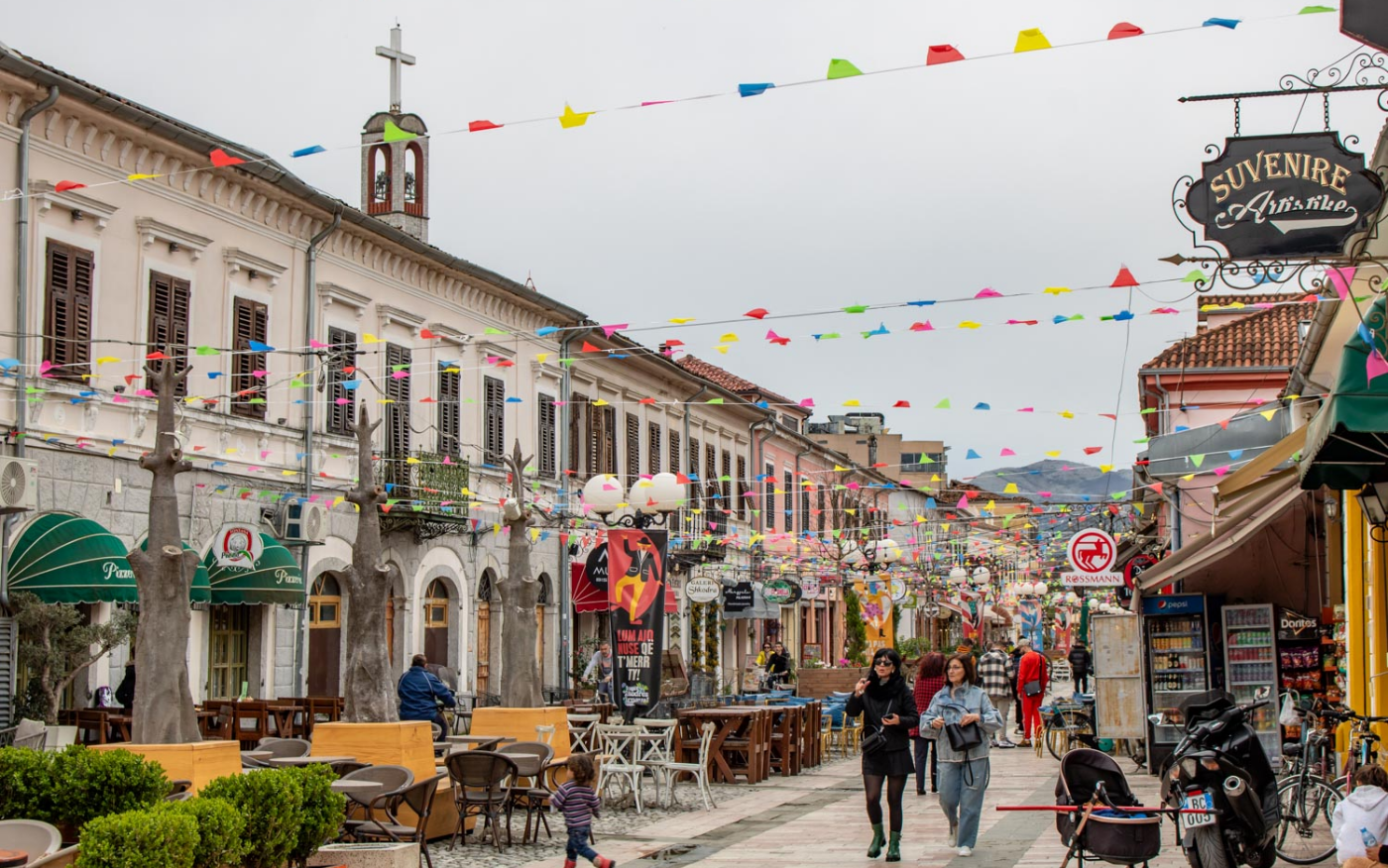
Back down in the centre, Shkodra's charm is at street level. Rruga Kolë Idromeno is the city's Venetian-style pedestrian boulevard, lined with 19th-century facades, cafés, and gelato counters, and it is where the evening xhiro, the traditional stroll, happens nightly. Nearby, the Ebu Bekr Mosque and the Lead Mosque stand a short walk from Catholic and Orthodox landmarks, a reminder of the city's long-mixed religious identity.
For culture and history, prioritise:
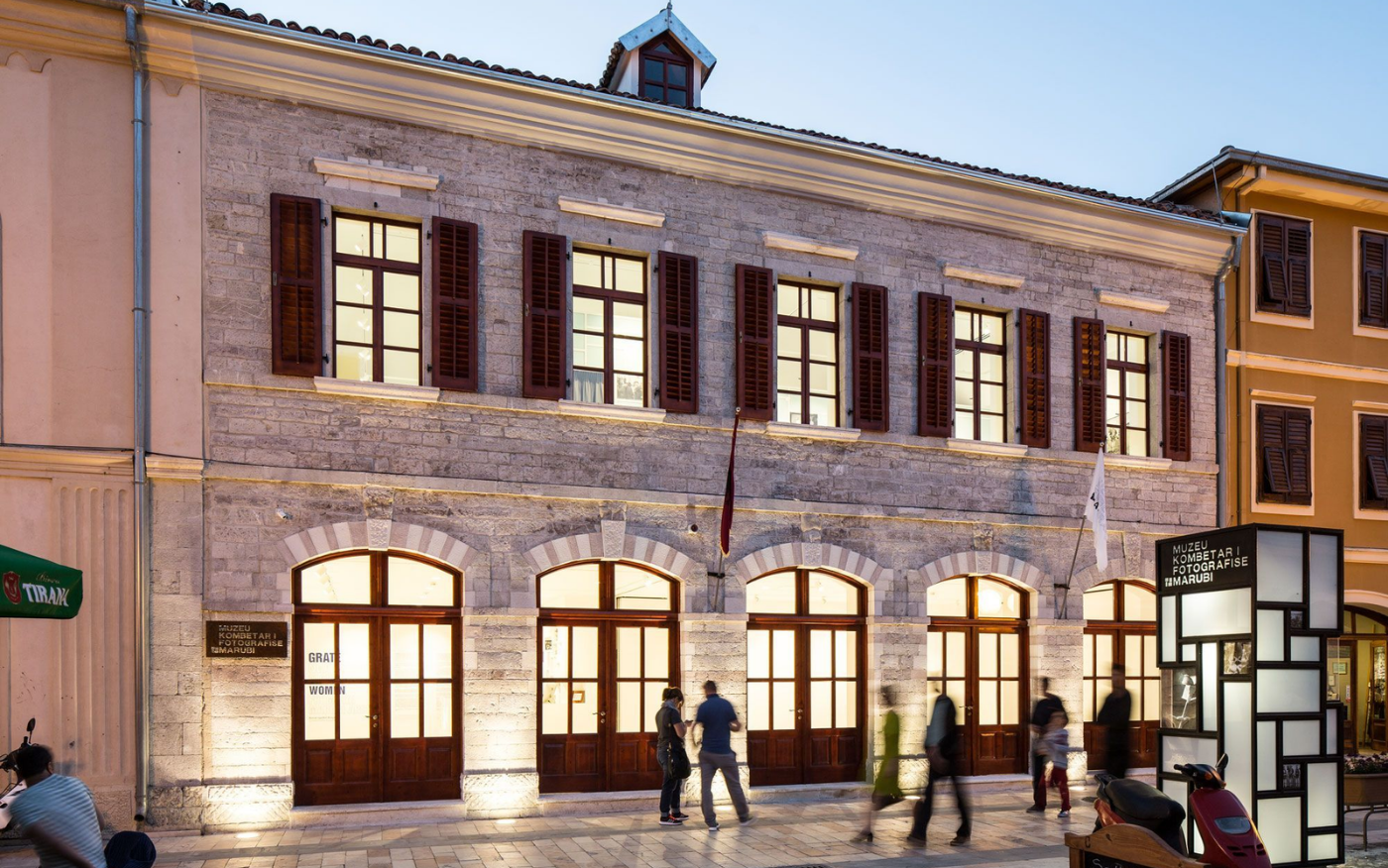
The Marubi National Museum of Photography, whose archive of glass-plate negatives spans a century of Albanian life. The collection holds the first photograph ever taken in Albania and hundreds of thousands of images produced across three generations of the same photography family, offering a genuinely rare window into the country's past.
The Shkodra Historical Museum and the Site of Witness and Memory, which together give context on the communist period and the city's resilience through it.
The Gjuhadol quarter, one of the best pockets for wandering older residential streets away from the main boulevard.
A local tip worth knowing: a discount card covering several of Shkodra's main museums and attractions is available and worth picking up if you're spending more than a single day here.
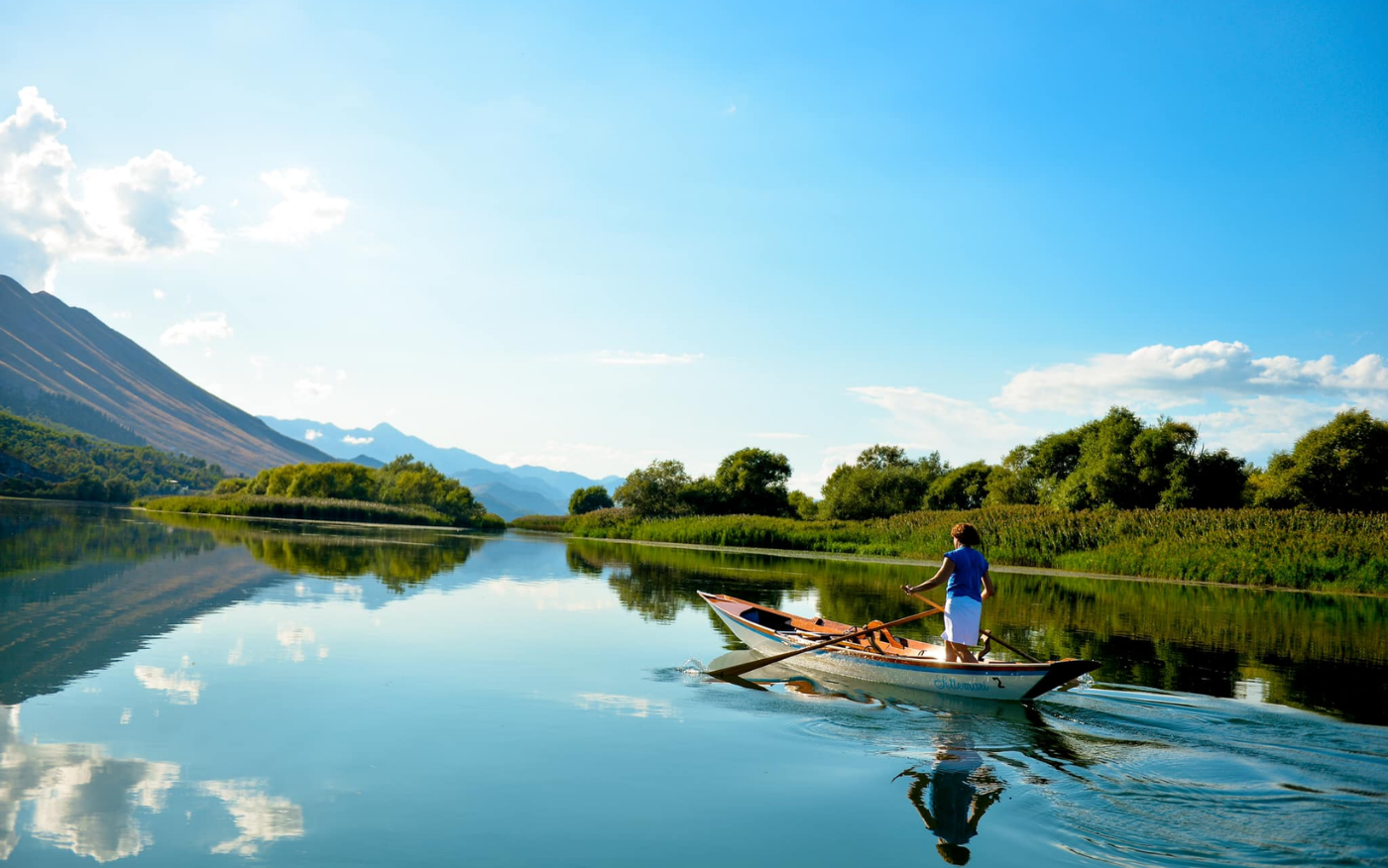
Lake Shkodra is the largest lake in the Balkans, stretching roughly 44 km in length and up to 14 km in width, with most of its surface lying across the border in Montenegro. The city centre sits a short ride from the water, and the lakeside village of Shiroka is where locals and travellers actually go to enjoy it.
Shiroka functions almost like a second centre for Shkodra: a small lakeside village with guesthouses and some of the best seafood in the region, thanks to restaurants sitting right on the water. In high season its lakeside walkway fills with people out for a sunset drink or dinner. Kayaking and stand-up paddle boarding are both easily arranged from Shiroka, and the quieter fishing village of Zogaj, close to the Montenegrin border, offers an even more low-key version of the same lake life.
Shkodra is also, unusually for Albania, a genuine cycling city. Renting a bike and riding out to Shiroka, or continuing further to Zogaj, is one of the most popular ways to spend a half-day here, and the flat terrain between the city and the lake makes it accessible for most fitness levels.
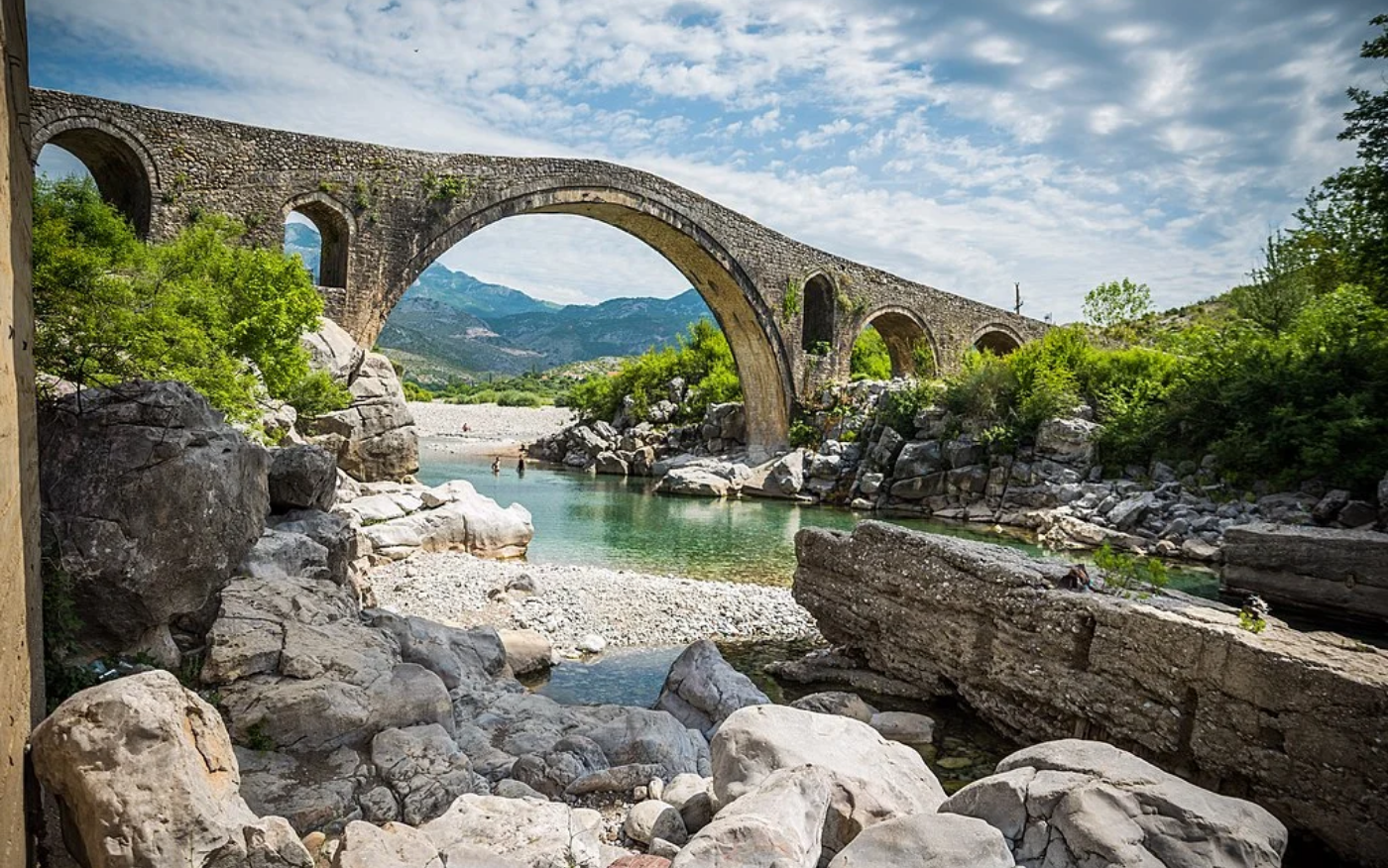
Mesi Bridge is one of the most photogenic Ottoman-era heritage sites in northern Albania, built around 1770 over the Kir river and stretching well over a hundred metres across its stone arches, with clear, fast-running water beneath it where locals swim after a bike ride in warmer months. The bridge historically connected Shkodra with the hilltop settlement of Drisht, whose castle ruins sit a short distance further along the same road, an easy extension for a longer ride.
This corner of Shkodra County rewards slow travel: a rented bike, a picnic by the Kir river, and a stop at Mesi Bridge combine naturally with a morning at Rozafa Castle into one full, unhurried day.
Shkodra's real distinction among Albanian cities is what lies beyond it. For many travellers heading north, Shkodra is the essential stopover before the Albanian Alps, and most multi-day hiking itineraries start and end here.
Theth National Park, roughly a two-and-a-half-hour drive from Shkodra on a now fully paved mountain road. Once there, the Blue Eye of Theth spring and the Grunas Waterfall are the two classic short hikes.
The Lake Koman Ferry, the classic northern loop that runs from Shkodra to the town of Koman, crosses the fjord-like Koman Lake by boat to Fierzë, then continues by road to Valbonë, before travellers hike the famous Valbonë–Theth pass and loop back down to Shkodra.
Valbonë Valley, reached via the Koman Ferry route and typically paired with Theth by hikers doing the well-known trail across the Albanian Alps.
Most visitors sleep at least one night in Shkodra before heading into the mountains, and use the city again as a comfortable base to rest and resupply on the way back down.
Shkodra's food leans lake and river rather than sea. Look for fresh carp and other lake fish around Shiroka, byrek, and qifqi, a rice-ball speciality of the wider north, and lean into the city's strong café culture along Kolë Idromeno Street, where a slow coffee is as much a Shkodra ritual as any single dish. Raki, the northern grape or fruit spirit, is the standard way to start a meal here, and locals are generous about pouring a round for guests.
April–June: mild temperatures, green surroundings, and the best window to combine the city with an early-season trip into the Alps before the summer heat sets in.
July–August: hot and the busiest period, especially as travellers pass through en route to Theth and the Koman Ferry. Visit Rozafa Castle in the early morning or evening and save the lake for a midday swim or paddle.
September–October: warm, clear light, thinner crowds, and comfortable hiking conditions if you're continuing into the mountains.
November–March: quiet and inexpensive, with a moody, atmospheric castle and lower prices in the city, though snow on the higher mountain passes can affect the road to Theth.
From Tirana: about 100 km north of the capital, a fast, largely flat drive on the A1 motorway and SH1, taking around 2 hours door-to-door. Regular buses run from Tirana throughout the day, and a private transfer is the easiest option, particularly if you're continuing on to Theth or the Koman Ferry on the same trip.
From Tirana International Airport (TIA): roughly 1.5 to 2 hours by private transfer, as most routes head straight north without needing to enter Tirana itself.
From Theth: budget 3.5 to 4.5 hours back to Tirana via Shkodra, on the fully paved SH1 and SH21 route.
From Podgorica, Montenegro: Shkodra sits close to the Montenegrin border, making it a practical first or last stop for travellers combining Albania and Montenegro in one trip.
Getting around town: on foot or by bicycle. The city centre is compact and flat, bike rental is widely available and inexpensive, and taxis cover the short hop to Rozafa Castle or out to Shiroka.
The city centre, around Kolë Idromeno Street and Gjuhadol, puts you inside the boulevard life, cafés, and museums, and is the practical base if you're heading out early to the mountains or the ferry terminal the next morning. Shiroka, on the lake, is the better choice for travellers who want water views, seafood dinners, and a slower pace, with the city centre a short bike ride or taxi away. For those continuing into the Alps, many travellers treat Shkodra as a one-night staging post, then base themselves in Theth or Valbonë for the mountain portion of the trip.
One day: Rozafa Castle in the morning, Kolë Idromeno Street and the Marubi Museum in the afternoon, dinner in the old town. Doable, but rushed if you also want the lake.
Two days: add Shiroka and a bike ride, plus the Historical Museum and Site of Witness and Memory. The right amount of time if Shkodra is your only northern stop.
Three days or more: add Mesi Bridge, Drisht Castle, and use the extra time to launch into Theth, Valbonë, or the Lake Koman Ferry, the reason most travellers come this far north in the first place.
We build private and small-group Shkodra itineraries year-round, licensed local guides, hotel selection in the city centre or lakeside in Shiroka, cycling days out to Mesi Bridge, and full connections onward to Theth, Valbonë, and the Lake Koman Ferry. [Browse our Albania tours] · [See Shkodra hotels] · [Request a custom itinerary]
Yes. Shkodra combines a living hilltop castle, one of the best photography museums in the Balkans, a flat and bikeable old town, and easy lake access, all while serving as the main gateway to the Albanian Alps, Theth, and the Lake Koman Ferry.
Shkodra is known for Rozafa Castle and its legend, the Marubi National Museum of Photography, the Venetian-style boulevard of Kolë Idromeno Street, Lake Shkodra (the largest lake in the Balkans), and its role as Albania's cycling capital and the launch point for trips into the Albanian Alps.
About 100 km, roughly 2 hours by car, private transfer, or intercity bus.
Yes, though it makes for a long day. A day trip can cover Rozafa Castle, Kolë Idromeno Street, and the Marubi Museum, but an overnight stay lets you add Shiroka, cycling, and Mesi Bridge without rushing.
Entry is charged at the gate in cash, in lekë; the small museum inside the castle typically carries a separate, modest ticket. Rates aren't consistently published online, so it's worth confirming the current price on arrival.
April to June and September to October, for mild weather, good hiking conditions in the nearby Alps, and lighter crowds than the peak summer months.
Yes. Shkodra is the standard starting and ending point for trips to Theth, Valbonë, and the Lake Koman Ferry, and most multi-day hikers spend at least one night here before and after the mountains.
Yes. Albania has low rates of crime against visitors. In Shkodra, the main practical considerations are summer heat on the climb up to Rozafa Castle and normal road-safety awareness when cycling around the lake.
