

Tirana is Albania's capital and largest city, home to around 900,000 people in its greater metropolitan area, set on a plain below Mount Dajti in the centre of the country. It is famous for the pastel-painted apartment blocks that reinvented its post-communist skyline, for Skanderbeg Square at the heart of the city, for a pair of Cold War bunker museums known as Bunk'Art, and for the trendy Blloku district, once off-limits to ordinary Albanians and now the city's best neighbourhood for cafés and nightlife. Most travellers spend two to three days here, walking the main square, exploring the bunkers, riding the Dajti Ekspres cable car, and using Tirana as a base for day trips to Kruja, Berat, and Durrës. Best months: April to June and September to October.
Tirana is not the city most travellers expect. Arrive with an idea of a grey, post-communist capital and you'll instead find a wash of colour, apartment blocks painted in bold geometric patterns, tree-lined boulevards, and a café culture that rivals anywhere in southern Europe. This transformation began deliberately in the early 2000s under then-mayor (and later Prime Minister) Edi Rama, an artist by training, and it set the tone for a city that keeps reinventing its own skyline. The Pyramid of Tirana, once a museum honouring dictator Enver Hoxha, is a good symbol of that pattern, converted in recent years into a tech education and youth culture centre, communist relic turned forward-looking public space.
What makes Tirana essential rather than a mere entry point is how much genuine depth sits within a compact, walkable centre. From Skanderbeg Square you can reach Blloku, the Pyramid, and the New Bazaar in about twenty minutes on foot, and the flat topography makes the whole centre pleasant to explore even in warmer months. For travellers building an Albania itinerary, Tirana is also simply the most practical base, close to Tirana International Airport, and the natural hub for day trips to Kruja, Berat, and Durrës.
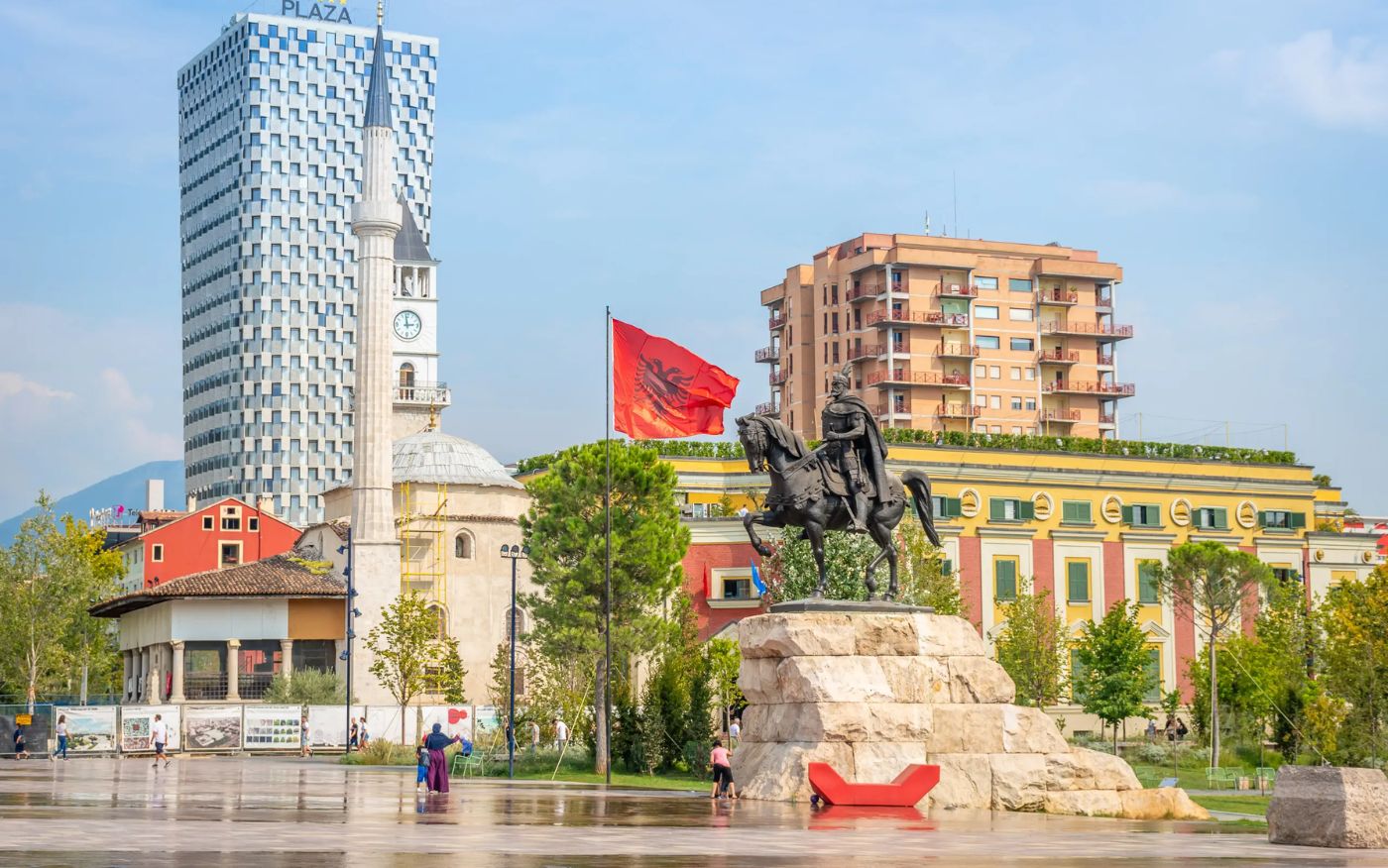
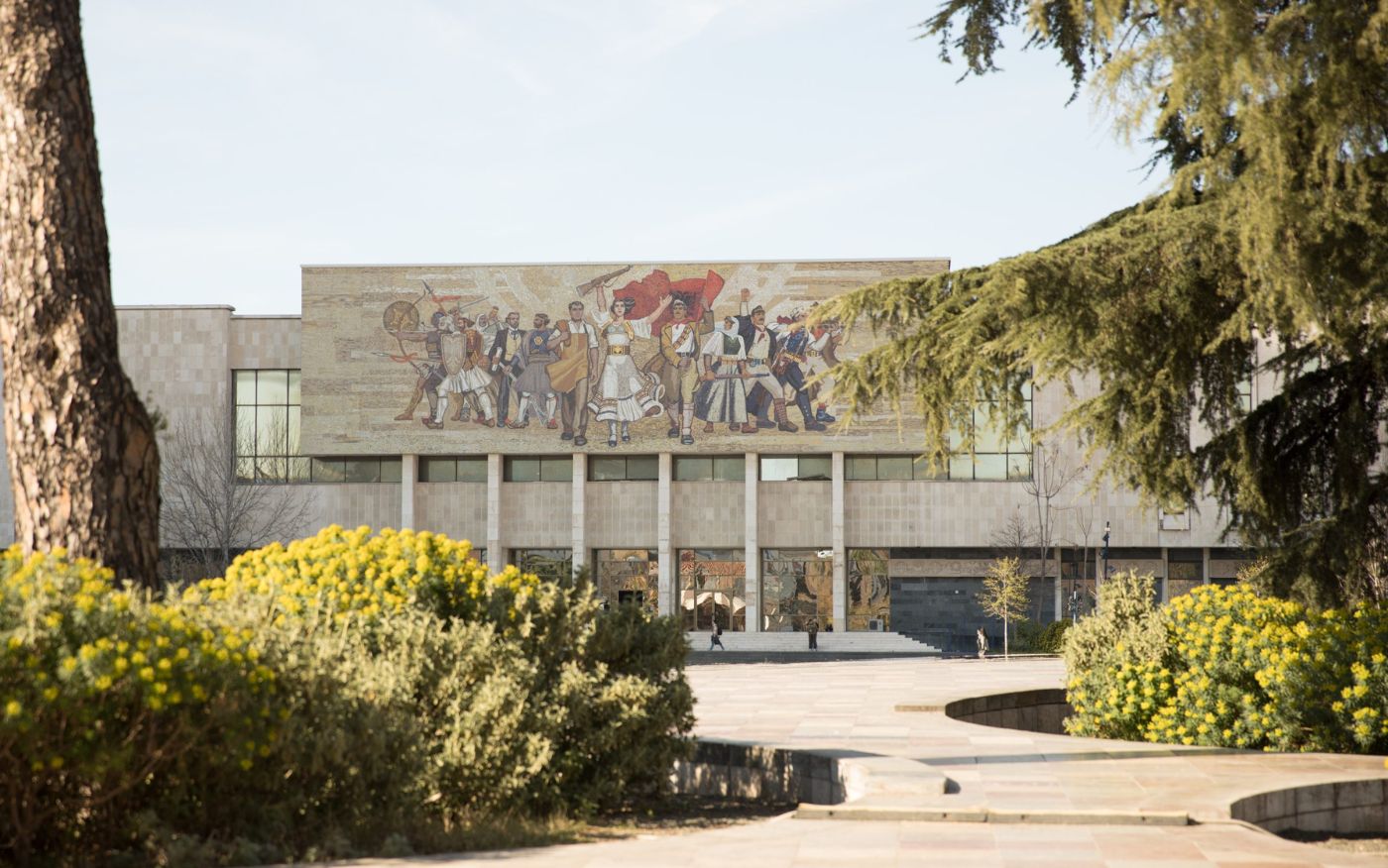
Skanderbeg Square is Tirana's emotional and cultural centre, the place where the city's identity becomes visible in a single glance. At its centre stands the equestrian statue of national hero Skanderbeg, and around its edges sit the Et'hem Bey Mosque, the Clock Tower, the National Opera and Ballet, and the National Historical Museum, Albania's largest museum, covering the country's history from Illyrian antiquity through the end of communism, currently closed for renovation with reopening expected by 2028.
The Et'hem Bey Mosque, an 18th-century Ottoman mosque with delicate frescoes, is one of the few religious buildings to survive Albania's decades of state atheism under communism, and it remains a working mosque open to respectful visitors outside prayer times. The square's atmosphere genuinely shifts across the day, calm in the morning, busy by afternoon, and by evening an open-air gathering of locals, families, and travellers, when the square lights up and, throughout the year, hosts festivals and seasonal installations. Nearly every walk in the city naturally leads back here, making it the obvious anchor point for a first orientation walk.
To understand Tirana beyond its colourful surface, step into its communist-era story, and the most immersive way to do that is through the city's two bunker museums, both built as part of the paranoid, decades-long bunkerisation of Albania under Enver Hoxha's regime.
Bunk'Art 1, near the base of the Dajti cable car, is the more complete underground experience: a five-storey anti-nuclear bunker built for the communist elite, inaugurated to the public in 1978 and now holding 106 rooms of exhibits on Albania's political and military history under Hoxha.
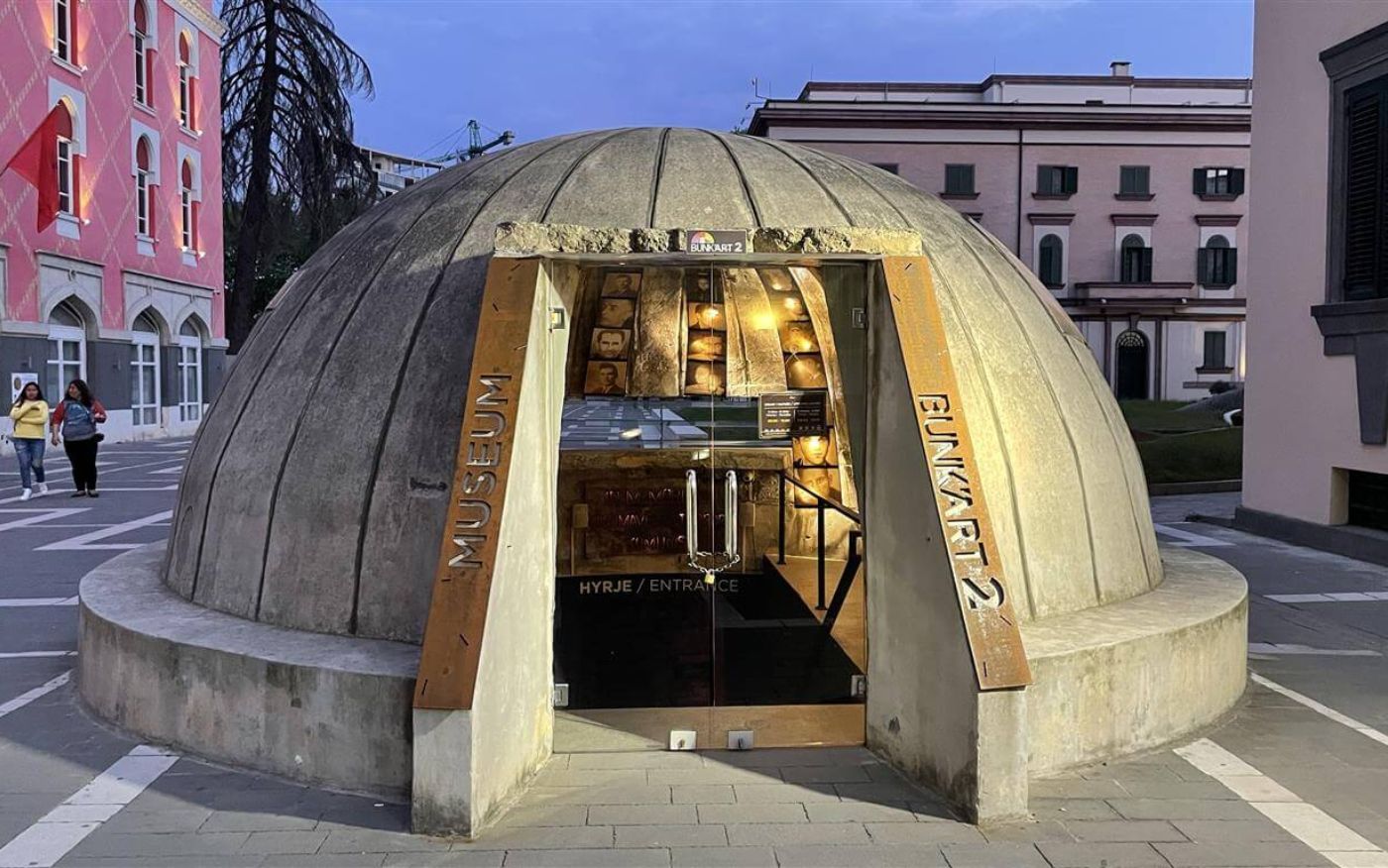
Bunk'Art 2, located centrally near Skanderbeg Square, is smaller and focuses more sharply on political persecution and the work of the Sigurimi, Albania's feared secret police, a genuinely sobering counterpart to the House of Leaves museum nearby, which covers state surveillance in similar depth.
Many visitors combine Bunk'Art 1 with the Dajti cable car ride the same day, since the lower cable car station sits just around the corner and up the hill from the bunker entrance, though it's worth noting the cable car is closed on Tuesdays.
For a complete change of pace, the Dajti Ekspres cable car climbs from just outside the city centre up Mount Dajti, Tirana's local mountain, for sweeping panoramic views back over the capital and out toward the Adriatic on a clear day. The ride itself takes roughly 15 to 20 minutes and is considered one of the longest cable car rides in the Balkans.
At the top, there's genuinely enough to fill an afternoon: hiking trails through pine forest, a restaurant with mountain views for lunch, a zipline for the more adventurous, and even a small hotel for travellers who want to stay up on the mountain rather than head back down. Many visitors treat this as a natural half-day pairing with Bunk'Art 1, given how close the two sit to each other, finishing with sunset views on the ride back down.
Blloku ("The Block") has one of the more striking backstories of any neighbourhood in the Balkans: for decades under communism, it was a restricted enclave reserved for Party leaders and their families, entirely off-limits to ordinary Albanians. Today it's the exact opposite, the city's buzziest district, packed with cafés, cocktail bars, boutiques, and street art, and the natural place to spend an evening after a day of museums and history.
The contrast is part of the appeal: renovated communist-era apartment blocks now house some of the city's best coffee spots and rooftop bars, and Blloku's energy in the evening, students, young professionals, and travellers spilling out of café terraces onto the sidewalk, is as good a snapshot of contemporary Tirana as any single monument.
A short walk from Skanderbeg Square rounds out Tirana's essential sights.
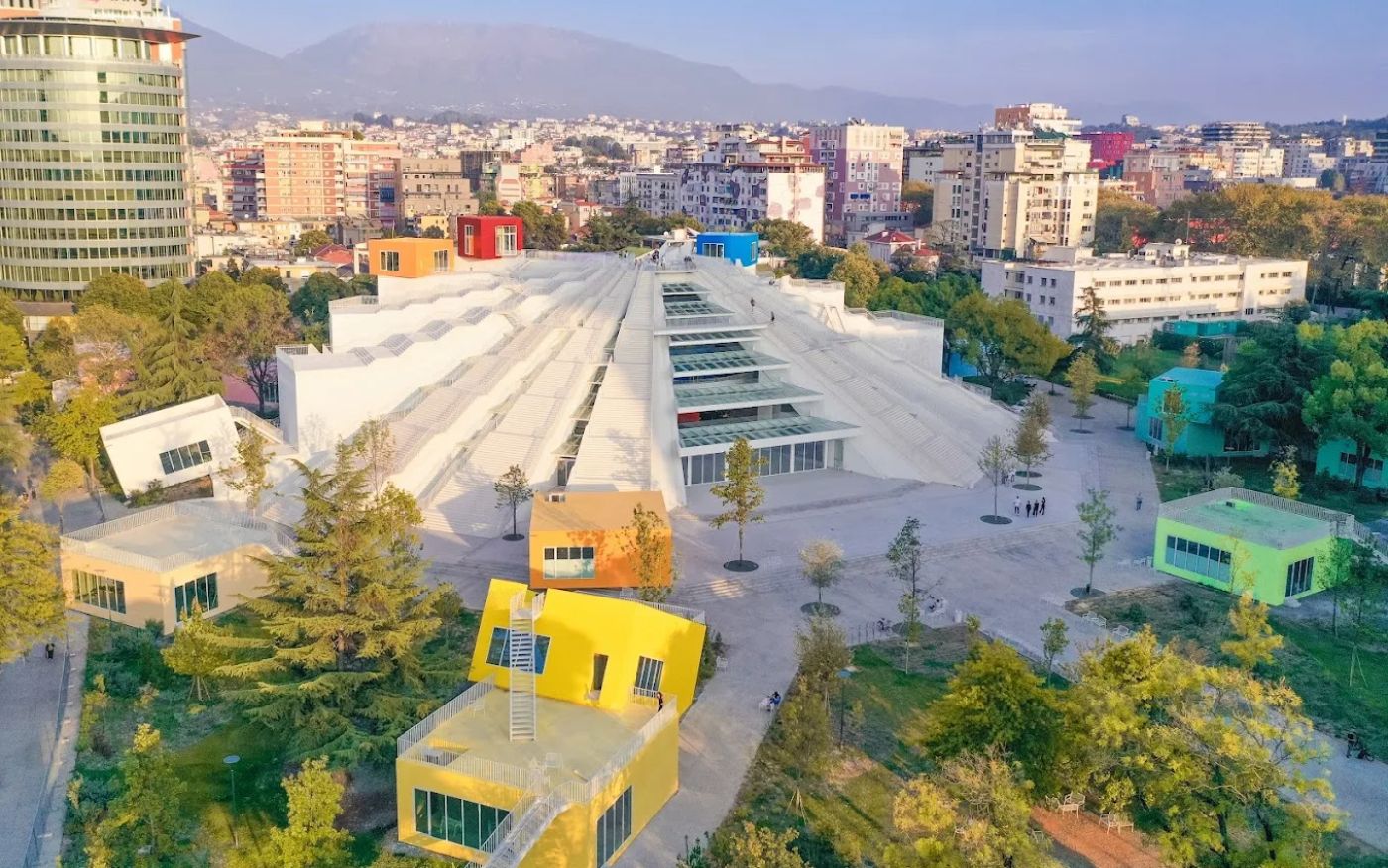
The Pyramid of Tirana, originally built in 1988 as a museum to Enver Hoxha, later used for various purposes including as a NATO base during the Kosovo War, has been fully renovated in recent years into a striking tech education and youth culture centre, with a rooftop that visitors can climb via external staircases for city views.
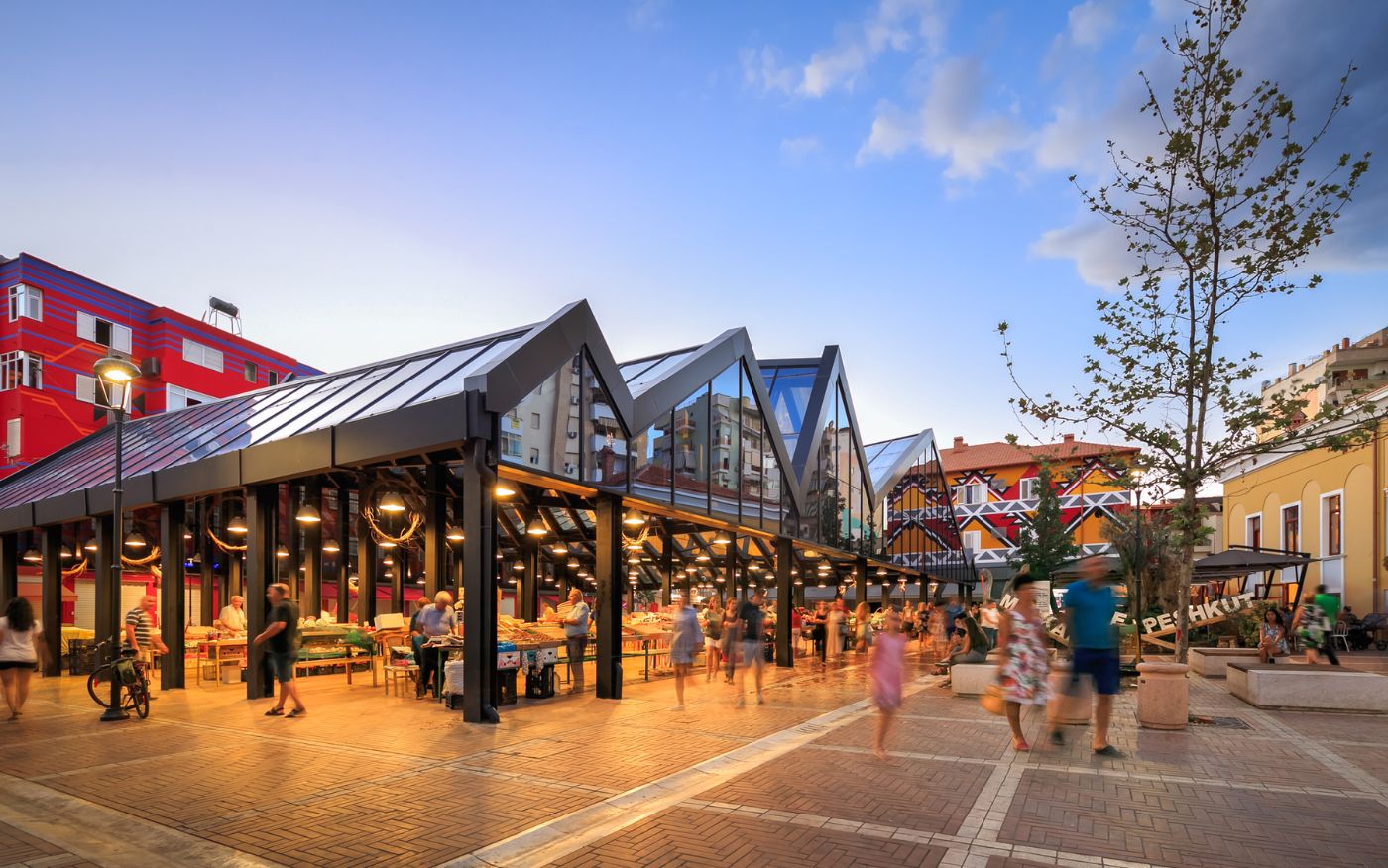
The New Bazaar (Pazari i Ri), a lively covered and open-air market area a short walk from the centre, good for fresh produce, local cheese, and a more everyday slice of Tirana life away from the main tourist sights.
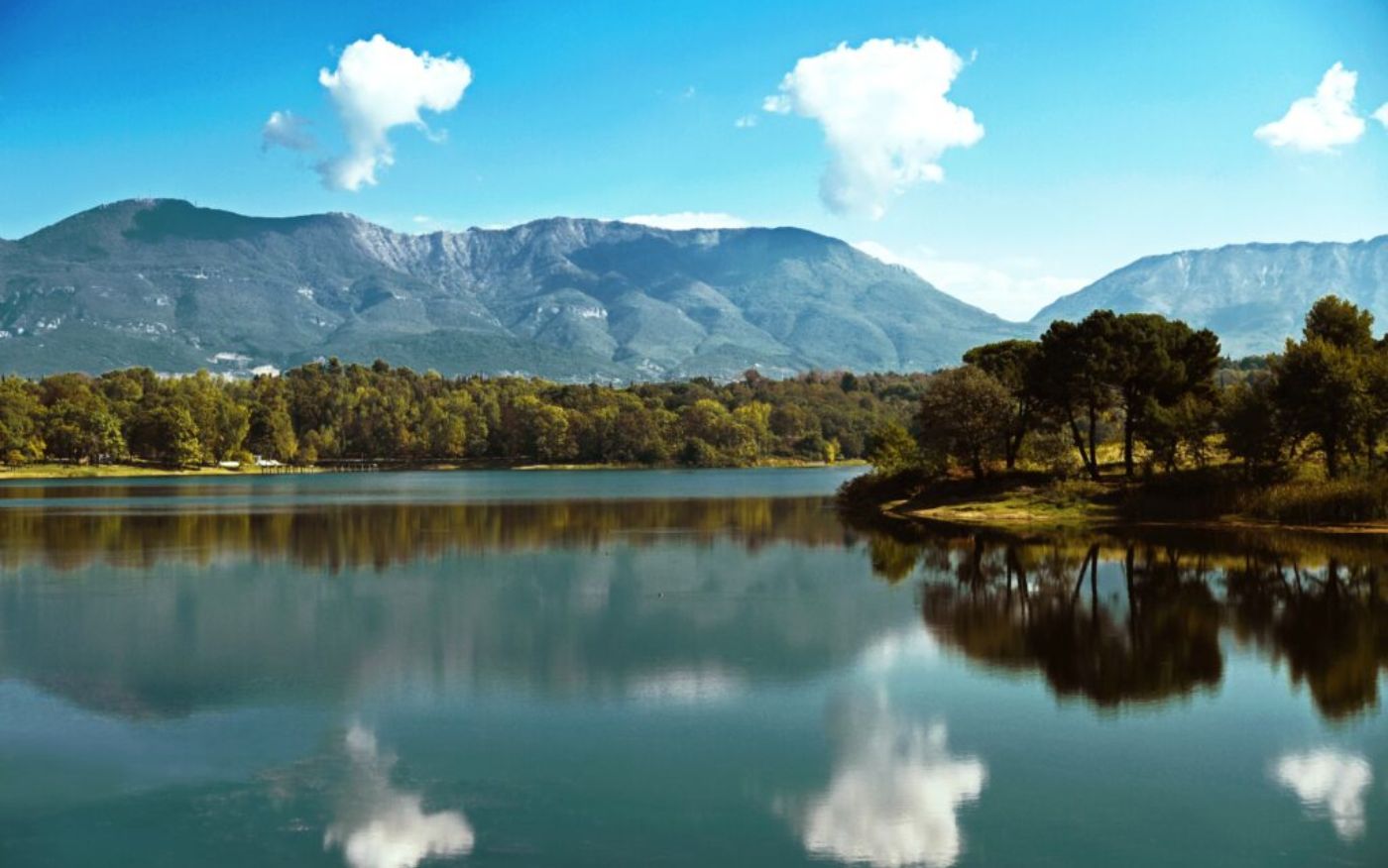
Grand Park (Parku i Madh), Tirana's largest green space, built around an artificial lake, popular with locals for jogging, cycling, and lakeside walks, and a pleasant contrast to the density of the city centre.
Start the day the local way with byrek, a flaky pastry filled with cheese or spinach, widely available from bakeries across the city. Tirana's dining scene spans the full range from simple, affordable Albanian taverns to genuinely excellent modern restaurants, particularly around Blloku, and it remains one of the most affordable capital cities in Europe, a coffee typically costs around €1, and a filling lunch is inexpensive by Western European standards. Rooftop bars and café terraces are as much a part of the Tirana experience as any individual dish, so budget time for a slow coffee or evening drink rather than treating meals as a formality between sights.
Best time to visit Tirana
April–June: mild, comfortable weather, green surroundings, and pleasant conditions for walking the flat, shaded boulevards of the centre.
July–August: hot, and the busiest period for visitors passing through en route to the coast. Café terraces stay lively without feeling crushed, but midday sightseeing is best kept brief.
September–October: warm, clear air after the summer heat lifts, thinner crowds, and the added bonus of grape harvest season in nearby vineyards, arguably the best all-round window to visit.
November–March: cooler and quieter, with indoor sights like Bunk'Art and the museums working well regardless of weather, and lower prices across the board.
From Tirana International Airport (TIA): about 17 km from the city centre, roughly 20 to 30 minutes by taxi, private transfer, or the airport shuttle bus, Albania's main international gateway.
From Durrës: about 40 km, roughly 40 minutes to an hour by car, bus, or private transfer, making it an easy add-on for travellers combining the capital with the coast.
From Berat: about 120 km, roughly 2 to 2.5 hours by car or bus.
From Kruja: about 32 to 35 km, roughly 45 minutes to an hour, one of the easiest and most popular half-day trips from the capital.
Getting around town: central Tirana is highly walkable, with Skanderbeg Square, Blloku, the Pyramid, and the New Bazaar all reachable from each other in about twenty minutes on foot. City buses cover longer stretches for a low, flat cash fare, taxis are plentiful and inexpensive for short hops (stick to metered companies or the local ride-hailing app Bolt), and rental bikes and e-bikes are increasingly common along the city's growing network of protected bike lanes.
The area around Skanderbeg Square puts you within walking distance of the main historical sights and is the practical choice for a first-time visit. Blloku is the best base for travellers prioritising restaurants, nightlife, and café culture, with plenty of boutique hotels set inside renovated buildings. Both neighbourhoods sit close enough together that the choice comes down to preference rather than practicality, since either puts you within a short walk or bus ride of everything else in the centre.
One day: Skanderbeg Square, the Et'hem Bey Mosque, one Bunk'Art museum, and an evening in Blloku. A solid, if brisk, introduction to the city.
Two days: the sweet spot for most visitors, covering Skanderbeg Square, the Pyramid, both Bunk'Art museums, the House of Leaves, Blloku, and the New Bazaar, with time to properly enjoy the café culture.
Three days or more: add the Dajti Ekspres cable car and a mountain hike, or use the extra day for a trip to Kruja, Berat, or Durrës, all easily reached from the capital.
We build private and small-group Tirana itineraries year-round, licensed local guides, hotel selection around Skanderbeg Square or Blloku, Bunk'Art and Dajti cable car tours, and full day-trip routing to Kruja, Berat, and Durrës. [Browse our Albania tours] · [See Tirana hotels] · [Request a custom itinerary]
Yes. Tirana consistently surprises visitors expecting a grey, post-communist capital, offering instead a colourful, walkable city with world-class bunker museums, a buzzing café and restaurant scene, and easy access to some of Albania's best day trips.
Tirana is known for its brightly painted post-communist apartment blocks, Skanderbeg Square and the Et'hem Bey Mosque, the Bunk'Art 1 and 2 Cold War bunker museums, the Dajti Ekspres cable car, and the trendy Blloku district, once a restricted Communist Party enclave.
Two to three days is the sweet spot for most visitors. Two full days covers the main sights comfortably; a third day allows for the Dajti cable car, Mount Dajti hiking, or a day trip to Kruja, Berat, or Durrës.
Tirana International Airport (TIA) sits about 17 km from the city centre, roughly 20 to 30 minutes by taxi, private transfer, or shuttle bus.
Kruja, about 45 minutes away, is the most popular half-day trip; Berat and Durrës are also easily reached within 1 to 2.5 hours, making Tirana a practical base for exploring central Albania.
Entry to Bunk'Art 1 and Bunk'Art 2 typically runs around $7 to $8 (a few hundred lekë) per site, among the most affordable major attractions in the city.
April to June and September to October, for mild weather, comfortable walking conditions, and, in autumn, the added bonus of grape harvest season in nearby vineyards.
Yes. Tirana is a very safe capital city, and violent crime against visitors is extremely rare. The main practical hazards are aggressive traffic, since pedestrians don't always have the right of way at crossings, and occasional petty theft in crowded markets or the bus terminal.
