

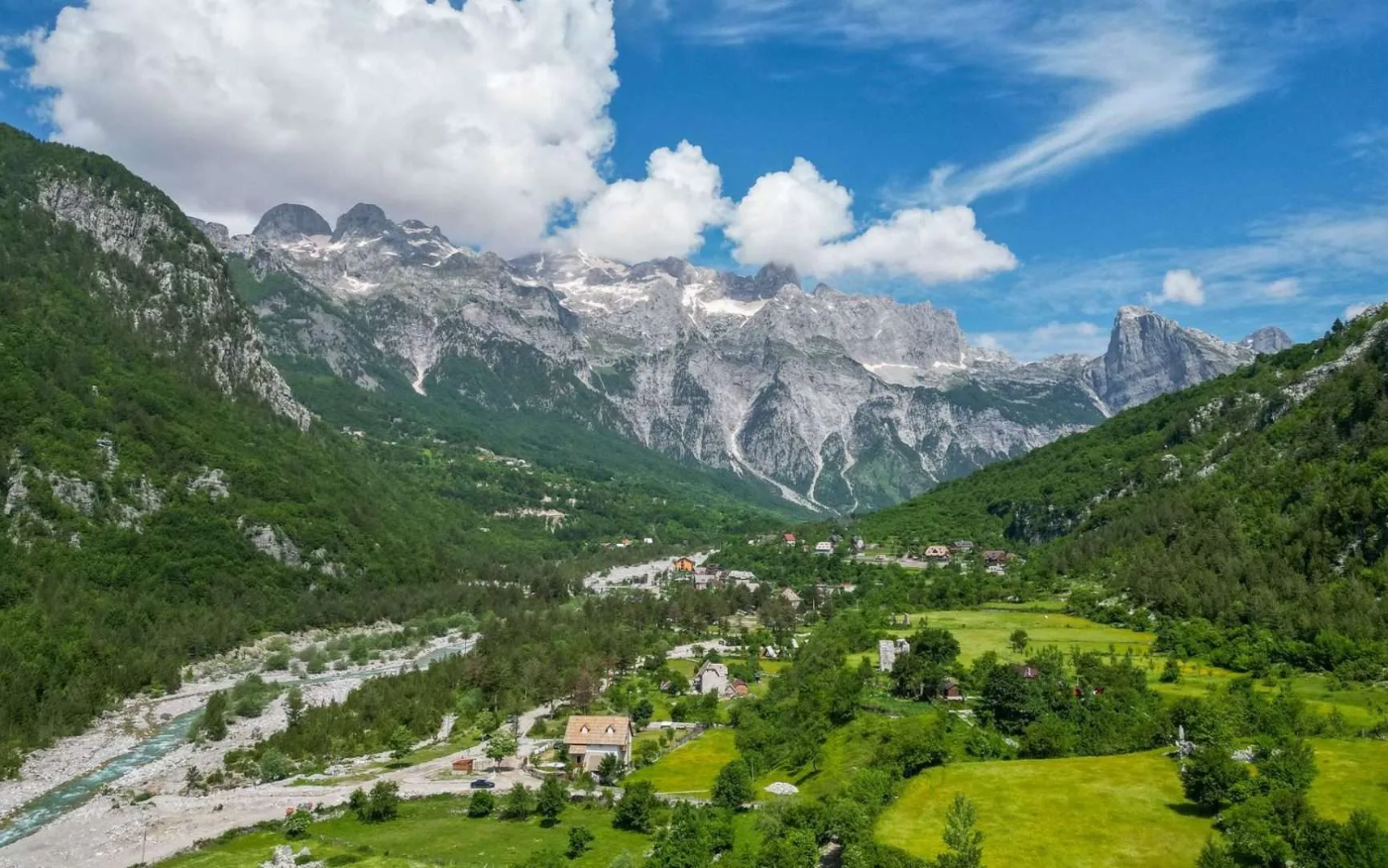
Theth (Thethi) is a mountain village in the Albanian Alps, known locally as the Bjeshkët e Namuna, the "Accursed Mountains," set inside Theth National Park about 76 km northeast of Shkodra, roughly 2.5 hours by road on a now fully paved mountain route. It is the single most accessible gateway into Albania's Alpine region, the range shared with Montenegro and Kosovo, and it has become the launch point that introduced international hikers to these mountains in the first place. Most travellers spend one to three nights, walking to the Blue Eye of Theth and Grunas Waterfall, visiting the historic stone church and Lock-in Tower, and, for the more ambitious, hiking the legendary Valbona Pass on to the neighbouring valley. Best months: May to October, when mountain trails are clear and guesthouses are open.
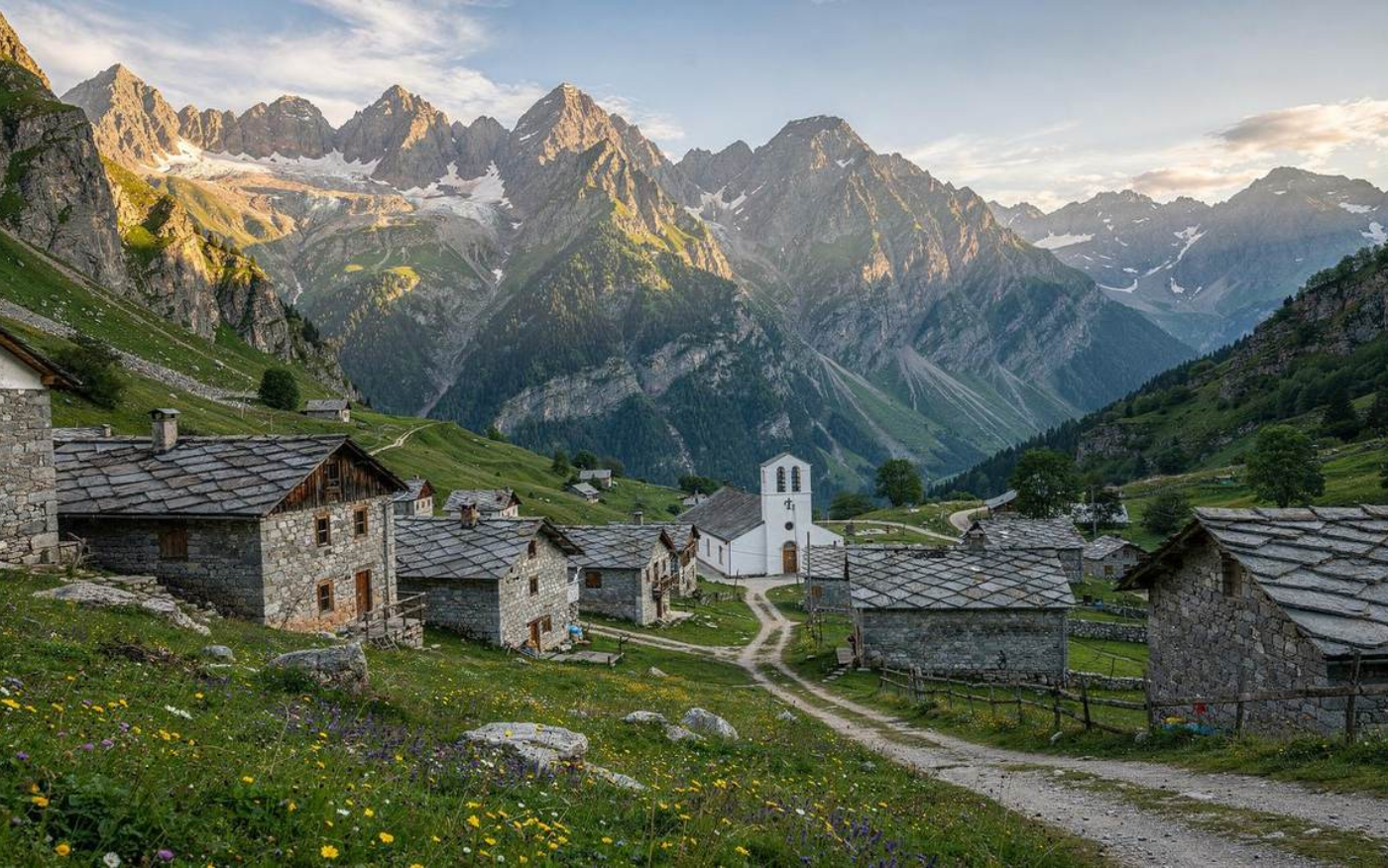
The Accursed Mountains are one of the last genuinely wild mountain ranges left in Europe, rising above 2,600 metres, cut by deep river valleys and glacial lakes, forested in beech and pine lower down and turning to bare limestone above the treeline. Theth sits at the heart of it, a scattering of stone houses and traditional bujtina guesthouses on a green valley floor, ringed on every side by peaks that seem to close the world out entirely.
What makes Theth different from a typical mountain village is how much rewards you without ever leaving on a multi-day trek. The valley holds its own signature sights within walking distance, a turquoise spring, a dramatic waterfall, a 19th-century stone church, and a genuinely eerie relic of Albania's blood-feud past, so a single overnight can already feel complete. For travellers with more time or ambition, Theth is also one end of the single most famous day hike in the Balkans, the crossing to Valbona over a 1,800-metre pass, a route that has quietly become the reason many international hikers come to Albania at all. For travellers building an Albanian Alps itinerary, Theth is generally the better base of the two valleys if you only have one night, since it holds more to explore directly around the village itself.
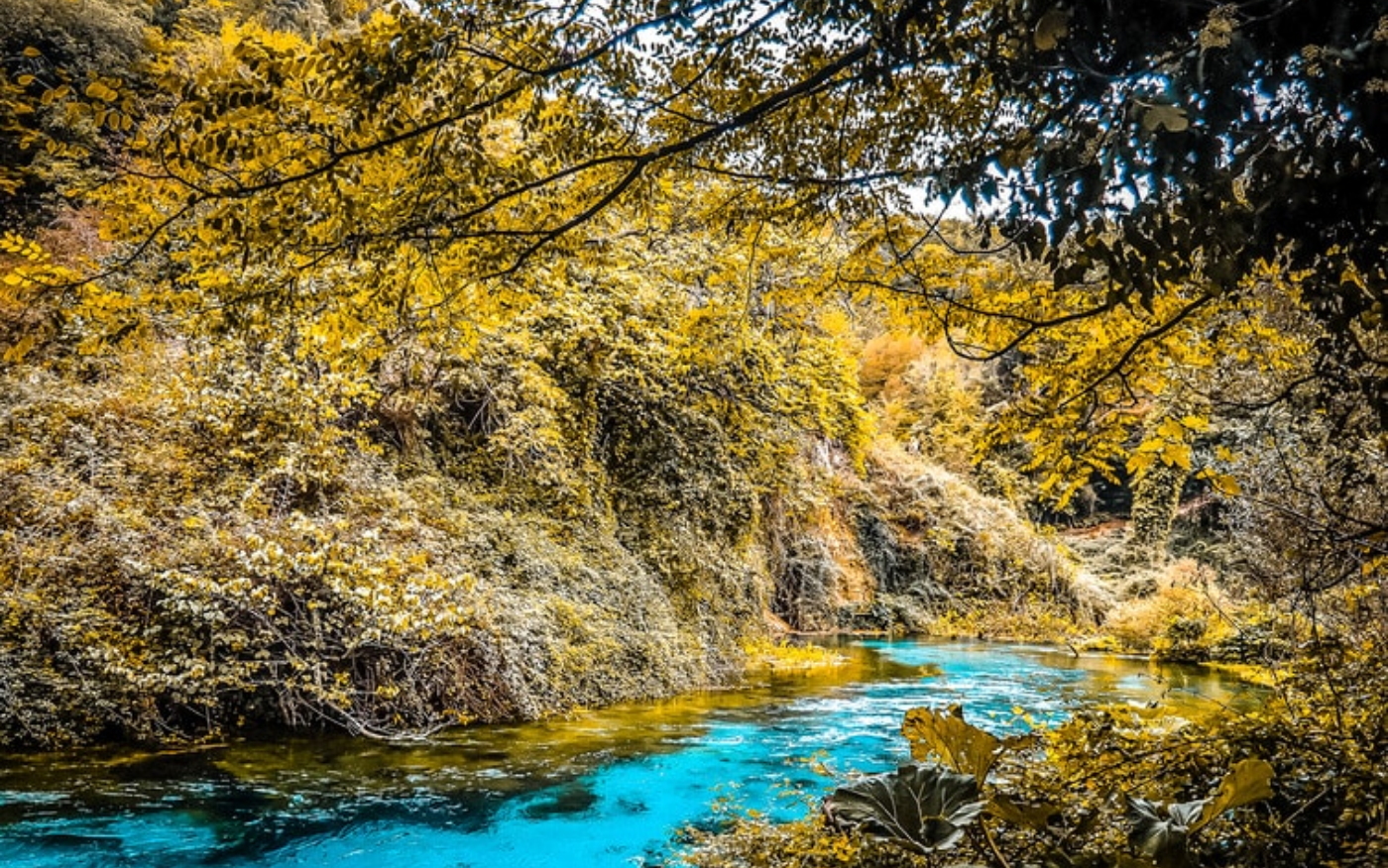
The Blue Eye of Theth (Syri i Kaltër i Thethit) is a vivid blue-and-turquoise spring pool fed by mountain water and framed by small waterfalls, set deep in a forested gorge down the valley near the hamlet of Nderlysaj. It's the mesmerizing, almost mythological-sounding centrepiece of a visit to Theth, and the water is cold enough to genuinely take your breath away on a hot summer day, exactly the reward you want after the walk in.
The hike there and back runs roughly six hours round trip from the southern end of the village near the Lock-in Tower, mostly flat, following the gorge past wooden bridges, farmland dotted with grazing goats, and long stretches of empty trail with the Accursed Mountains looming overhead the entire way. Trails are not always clearly signed, so a downloaded offline map through an app like Maps.me or AllTrails is genuinely useful, and many hikers combine the walk with a stop at Grunas Waterfall along the way, since the two paths run close together for part of the route.
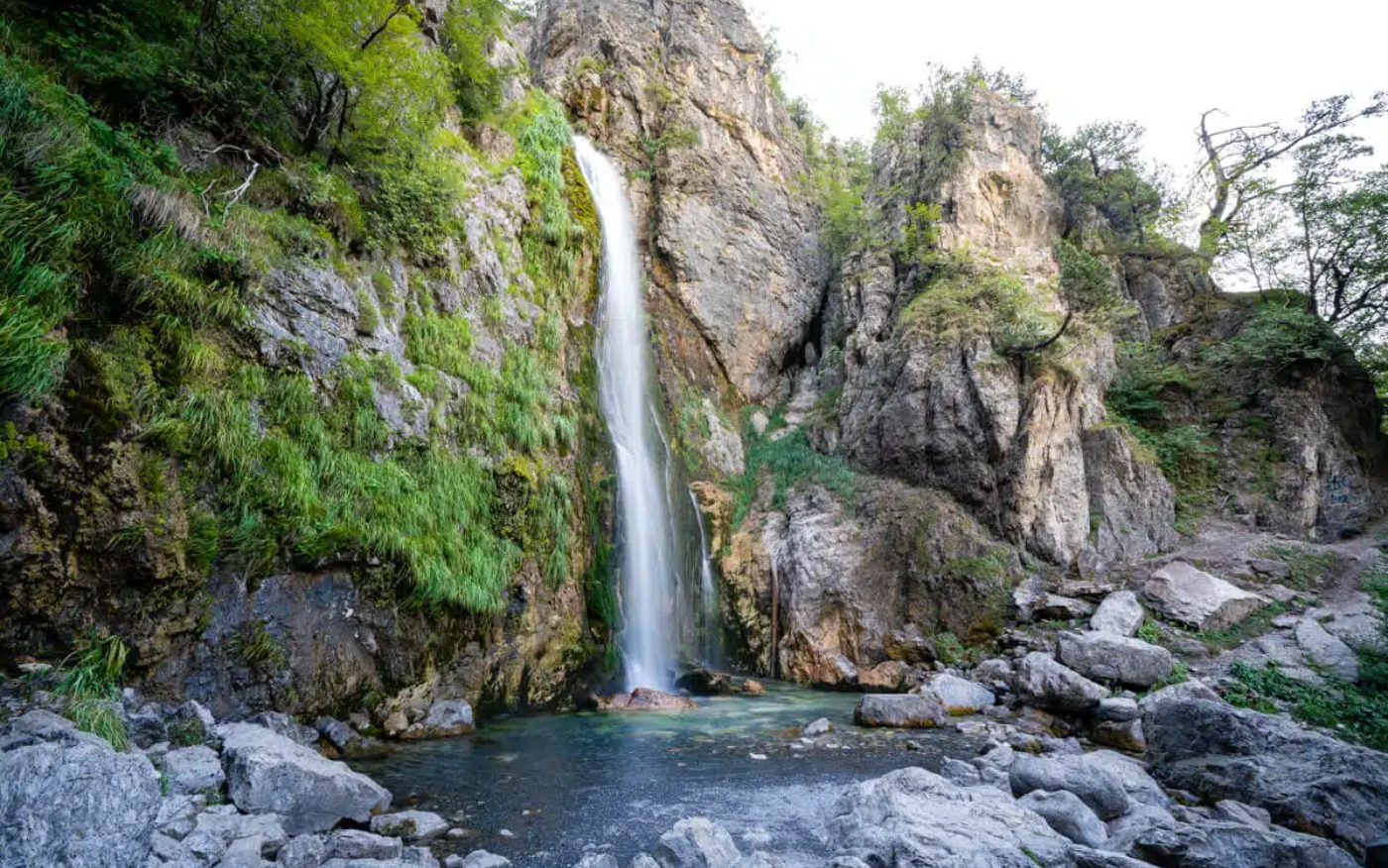
Grunas Waterfall, about 20 minutes on foot from the village centre, is the most accessible of Theth's signature sights, a roughly 25 to 30 metre cascade dropping through limestone rock into a pool at the valley floor. The path is well-marked, passing through the gorge section of the Grunas River with a few short scrambles over rock, and it's a natural first walk to get a feel for the valley without committing to a full day.
The waterfall is at its most dramatic in spring and early summer, when snowmelt feeds it at full force, and noticeably thinner by late August. For hikers who want to go further, the Grunas Canyon extends beyond the falls into a half-day walk that narrows dramatically in its upper section, with rock walls rising 50 to 60 metres on either side, requiring some scrambling and occasional wading when water levels are low.
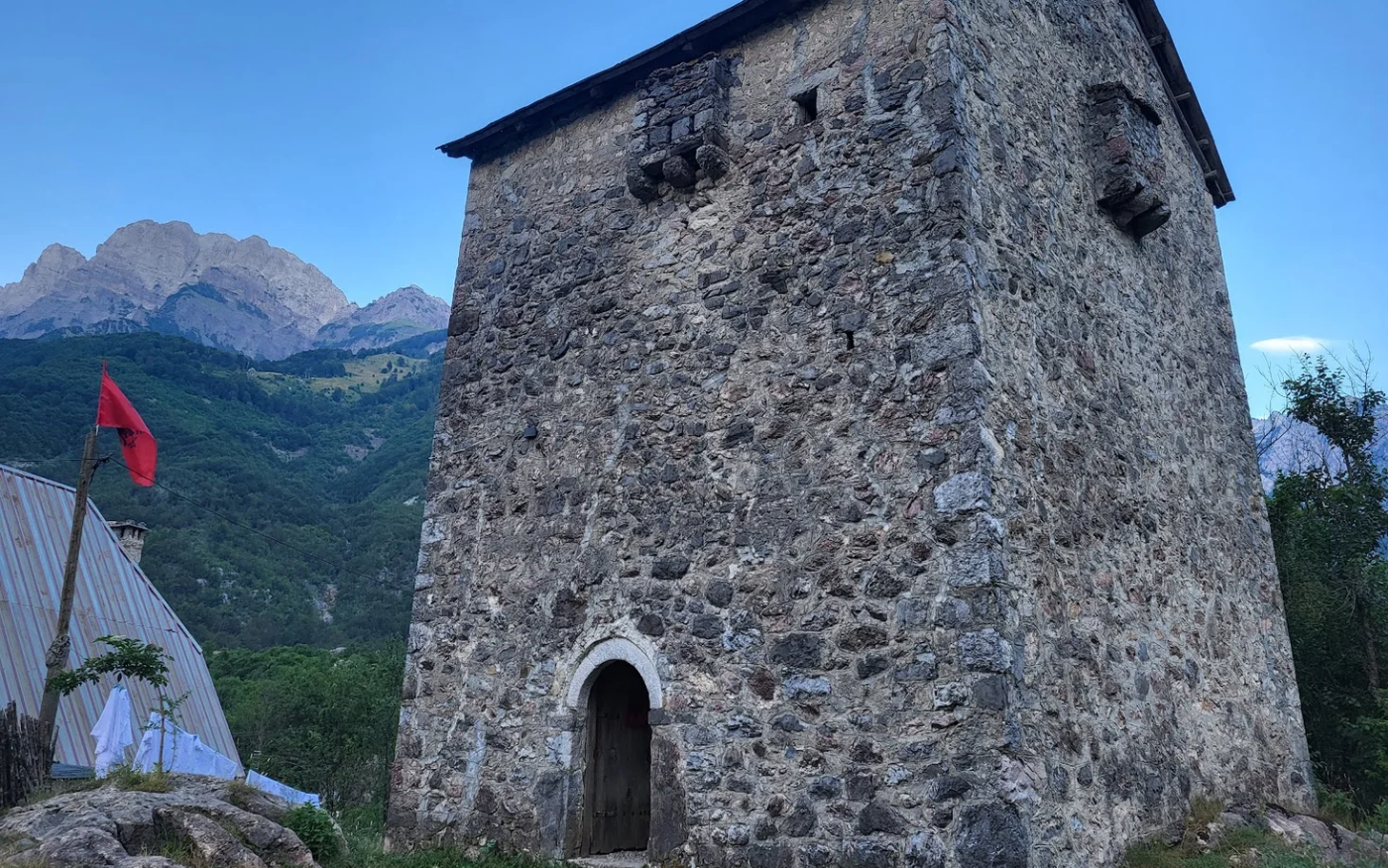
At the southern end of the village stand Theth's two most photographed landmarks, sitting close together and usually visited as a pair.
Theth's Church, a small stone Catholic church built around 1892, is the visual symbol of the valley, a modest building with a shingled bell tower and conical roof standing alone on a green meadow, mountains rising directly behind it.
The Lock-in Tower (Kulla e Ngujimit) sits nearby, a stone tower historically used to shelter men from blood feuds under the Kanun, Albania's traditional customary law, where a family in a feud could lock a male relative inside for his own protection, sometimes for months or years at a time. It's a genuinely striking, slightly eerie piece of living history, and one of the clearest physical reminders in the country of just how recently these mountain traditions shaped everyday life here.
Both landmarks sit at the trailhead for the Blue Eye and Grunas hikes, so most visitors naturally pass by both on their way out of the village.
For travellers with an extra day and a reasonable level of fitness, the Theth to Valbona Pass hike is the single most celebrated trek in the Albanian Alps, and often the very reason international hikers come to this corner of the country at all. The trail climbs from the valley floor to the Valbona Pass at around 1,800 metres, opening onto sweeping views of the Accursed Mountains, before descending into the neighbouring Valbona valley on the other side.
Covering roughly 13 to 17 km depending on the exact route, the hike typically takes 5 to 7 hours and can be done independently without a guide, following a well-trodden and increasingly well-marked trail, or arranged with a local guide and guesthouse-to-guesthouse luggage transfer for a more relaxed pace. Most hikers agree it's better to start from Theth rather than Valbona if only doing one direction, since Theth simply holds more to see and do before and after the crossing. Together, Theth and Valbona also form the classic first stage of the multi-day Peaks of the Balkans trail, which continues on through Montenegro and Kosovo for hikers with more time.
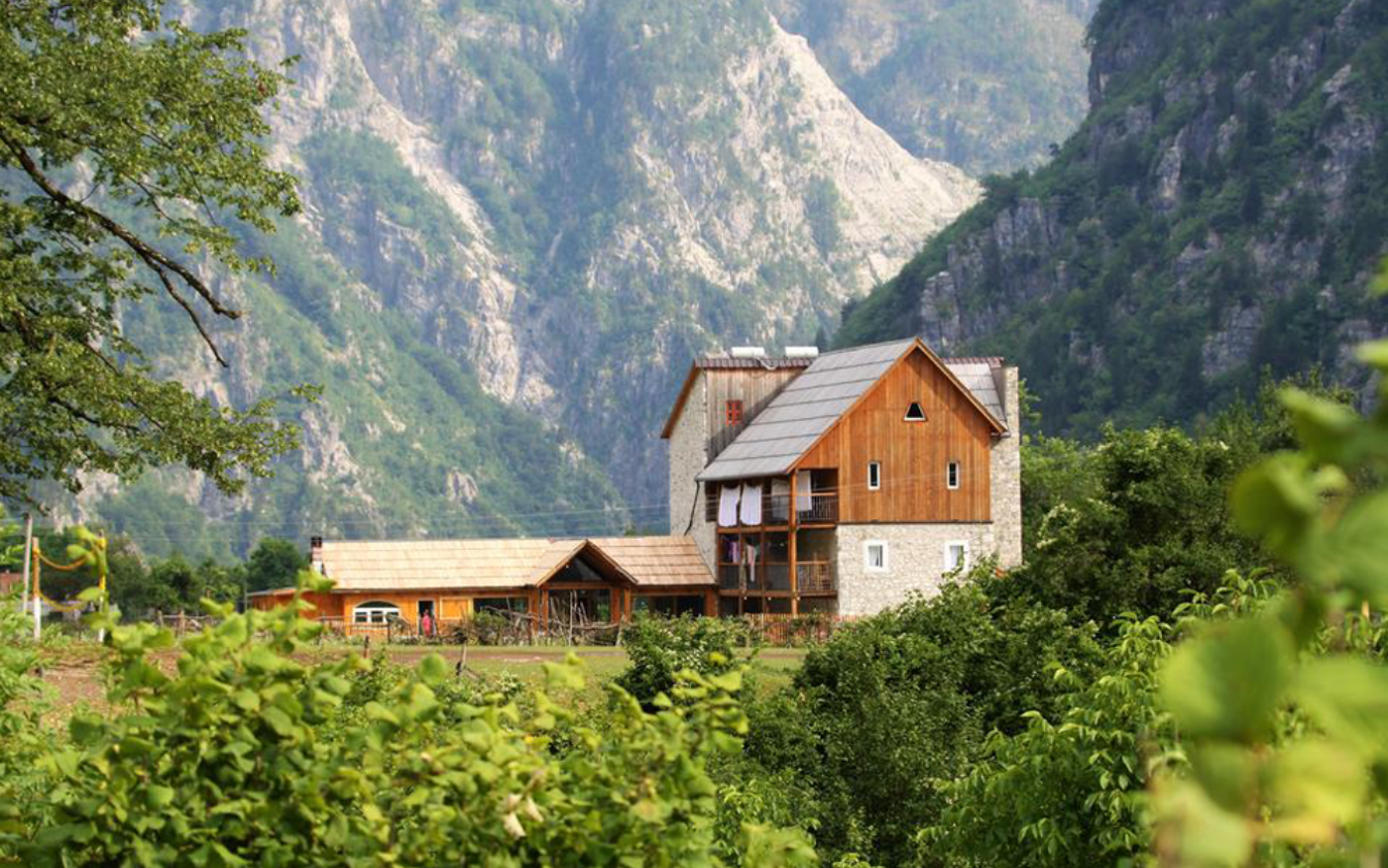
Almost all dining in Theth happens through the valley's family-run guesthouses, or bujtina, most of which offer half-board with home-cooked, farm-to-table meals: fresh bread, local cheese, seasonal vegetables, and hearty mountain dishes like byrek and slow-cooked meat, often served family-style. There are few standalone restaurants here, so choosing a well-regarded guesthouse is as much a decision about where you'll eat as where you'll sleep, and it's one of the most genuinely memorable parts of a Theth stay.
May–June: the season's opening stretch, with guesthouses reopening, waterfalls at their fullest from snowmelt, and green, lush valley scenery.
July–August: the busiest and driest months, warm days, cooler mountain evenings, and the most reliable window for the Valbona Pass hike, though Grunas Waterfall noticeably thins out by late August.
September–October: clear air, comfortable hiking temperatures, and thinner crowds, a strong choice for travellers who prefer the trails quieter.
November–April: most guesthouses close, and snow can make the mountain road and higher trails impassable; Theth is not a realistic destination outside the May-to-October season for most travellers.
From Shkodra: about 76 km, roughly 2.5 hours by road on a route now fully paved the entire way, a major improvement from the rough gravel road of only a few years ago. Regular minibuses run from Shkodra in season, and private transfers or guided tours are the more comfortable option, particularly for travellers wanting to combine the trip with other Alps highlights.
From Tirana: budget 4 to 5 hours total via Shkodra, either self-driven, by public bus connection, or as part of a full-day guided tour that also covers Shkodra along the way.
From Valbona: via the Theth to Valbona Pass hike, roughly 5 to 7 hours on foot, or the longer road route via the Lake Koman Ferry and Fierzë for travellers who prefer not to hike.
Getting around the valley: entirely on foot. Theth itself is small and walkable, but the Blue Eye, Grunas Waterfall, and Valbona Pass trailheads all require hiking, so proper footwear and a downloaded offline map are essential.
Family-run guesthouses, known locally as bujtina, are the standard and, in most cases, the only real accommodation option in the valley, typically offering half-board with home-cooked meals included. Guesthouses near the Lock-in Tower and church at the southern end of the village are the most convenient base if you're planning to hike to the Blue Eye, since they shave meaningful time off what is already a long round trip. Booking ahead in July and August is strongly recommended, as the most popular guesthouses fill up during peak hiking season.
One night: enough for the Grunas Waterfall walk, a visit to the church and Lock-in Tower, and a home-cooked dinner at your guesthouse, a satisfying if efficient introduction to the valley.
Two nights: add the full Blue Eye hike, giving enough time to properly explore the gorge without rushing back for a departure.
Three nights or more: add the Valbona Pass hike as a full day, continuing on to explore the neighbouring Valbona valley before returning to Shkodra or Tirana, the complete Albanian Alps experience.
We build private and small-group trips into Theth National Park year-round, licensed local guides, guesthouse selection near the trailheads, the Blue Eye and Grunas Waterfall hikes, and full support for the Valbona Pass crossing with luggage transfer. [Browse our Albania tours] · [See Shkodra hotels] · [Request a custom itinerary]
Yes. Theth is widely considered one of Albania's most striking mountain destinations, offering a turquoise natural spring, a dramatic waterfall, a historic stone church, and Albania's most famous long-distance hiking trail, all set inside a genuinely wild stretch of the Accursed Mountains.
Theth is known for the Blue Eye of Theth, a vivid turquoise spring pool, Grunas Waterfall and Canyon, the 19th-century Theth Church, the historic Lock-in Tower tied to Albania's blood-feud tradition, and the Valbona Pass hike, one of the Balkans' most celebrated day treks.
About 76 km, roughly 2.5 hours by car, minibus, or private transfer on a now fully paved mountain road.
Yes, guided day tours run from both Shkodra and Tirana, typically covering the church, Lock-in Tower, and Grunas Waterfall. However, an overnight stay is strongly recommended if you want to also hike to the Blue Eye or attempt the Valbona Pass, since both require a full day on their own.
Roughly six hours round trip from the southern end of the village near the Lock-in Tower, mostly flat but long, following the gorge past Nderlysaj. Many hikers combine it with a stop at Grunas Waterfall along the way.
The trail covers roughly 13 to 17 km and typically takes 5 to 7 hours, climbing to around 1,800 metres. It requires good fitness and proper footwear but no technical climbing experience, and can be done independently or with a local guide.
May to October, when mountain trails are clear and guesthouses are open. Late May and June offer the fullest waterfalls thanks to snowmelt, while July and August are the most reliable window for the Valbona Pass crossing.
Yes. Theth is a well-established hiking destination with a strong tradition of Albanian mountain hospitality. The main practical considerations are poorly marked trails in places, so an offline map is essential, and limited mobile signal once you leave the village centre.
