

Vlora (Vlorë), sometimes anglicised as Valona, is a port city in southwestern Albania, set at the point where the Adriatic Sea narrows into the Strait of Otranto and meets the Ionian, about 150 km south of Tirana, roughly 2.5 to 3 hours by road. It is the birthplace of modern Albania, where Ismail Qemali declared independence from the Ottoman Empire in 1912, and it now serves as the northern gateway to the Albanian Riviera, the last real city before the coastal road climbs over the Llogara Pass toward Palasa, Dhermi, and Himara. Most travellers spend one to two nights, visit Flag Square and the Independence Museum, climb to Kanina Castle, walk the Lungomare promenade, and take a boat trip to Sazan Island and the Karaburun Peninsula. Best months: May to June and September, for warm sea temperatures without peak-August crowds.
Vlora is not a postcard village, and it doesn't pretend to be. It's a real, working city of around 66,000 people, with a working port, a genuine old town, and a history that runs far deeper than tourism brochures usually credit. This is where, on 28 November 1912, Ismail Qemali stood in a modest two-storey wooden house and read out Albania's declaration of independence, making Vlora, for a brief period, the country's first capital. Fortified port activity here traces back to the 6th century BC, and the city later spent seven decades, from 1346 to 1417, as capital of the independent Christian Principality of Valona, whose rulers married into Byzantine and Serbian noble families.
What makes Vlora essential on a modern itinerary is its position. This is where the Adriatic ends and the Ionian begins, where the limestone wall of the Karaburun Peninsula rises straight out of the sea, and where the Albanian Riviera officially starts before running south over the Llogara Pass to Dhermi, Himara, and Saranda. For travellers building a luxury Albania itinerary, Vlora is increasingly a destination in its own right too, with a new marina development and an international airport opening the south to direct flights, rather than purely a stopover on the way to the beach.
Flag Square (Sheshi i Flamurit) is Vlora's symbolic and social heart, marked by a monumental Independence Monument at whose centre stands a statue of Ismail Qemali, Albania's first Prime Minister. The square underwent a full renovation in 2023 and is now paved in pink marble, making it one of the most photographed spots in the city.
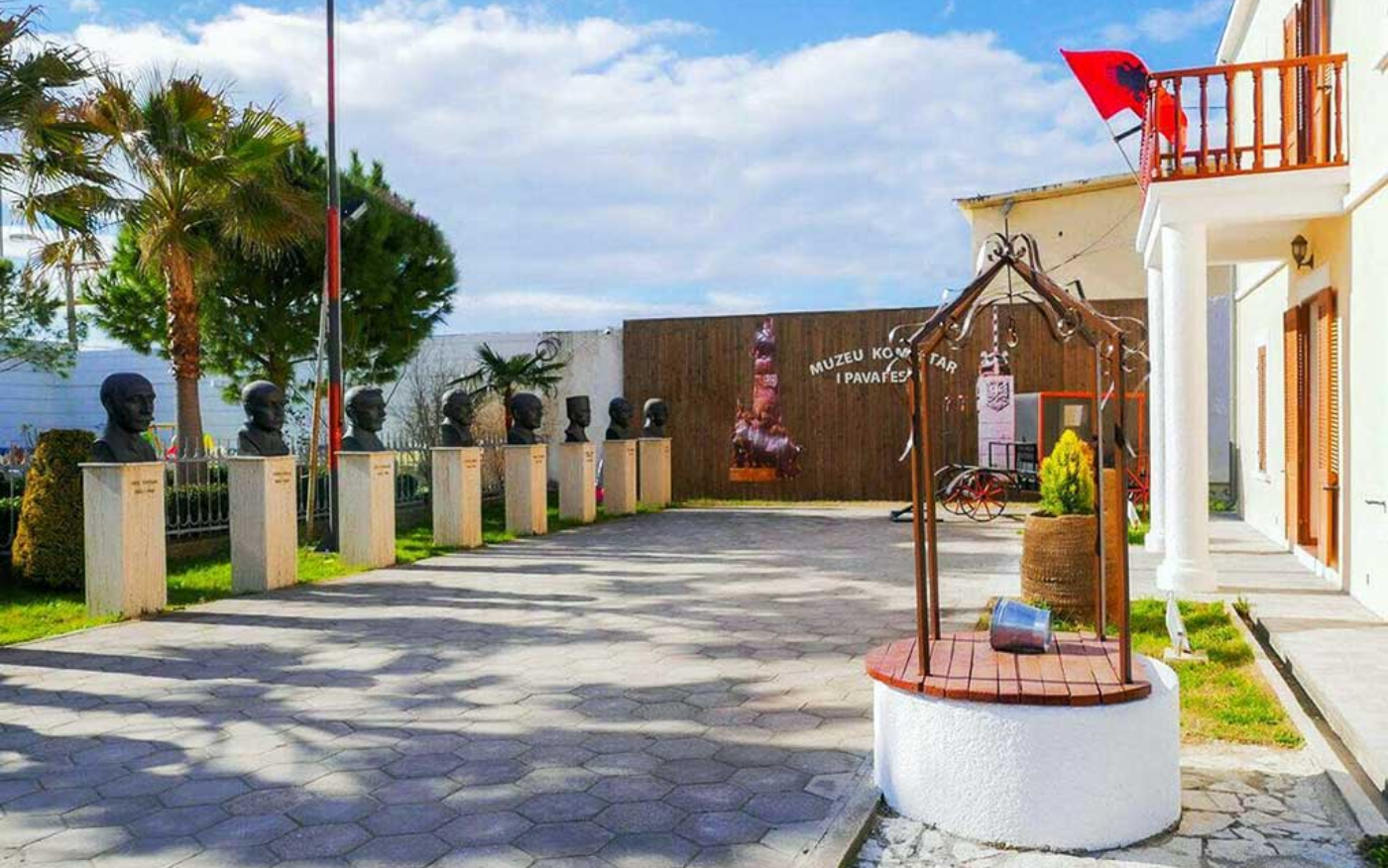
A short walk toward the port, the Independence Museum occupies the original building where Albania's first national assembly met in 1912. Founded in 1936, it was the very first museum established in Albania, and it tells the story of the declaration of independence through original documents, photographs, and period artefacts. History-focused visitors typically pair the two sites into a single, easy stop.
Practical note: the museum is generally open standard daytime hours with a modest entry fee; confirm current hours locally, as they can shift seasonally.
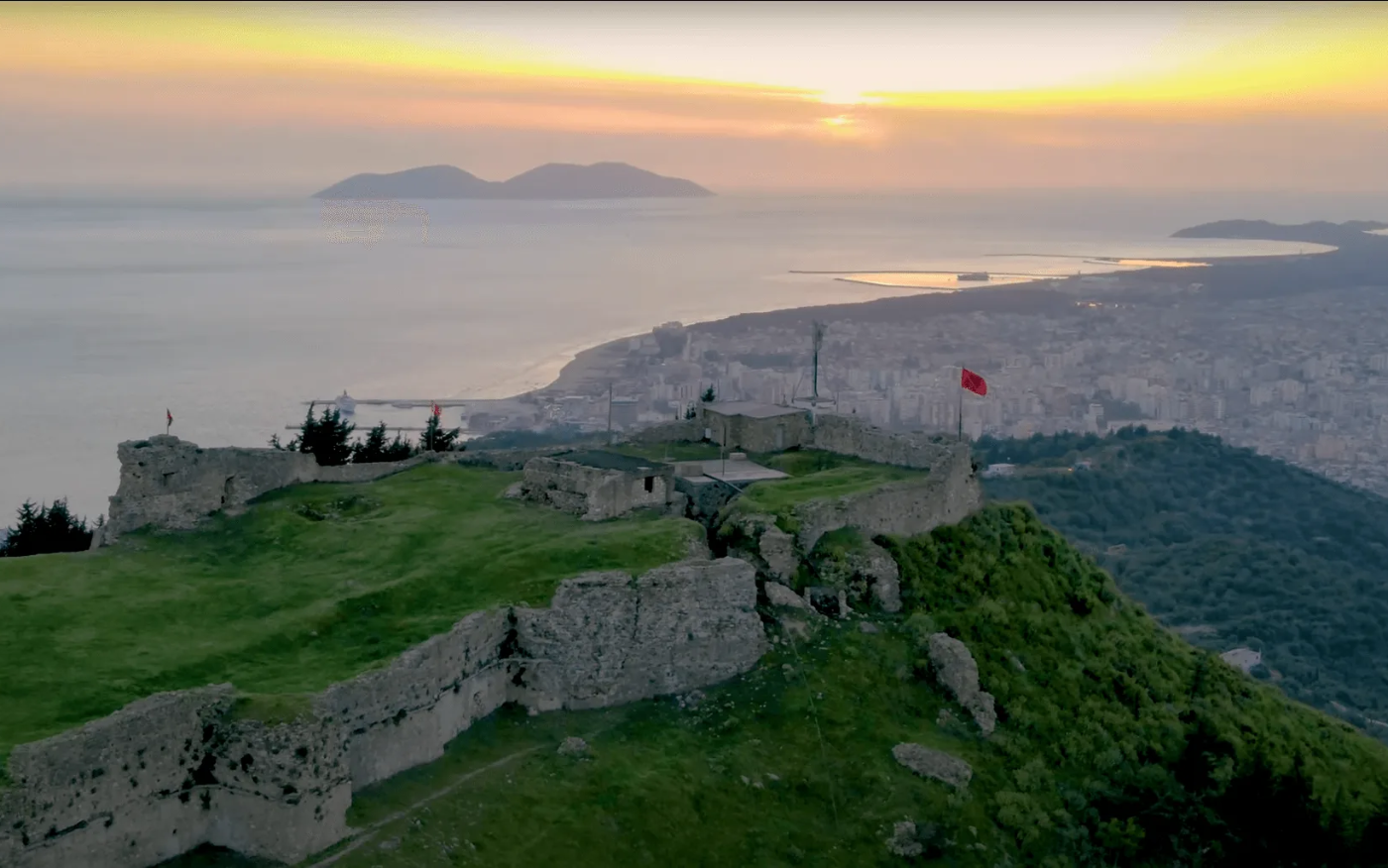
Above the city, on Mount Shushica at around 380 metres, Kanina Castle offers the definitive panorama over Vlora, its bay, and the island of Sazan in the distance. The fortress traces its origins to a 4th-century-BC Illyrian settlement, later rebuilt by the Byzantine Emperor Justinian I around 500 AD, and it went on to serve as a stronghold of the medieval Principality of Valona. Fittingly for a country where history keeps circling back to the same names, the castle also hosted the wedding of national hero Skanderbeg to the daughter of Prince Gjergj Arianiti.
Little of the original walls survive intact, but the setting more than compensates: sweeping views stretch from the city rooftops out across the bay to Sazan Island, particularly striking at sunset. Entry is generally inexpensive, around 300 lekë, and a taxi from the centre is the easiest way up if you'd rather not tackle the climb on foot in summer heat.
The single best full-day excursion from Vlora is a boat trip to Sazan Island and the Karaburun Peninsula, together protected as the Karaburun-Sazan Marine National Park, Albania's first marine protected area. Sazan was a closed Soviet and later Albanian naval base throughout the Cold War, riddled with bunkers and tunnels built to withstand nuclear attack, and it only opened to civilian visitors after 2015, giving it a genuinely rare, untouched Mediterranean character after decades of isolation.
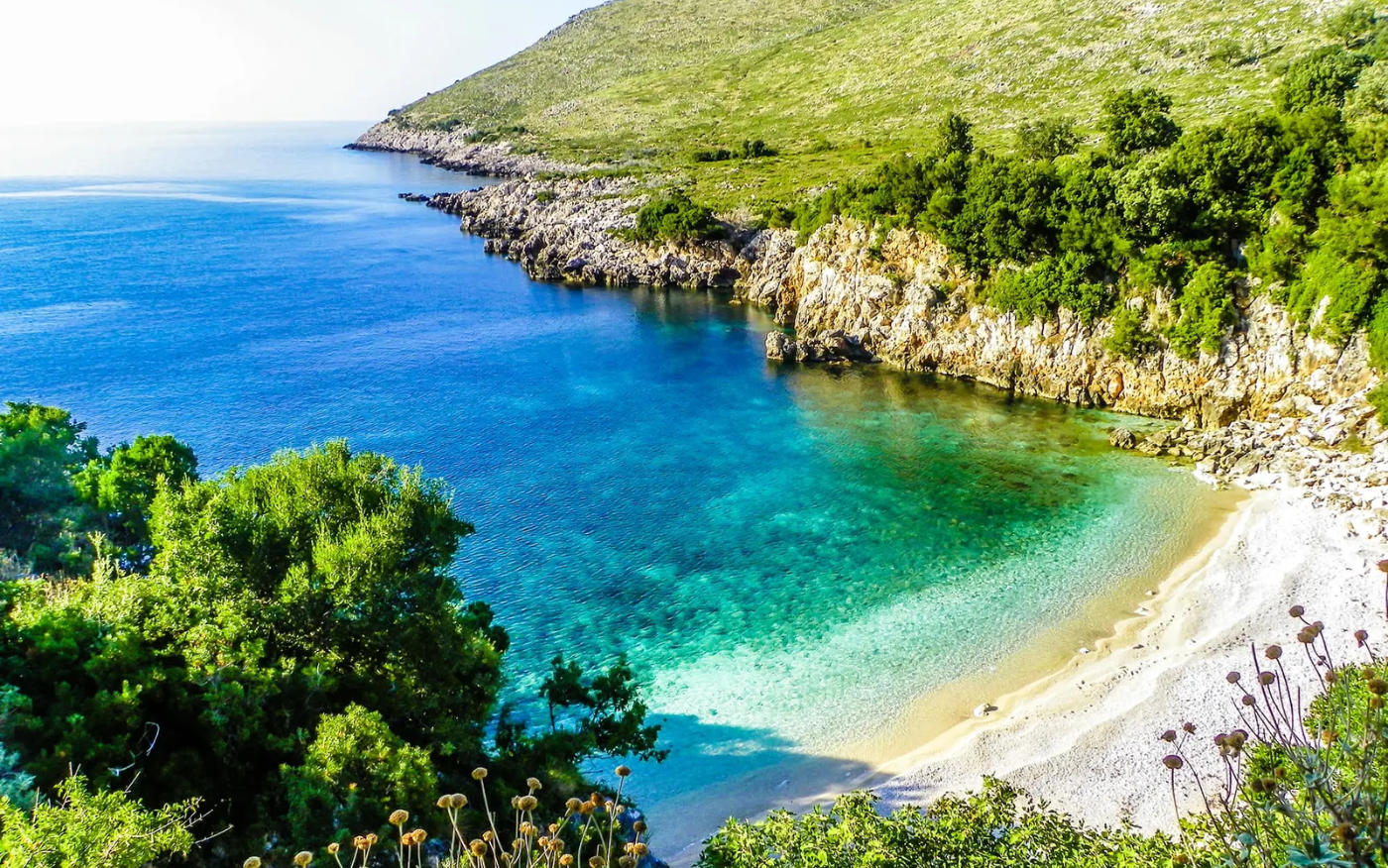
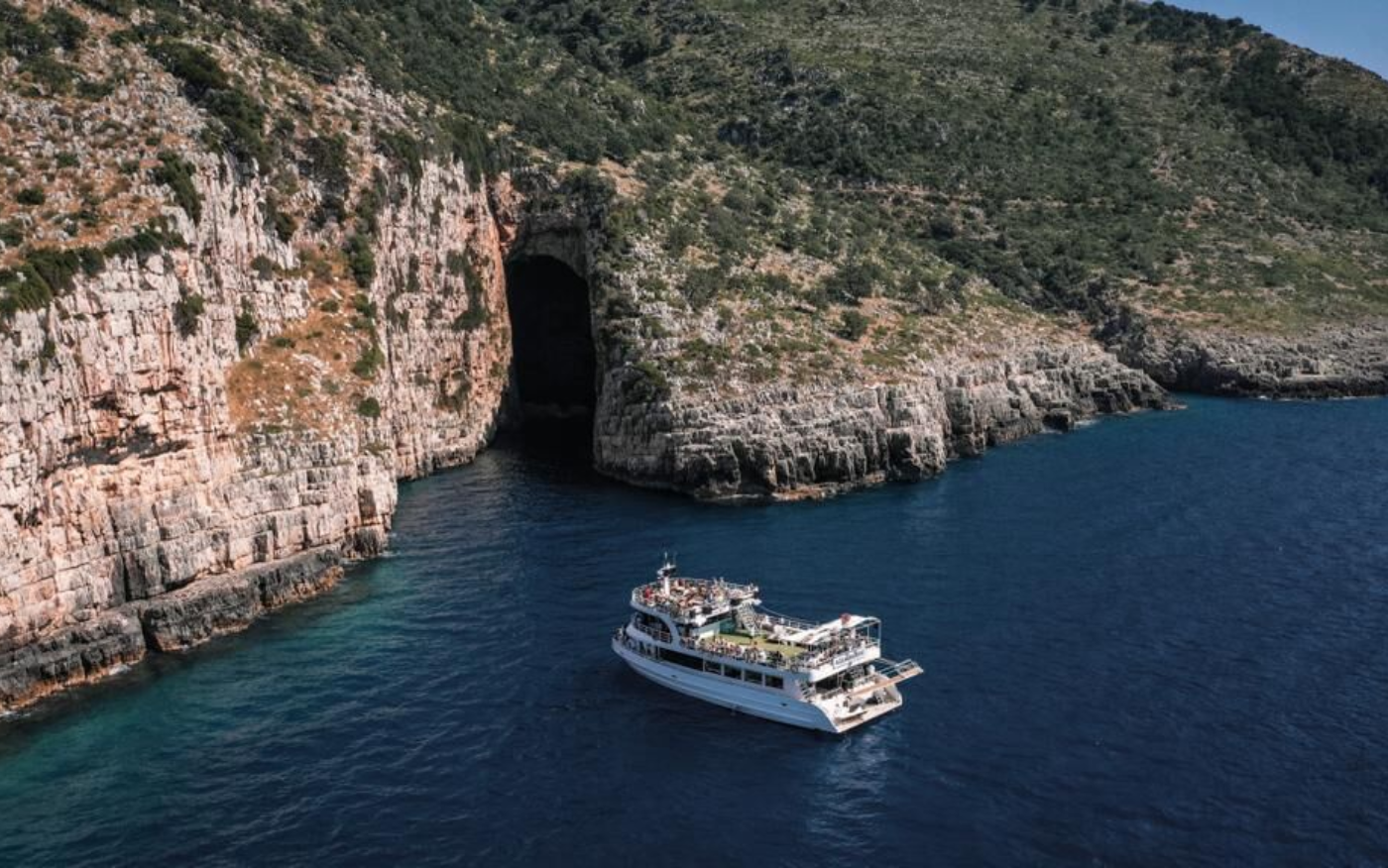
Boats typically depart from Vlora's Old Beach or the port, running a loop that takes in Sazan Island, the Cave of Haxhi Ali, and the dramatic sea cliffs and pebble coves of the Karaburun Peninsula, with stops for swimming and snorkelling in some of the clearest water on the Albanian coast. Tours run roughly €30 to €80 per person depending on group size and length, and operate mainly in the warmer months, so it's worth booking a day or two ahead in July and August.
A little inland from the seafront, Vlora's Old Town is compact, just a central square and a couple of restored streets, but full of character after a recent renovation, and worth an unhurried wander. The Muradie Mosque, built in 1542 by the same architect responsible for Istanbul's grand Suleymani Mosque, is a rare surviving 16th-century Ottoman building still active as a place of worship today and protected as a cultural monument.
Down by the water, the Lungomare is Vlora's palm-lined waterfront promenade, running from Independence Park toward the Uji i Ftohtë district, and it's the liveliest place in the city come evening, filled with families, cyclists, and café tables. The city's two main beaches, Plazhi i Ri ("New Beach") south of the port and Plazhi i Vjetër ("Old Beach") to the northwest, both sit within easy walking distance of the centre.
Vlora makes an easy base for exploring the wider county.
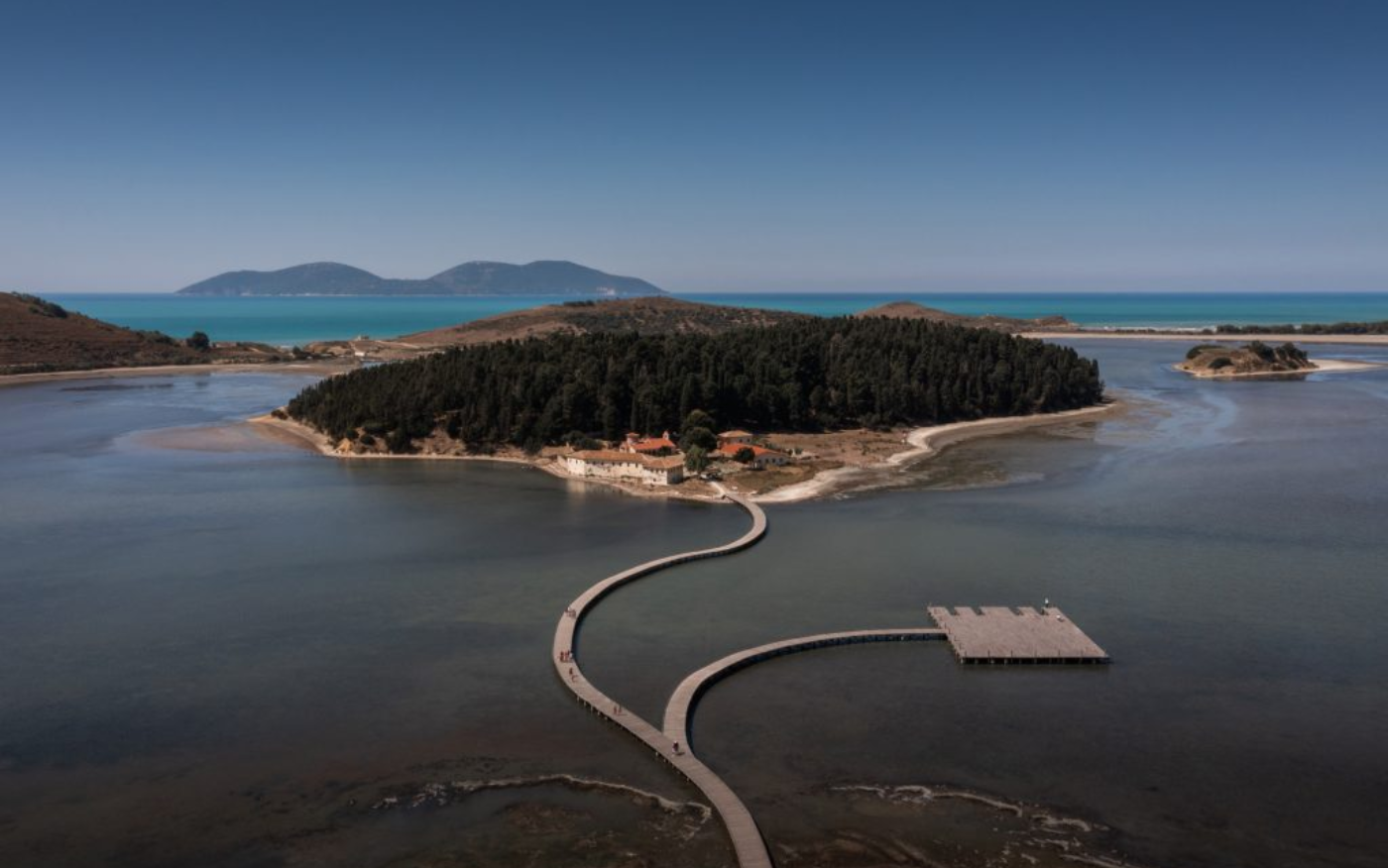
Zvernec Monastery, a 13th-century monastery built on a small island in the Narta Lagoon, reached via a long wooden footbridge, one of the most atmospheric short trips from the city and a favourite for sunset visits.
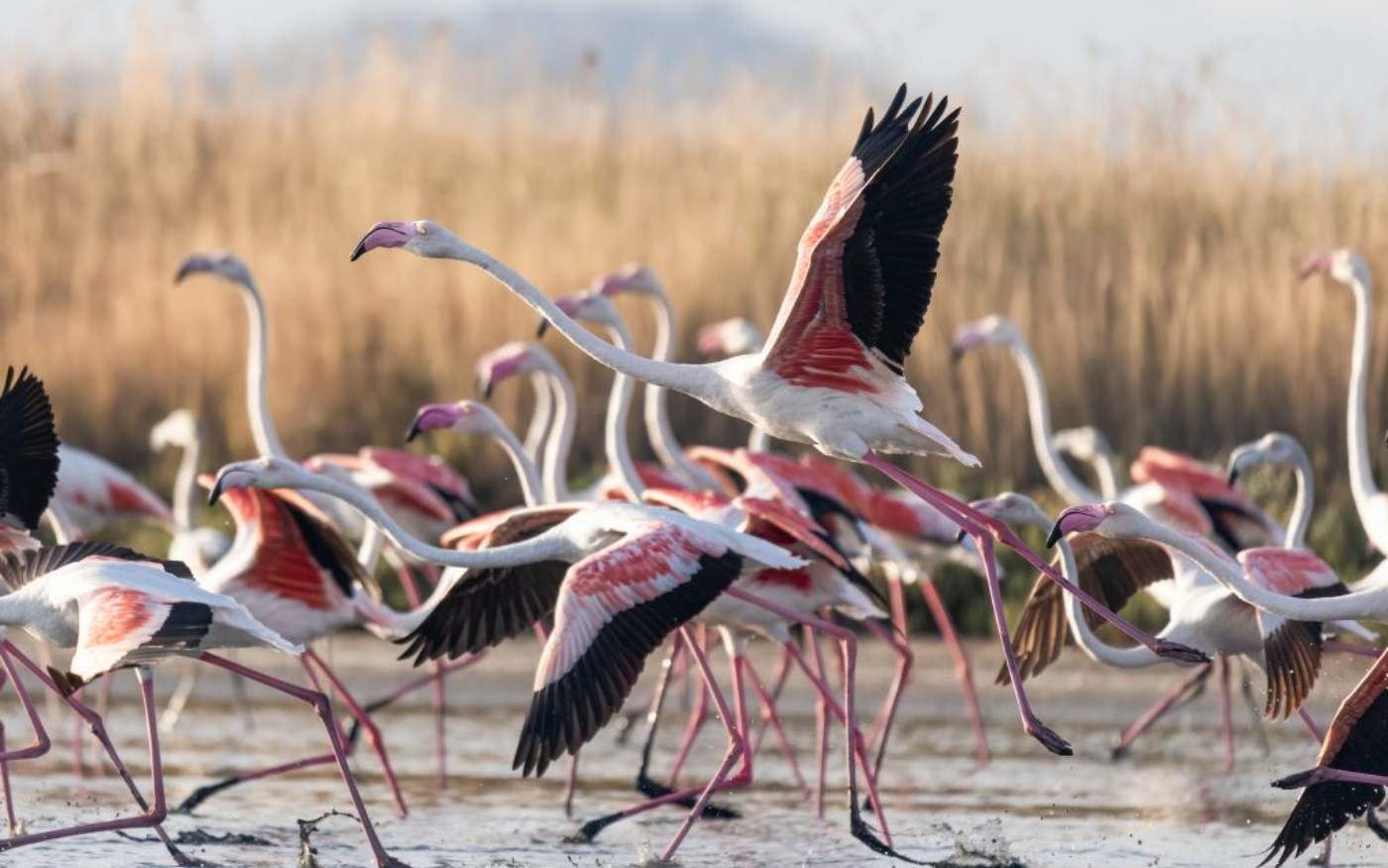
Narta Lagoon, the wetland surrounding Zvernec, home to flamingos and a wide range of birdlife, and a peaceful contrast to the city's busier waterfront.
Llogara Pass and Llogara National Park, the dramatic mountain road that climbs south out of Vlora before dropping down to the Riviera beaches, with hiking trails and panoramic viewpoints over the coastline.
Apollonia, the ancient Greek and Roman archaeological park near Fier, reachable within about an hour, a natural pairing for travellers combining coast and antiquity.
Seafood is the obvious strength here, best enjoyed at a table along the Lungomare promenade with the harbour in view. Beyond the catch of the day, look for dishes from the Labëri culinary tradition of the surrounding region, slow-cooked lamb, arapash (a cornmeal dish similar to polenta, mixed with cheese and butter), and byrek. Raki is the standard way to start a meal, as it is across most of Albania.
May–June: warm sea temperatures, green surroundings, and the best balance of good weather and manageable crowds before the peak summer rush.
July–August: hot and the busiest period, as Vlora fills with both domestic travellers and those passing through en route to the Riviera. Boat tours to Sazan run daily, but book ahead.
September: still warm enough to swim, with noticeably thinner crowds and lower prices than August, arguably the best all-round month to visit.
October–April: quiet and inexpensive, with fewer boat tours running to Sazan and the Karaburun coast, but the city's history and old town remain fully open and rewarding.
From Tirana: about 150 km, roughly 2.5 to 3 hours by car via the A2 motorway and SH8. Regular buses and furgons run from Tirana throughout the day, and a private transfer is the most comfortable option, especially if you're continuing straight on to the Riviera the same trip.
From Tirana International Airport (TIA): roughly 3 hours by private transfer.
From Vlora International Airport: a newer airport has opened direct international flights to the south, cutting travel time significantly for travellers headed straight to Vlora or the Riviera without transiting Tirana.
From Saranda: about 2 hours north along the Riviera coast road, over the Llogara Pass, one of Albania's most scenic drives.
Getting around town: on foot along the waterfront and old town; taxis and rental cars cover Kanina Castle and day trips further afield, while furgons (minibuses) connect Vlora with surrounding towns.
The seafront near the Lungomare and the New Beach area puts you closest to restaurants, the promenade, and the port, and suits travellers who want an easy walk to dinner and a morning coffee by the water. The Old Town, a short walk inland, offers a quieter, more character-filled base with easy access to Flag Square and the Independence Museum. With a new five-star marina development underway, Vlora's upper end of accommodation is also expanding, making it an increasingly credible base for a longer stay rather than a single overnight stop.
One day: Flag Square, the Independence Museum, a walk along the Lungomare, and a climb up to Kanina Castle for sunset. Doable, but a full day.
Two days: add a full-day boat trip to Sazan Island and the Karaburun Peninsula, plus time in the Old Town and a proper seafood dinner.
Three days or more: add Zvernec Monastery and the Narta Lagoon, a drive over the Llogara Pass, or use Vlora as a base before continuing south along the Riviera.
We build private and small-group Vlora itineraries year-round, licensed local guides, hotel selection along the Lungomare or in the Old Town, Sazan Island and Karaburun boat tours, and full routing onward down the Albanian Riviera. [Browse our Albania tours] · [See Vlora hotels] · [Request a custom itinerary]
Yes. Vlora is the birthplace of Albanian independence, home to a hilltop castle with sweeping bay views, a rare Cold War-era island now open to visitors, and the northern gateway to the Albanian Riviera, all in a real working city rather than a purely touristic village.
Vlora is known as the site where Ismail Qemali declared Albania's independence in 1912, for Kanina Castle overlooking Vlora Bay, for boat trips to Sazan Island and the Karaburun Peninsula marine park, and for its position as the starting point of the Albanian Riviera.
About 150 km, roughly 2.5 to 3 hours by car, bus, or private transfer via the A2 motorway and SH8.
It's possible but ambitious given the distance. Most travellers spend at least one night, since the city's real highlights, Kanina Castle at sunset and a full-day boat trip to Sazan Island, are hard to fit into a rushed single day.
Entry is inexpensive, generally around 300 lekë, payable at the site; some sources describe it as free with only minimal formal ticketing, so it's worth confirming current arrangements locally.
May, June, and September offer the best balance of warm weather, swimmable sea temperatures, and lighter crowds than the peak July–August period.
Yes. Sazan Island, a former Cold War naval base only opened to civilian visitors after 2015, is reached by boat tour from Vlora's Old Beach or port, typically combined with the Karaburun Peninsula's sea caves, running mainly in the warmer months.
Yes. Albania has low rates of crime against visitors. In Vlora, the main practical considerations are normal port-city awareness around the harbour and following local guidance on boat tours to Sazan and the Karaburun coast.
