

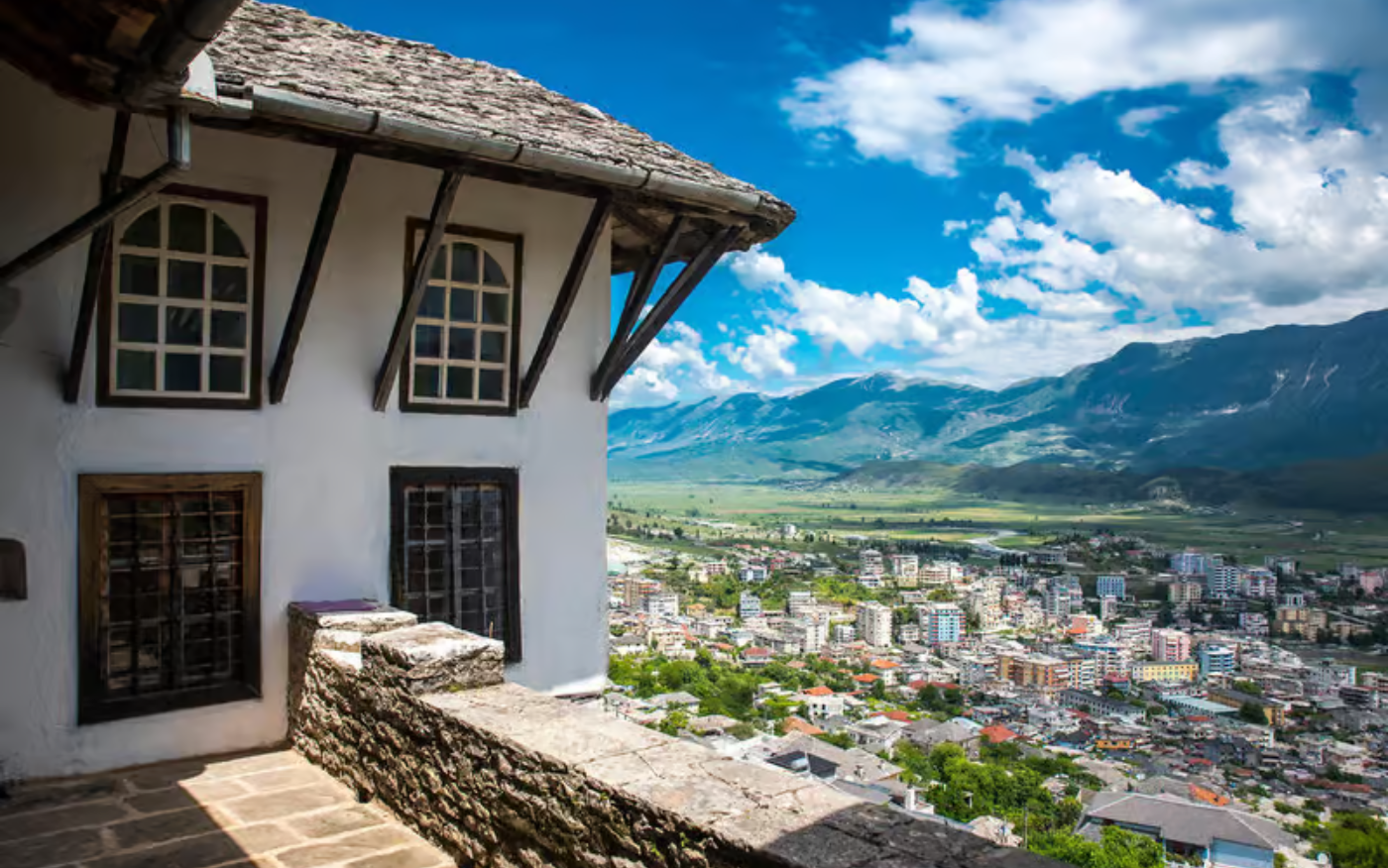
Gjirokastra (also spelled Gjirokastër) is a UNESCO World Heritage city in southern Albania, set on the slope of Mali i Gjërë above the Drino river valley, about 200 km south of Tirana and roughly 4 hours by road. It is famous for its hilltop castle, one of the largest in the Balkans, for the distinctive stone-roofed Ottoman mansions that give the city its "Stone City" nickname, and for a lively Old Bazaar of artisan shops and tavernas. Most travellers spend one to two nights, visit the castle and its museums, walk the Old Bazaar, tour a preserved Ottoman house like Zekate House or Skenduli House, and pair the visit with Saranda, the Blue Eye Spring, or Berat. Best months: March to May and September to November.
Some cities announce themselves from a distance, and Gjirokastra is one of them. Long before you reach the Old Town, the castle appears above a hillside of grey slate roofs, stacked stone houses that all seem to have grown out of the same rock as the mountain behind them. This is why UNESCO inscribed the city in 2005 as a rare, well-preserved example of an Ottoman-era town, and why more than 500 of its historic homes are protected as cultural monuments.
Gjirokastra is also a city of layered, sometimes contradictory history. It is the birthplace of both Ismail Kadare, Albania's most celebrated writer, and Enver Hoxha, the communist dictator whose decades-long regime shaped the country long after Skanderbeg's era ended. That tension between literature and dictatorship, between Ottoman elegance and Cold War concrete, is part of what makes walking the Old Town so absorbing. For travellers building a luxury Albania itinerary, Gjirokastra is the natural southern anchor, pairing easily with Berat as a "two UNESCO cities" route, or with Saranda and the Albanian Riviera for a history-then-beach combination.
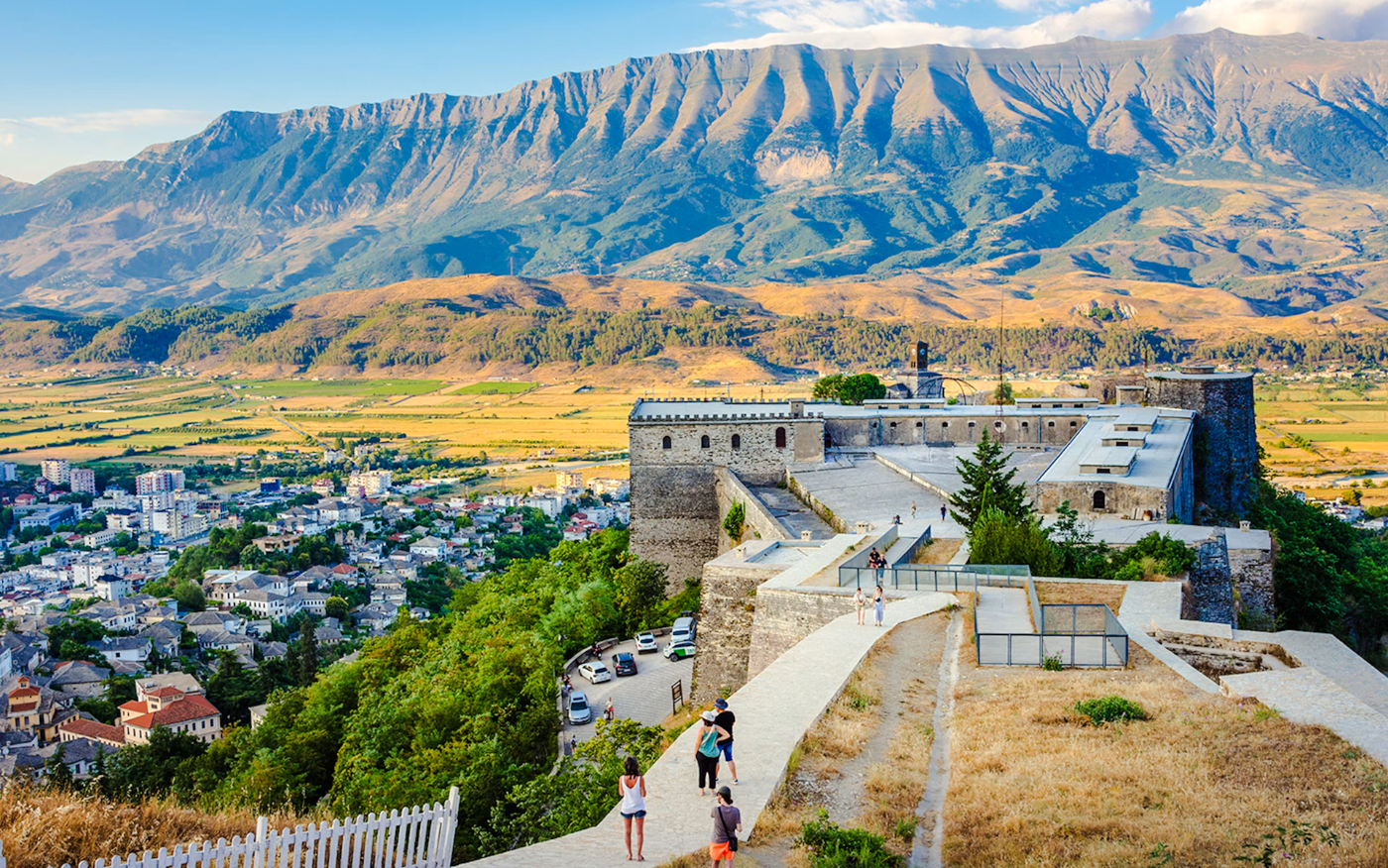
Gjirokastra Castle crowns the ridge above the Old Town, its history stretching back to the 13th century and its current form largely shaped through Ottoman-era expansions. It is one of the largest castles in the Balkans, and the walk along its ramparts delivers sweeping views over the stone rooftops below and out across the Drino valley to the mountains beyond.
Inside the fortress, two museums are usually covered by a single combined ticket:
The Museum of Gjirokastra (sometimes listed as the Ethnographic or Archaeological Museum), which traces the city's history from antiquity through the communist era and is generally considered the highlight of the two.
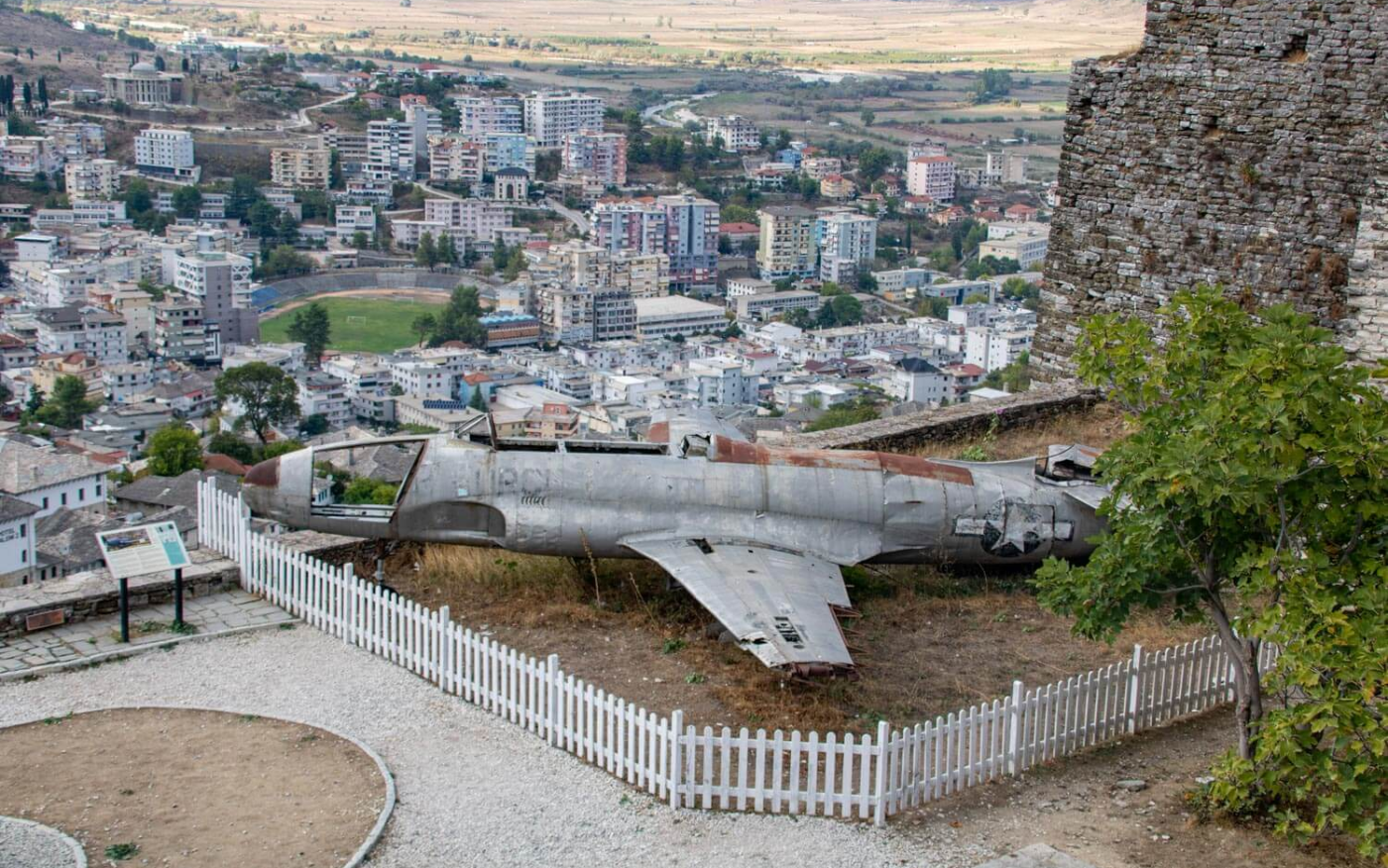
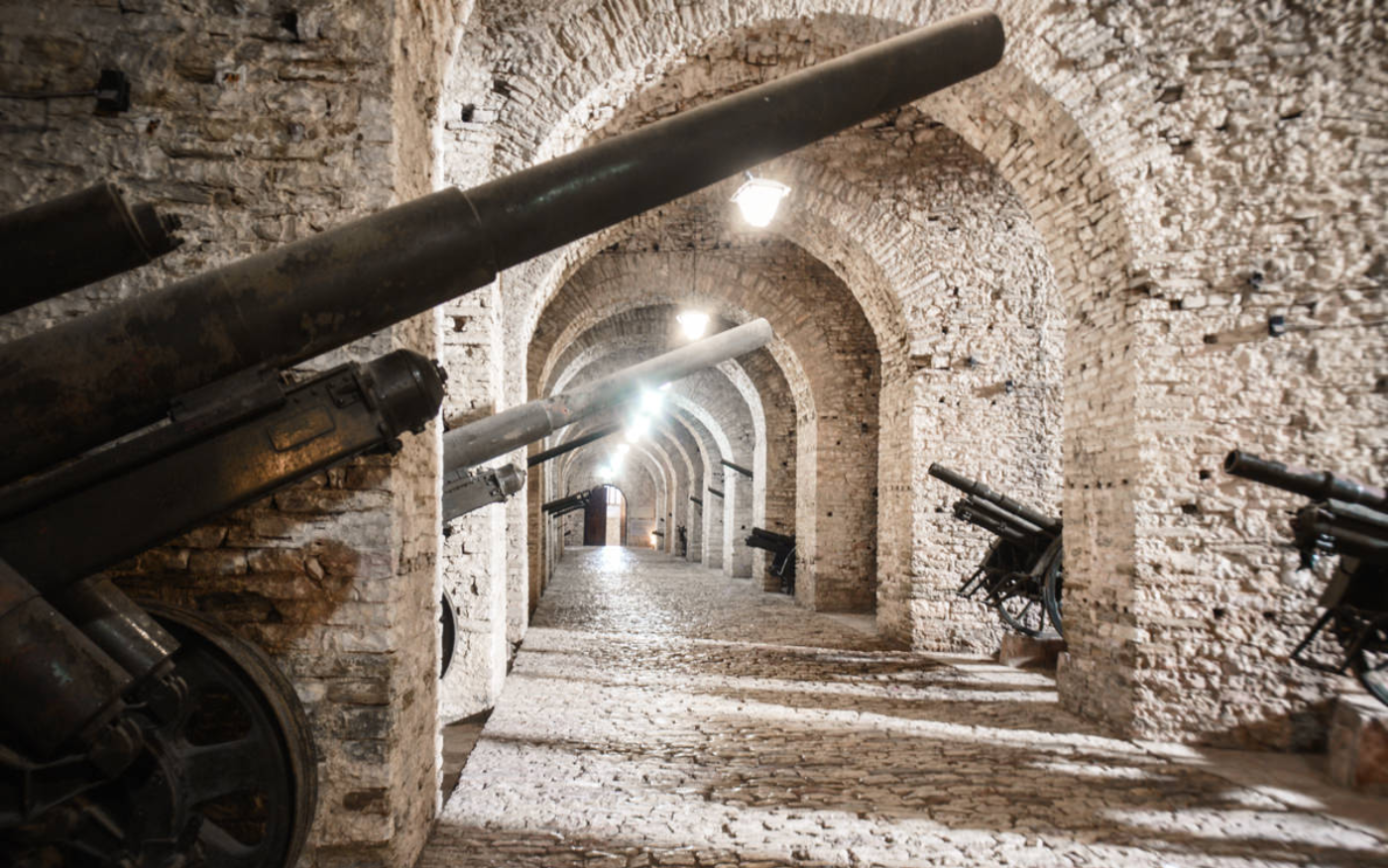
The National Museum of Armaments, housed in the former prison wing where political prisoners were held, first under King Zog and later under the communist regime until 1968. The collection is heavy on weaponry, including a US fighter jet displayed on the grounds, and pairs a grim political history with the mechanics of the Cold War.
Practical note: the castle is typically open daily from around 9:00 am to 6:00 pm, with the museums closing slightly earlier, and combined museum entry runs to a few hundred lekë alongside a separate castle entry fee. Allow two to three hours for the castle alone, or up to four if you're visiting both museums in full. Prices and hours shift by season, so it's worth confirming locally. Wear proper shoes, the stone streets and ramparts are beautiful but slippery, especially after rain.
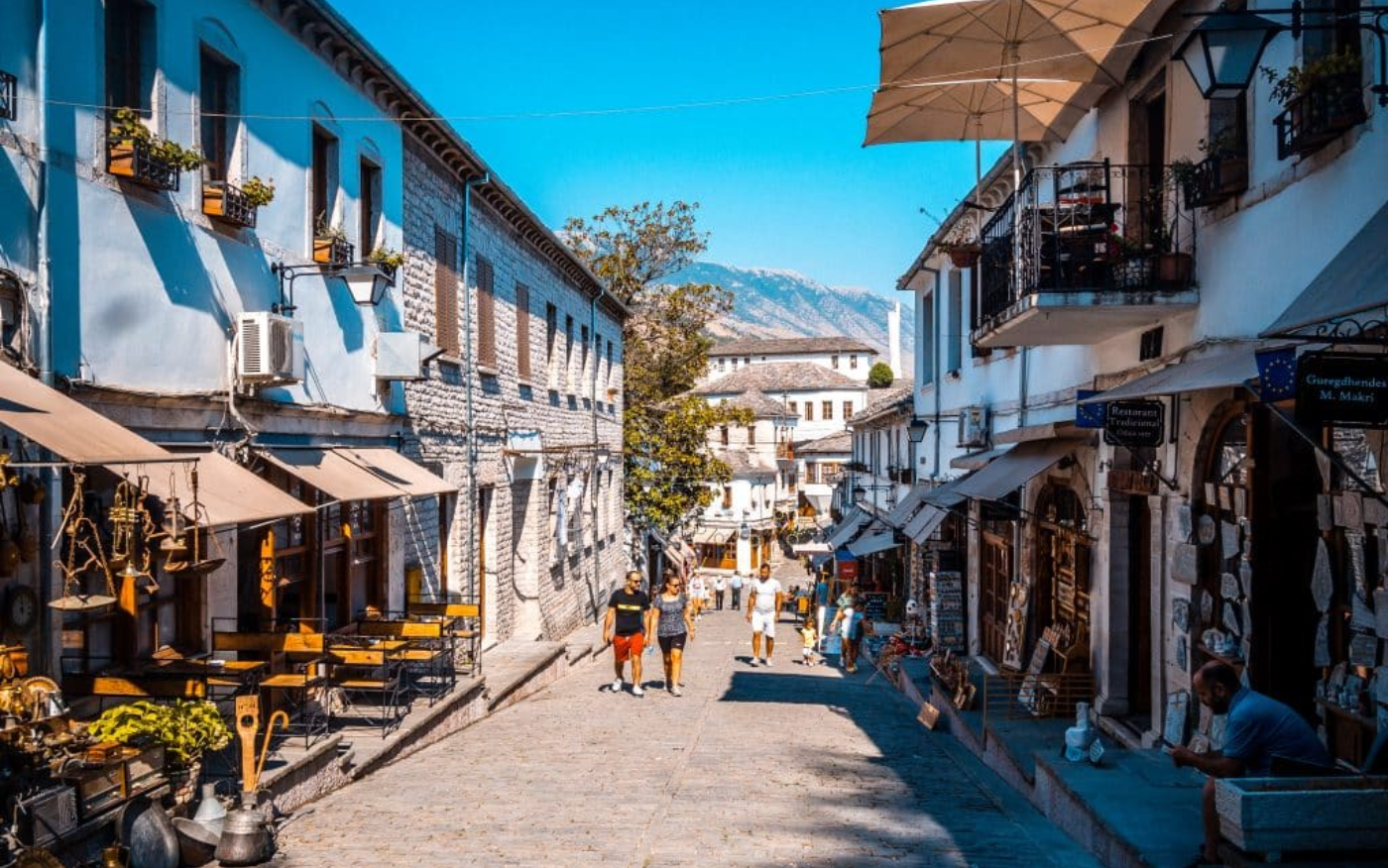
Below the castle, the Old Bazaar (Qafa e Pazarit) is the beating heart of the city, a cobblestoned shopping district dating mainly to the 17th to 19th centuries, rebuilt after a 19th-century fire in its original style. Wander among artisan workshops, rug merchants with carpets laid out on the stones, and small stalls selling local olive oil, honey, and raki, alongside cafés and tavernas tucked into former merchant houses.
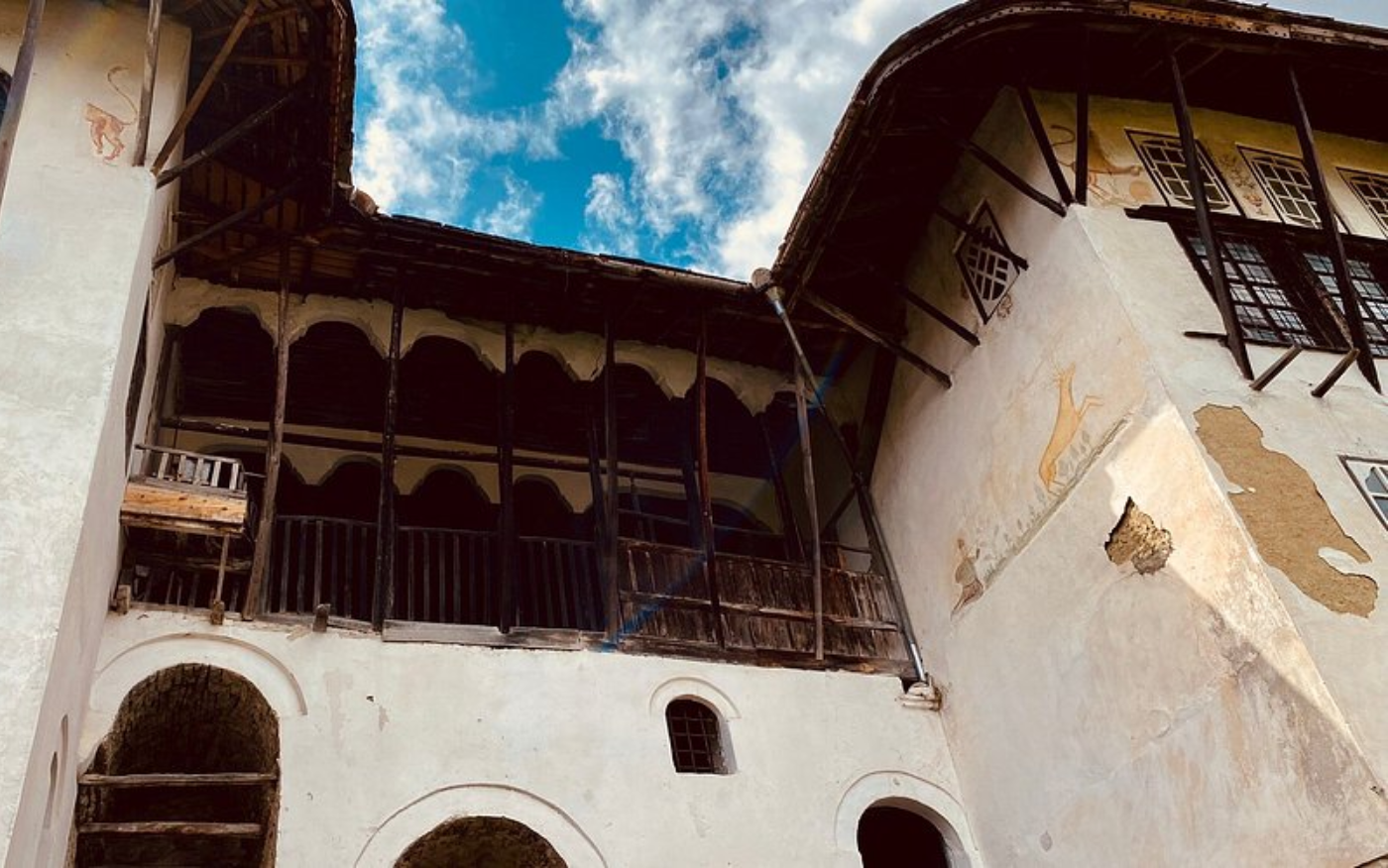
Beyond the bazaar, Gjirokastra's real signature is its Ottoman-era stone mansions, several of which are open to visitors:
Zekate House, widely regarded as the finest of the preserved mansions, and the one with the best views over the valley from its upper floors.
Skenduli House, where tours are often led by descendants of the original family, adding a personal thread to the architecture and history.
The Bazaar Mosque and the older residential quarters like Manalat, where narrow lanes and traditional layouts survive largely untouched by modern development.
Together, these houses explain what the castle's ramparts can only show from a distance: how an entire Ottoman merchant town actually lived, room by room, courtyard by courtyard.
Gjirokastra carries its 20th-century history openly, and it's part of what sets it apart from Albania's other historic towns. Beneath the castle lies a Cold War-era underground bunker, built for the political and military elite in case of attack, now open for visitors to explore its tunnels and chambers. Combined with the National Museum of Armaments in the former prison, the city offers a rare, tangible sense of life under one of Europe's most closed regimes, a sharp contrast to the Ottoman elegance just a short walk away.
Gjirokastra makes an easy base for exploring the surrounding Drino valley and beyond.
The Blue Eye Spring (Syri i Kaltër), roughly 30 to 40 minutes from the city, a strikingly deep, vivid-blue natural spring popular for swimming, picnicking, and simply admiring the water's colour.
Ali Pasha Bridge, an old aqueduct-bridge about a 45-minute hike from town, a rewarding half-day walk through the valley for travellers who want to stretch their legs beyond the Old Town's cobblestones.
Saranda and the Albanian Riviera, roughly 1 to 1.5 hours south, making Gjirokastra a natural stop between the mountains and the coast.
Berat, Albania's other UNESCO "museum city," reachable by road and often paired with Gjirokastra on a two-city southern Albania itinerary.
The city's Ottoman-era kitchens are still very much alive. Look for qifqi, a local specialty of fried rice balls seasoned with mint and eggs, said to have originated in Gjirokastra itself; oshaf, a traditional dried-fruit dessert; and the region's raki, olive oil, and honey, all commonly sold in the Old Bazaar. Restaurants tucked into former merchant houses around the bazaar are the atmospheric choice, and Gjirokastra remains one of the more affordable cities in Albania for a sit-down meal.
March–May: mild temperatures, green valley views, and comfortable walking weather on the castle's steep stone streets.
June–August: hot and the busiest period, particularly with travellers passing through en route to the Riviera. Visit the castle and bazaar in the early morning or evening and save the Blue Eye Spring for a midday swim.
September–November: warm, clear light and noticeably thinner crowds, widely considered the best season for photography from the castle ramparts.
December–February: quiet and inexpensive, with an atmospheric, mist-wrapped castle, though some guesthouses and restaurants reduce their hours off-season.
From Tirana: about 200 km south, roughly 4 hours by car or bus. Direct buses run several times daily from Tirana, and a private transfer is the more comfortable option, particularly if you're combining Gjirokastra with Berat or the coast on the same route.
From Saranda: about 1 to 1.5 hours, with several bus services running daily, making Gjirokastra an easy add-on for travellers based on the Riviera.
From Tirana International Airport (TIA): roughly 4 to 4.5 hours by private transfer.
From Berat: a few hours by road, the standard link on Albania's "two UNESCO cities" route.
Getting around town: on foot. The Old Town is a compact, largely pedestrianised zone; the New Town below is functional but holds little of interest for visitors, so plan to base yourself uphill.
The Old Town is the only sensible base, restaurants, sights, and atmosphere are all uphill, while the New Town below is cheaper but disconnected from everything worth seeing. Guesthouses set inside restored Ottoman stone houses are the signature Gjirokastra stay, offering traditional stone quarters, wooden ceilings, and terraces overlooking the castle and valley. Book ahead in high season, since options inside the historic core are limited.
One day: the castle with its two museums, a walk through the Old Bazaar, and a visit to one Ottoman mansion such as Zekate House or Skenduli House. Doable, but a fairly full day.
Two days: add the Blue Eye Spring, the hike to Ali Pasha Bridge, and an unhurried evening on a bazaar terrace, plus time to properly absorb the Old Town after the day-trippers leave.
Three days or more: pair with Berat for a full two-UNESCO-cities itinerary, or extend south toward Saranda and the Albanian Riviera.
We build private and small-group Gjirokastra itineraries year-round, licensed local guides, hotel selection inside the Old Town's restored stone houses, castle and Ottoman-house tours, and full routing onward to Berat, Saranda, and the Albanian Riviera. [Browse our Albania tours] · [See Gjirokastra hotels] · [Request a custom itinerary]
Yes. Gjirokastra is one of only two Albanian towns inscribed on the UNESCO World Heritage list, and it combines one of the largest castles in the Balkans, a living Old Bazaar, exceptionally well-preserved Ottoman mansions, and a striking Cold War-era history within a compact, walkable centre.
Because of its distinctive Ottoman-era architecture: tall stone houses topped with grey slate roofs, all built from local stone, that give the entire Old Town a uniform, fortress-like appearance from a distance.
About 200 km, or roughly 4 hours by car, bus, or private transfer.
It's possible from Saranda, about 1 to 1.5 hours away, but not comfortably from Tirana given the distance. Most travellers spend at least one night to properly see the castle, the bazaar, and an Ottoman house museum.
Castle entry and combined museum tickets are charged separately, typically a few hundred lekë each, payable at the gate. Prices and hours can change seasonally, so it's worth confirming on arrival.
March to May and September to November, for mild weather, clear light, and lighter crowds than the peak summer months.
Yes. It's commonly combined with Berat as a "two UNESCO cities" route, or with Saranda and the Albanian Riviera for travellers connecting history with the coast.
Yes. The Old Town is safe day and night and thoroughly geared toward tourism. The main practical cautions are steep, slippery stone streets, especially after rain, and normal awareness in the less touristic New Town after dark.
