

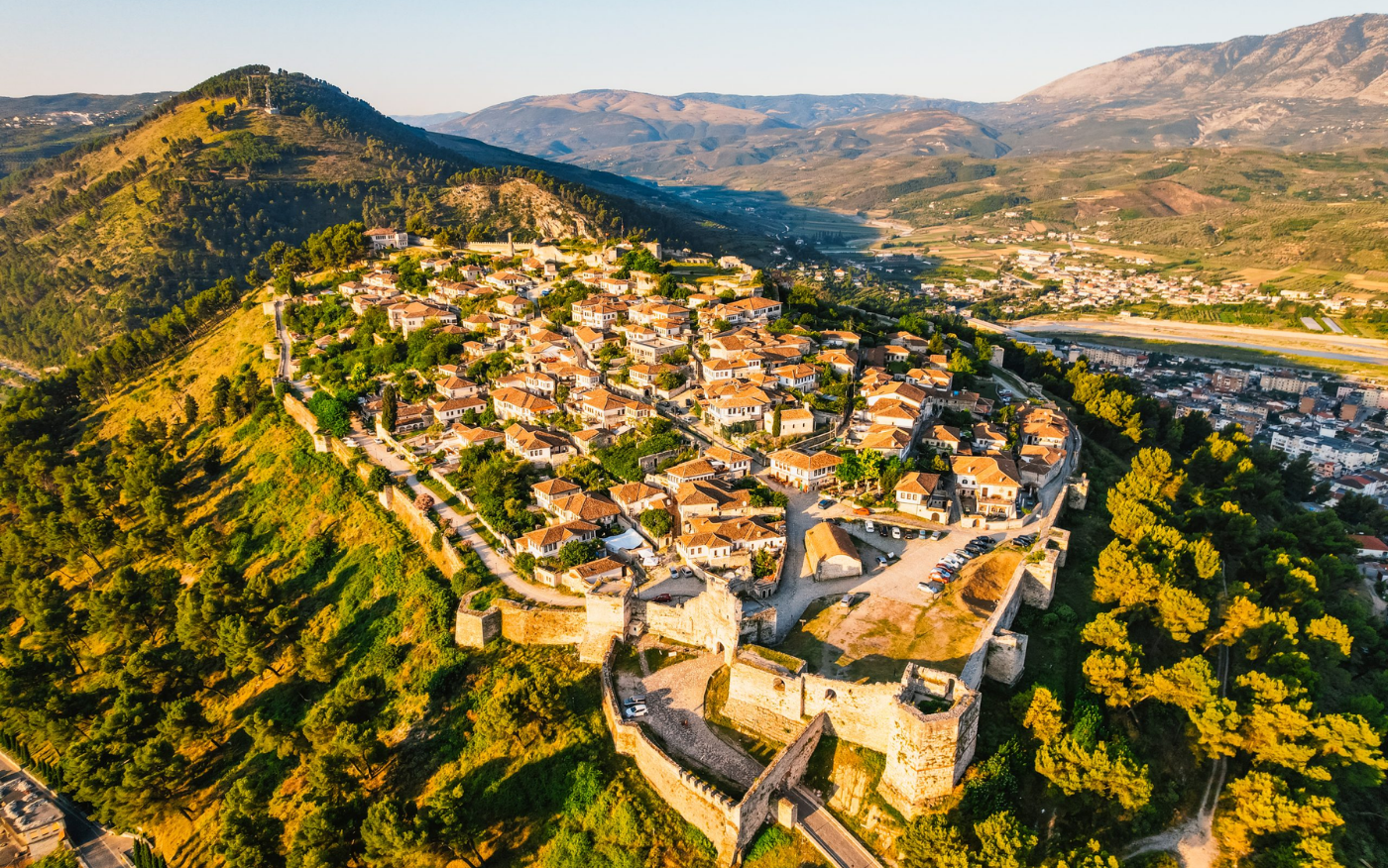
Berat is a UNESCO World Heritage city in central Albania, about 120 km south of Tirana (roughly 2 to 2.5 hours by road). It is famous for its white Ottoman houses stacked in tiers up the hillside the "thousand windows" and for a hilltop castle where families still live inside the medieval walls. Most travellers stay one or two nights, visit Berat Castle and the Onufri Museum, walk the Mangalem and Gorica quarters, and add a winery afternoon or a day in the Osumi Canyon. Best months: April to June and September to October.
Some old towns feel embalmed. Berat does not. Bread is still baked behind those famous windows, laundry still hangs above cobblestones that Roman feet wore smooth, and the call to prayer still rolls down the valley at dusk while church bells answer from the opposite bank. This is a city that has been continuously inhabited for roughly 2,400 years, and it wears that age lightly.
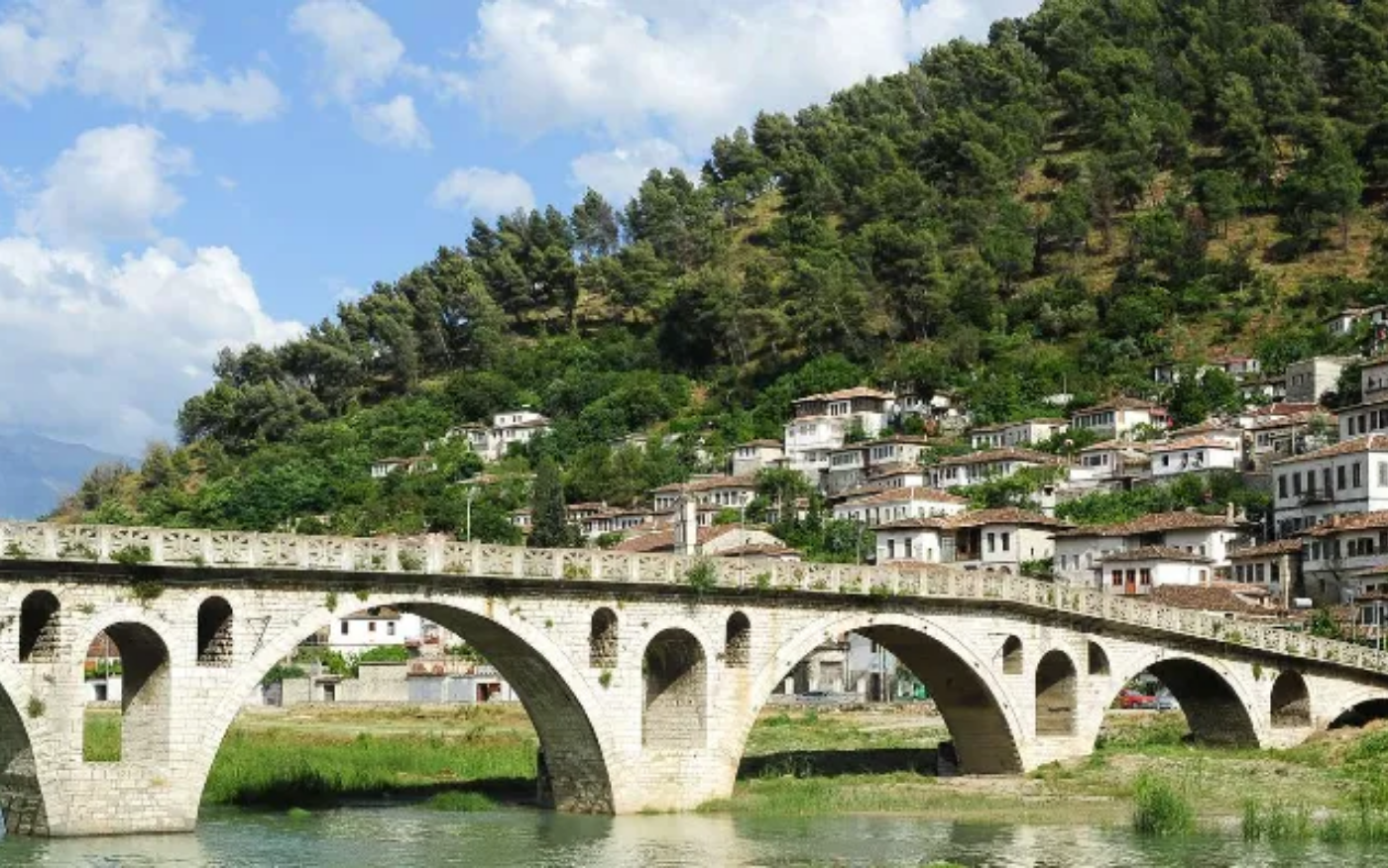
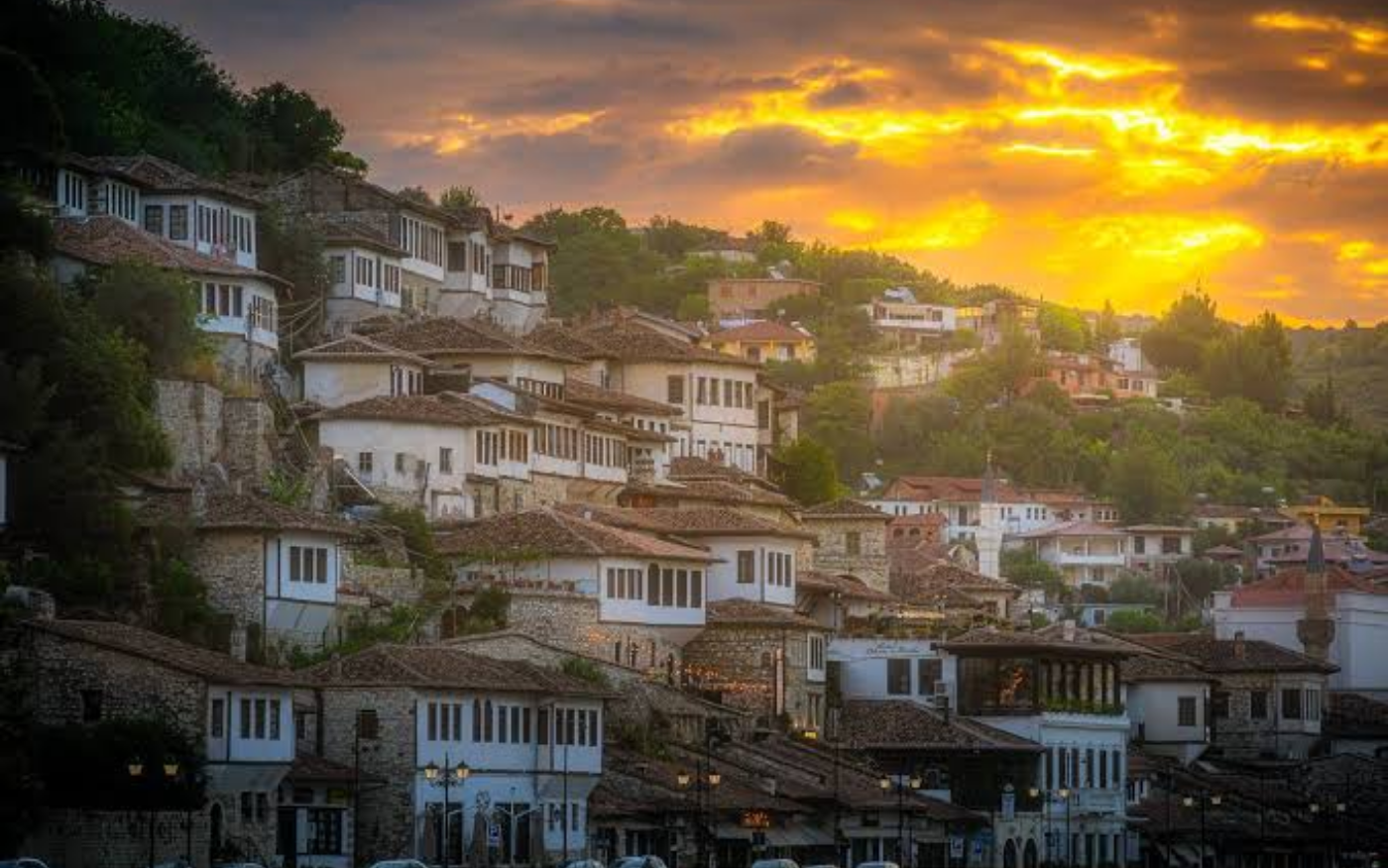
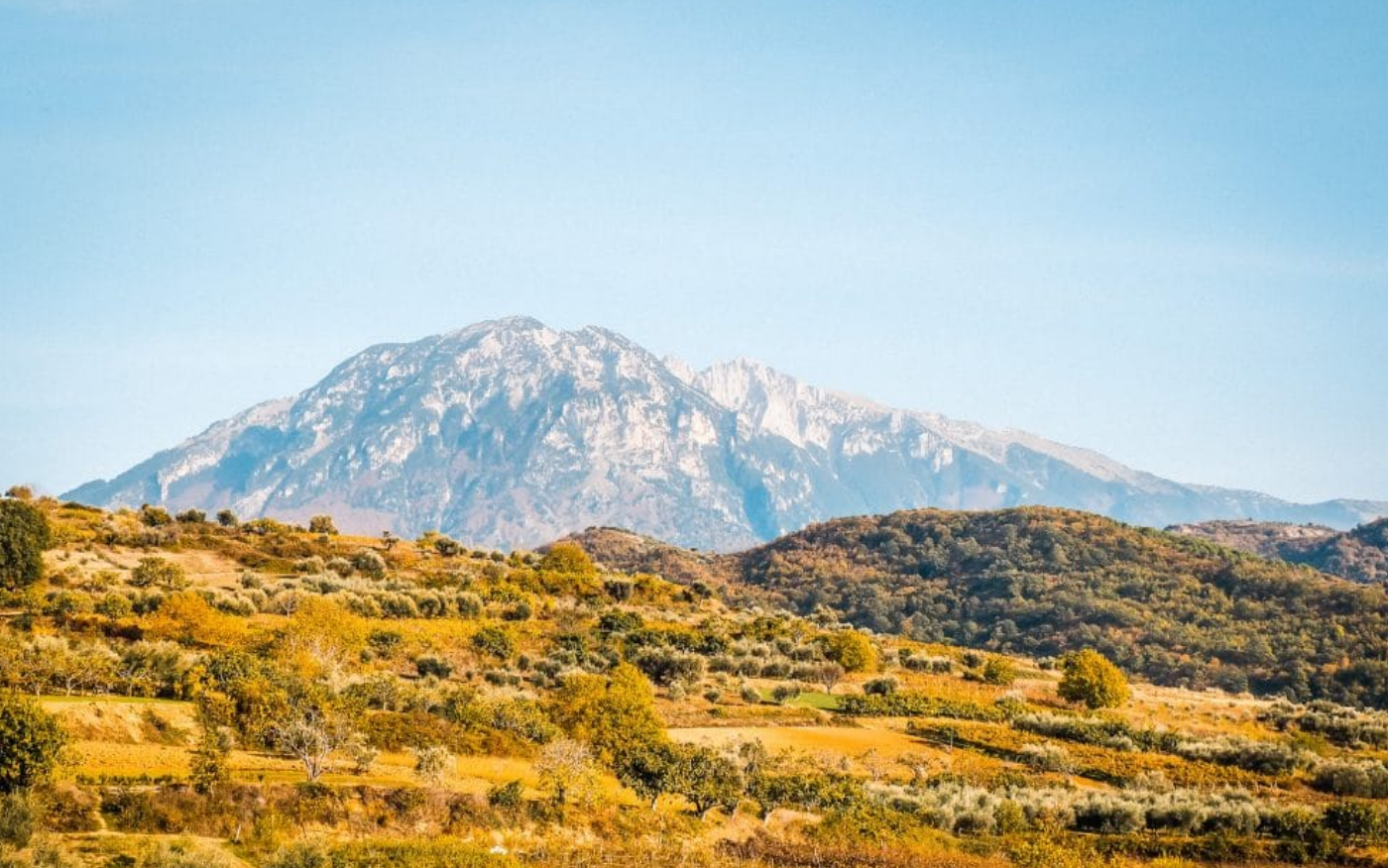
The setting does half the work. The Osum River cuts the town in two, with Mount Tomorr rising behind it a peak Albanians have treated as sacred since long before either mosques or churches arrived. On one bank sits Mangalem, the historically Muslim quarter; across the arched Gorica Bridge sits Gorica, the historically Christian one. Both are made of the same tall stone-and-white houses with rows of oversized windows, and when late-afternoon light hits them, the whole hillside seems to be watching you. That single view is the reason Berat is on nearly every "most beautiful towns in Europe" list and the reason photographers plan their day around 6 p.m.
For travellers building a luxury Albania itinerary, Berat is the cultural anchor between the beaches of the Riviera and the energy of Tirana. It pairs naturally with a private guide, a boutique stone-house hotel, and a chauffeured winery afternoon.
Berat Castle (Kalaja e Beratit) crowns the ridge above the city, its earliest walls dating to the 4th century BC and its current fortifications largely shaped in the 13th century. What makes it extraordinary is not the ramparts — Albania has many but the fact that it is a living neighbourhood. Behind the gate you'll find lanes, vegetable gardens, guesthouses, tavernas, a scattering of Byzantine churches, and the ruins of Ottoman mosques, all inside the walls.
Allow two to three hours. Walk the perimeter for the panorama over the Osum valley, then work inward.
Inside the citadel, do not skip:
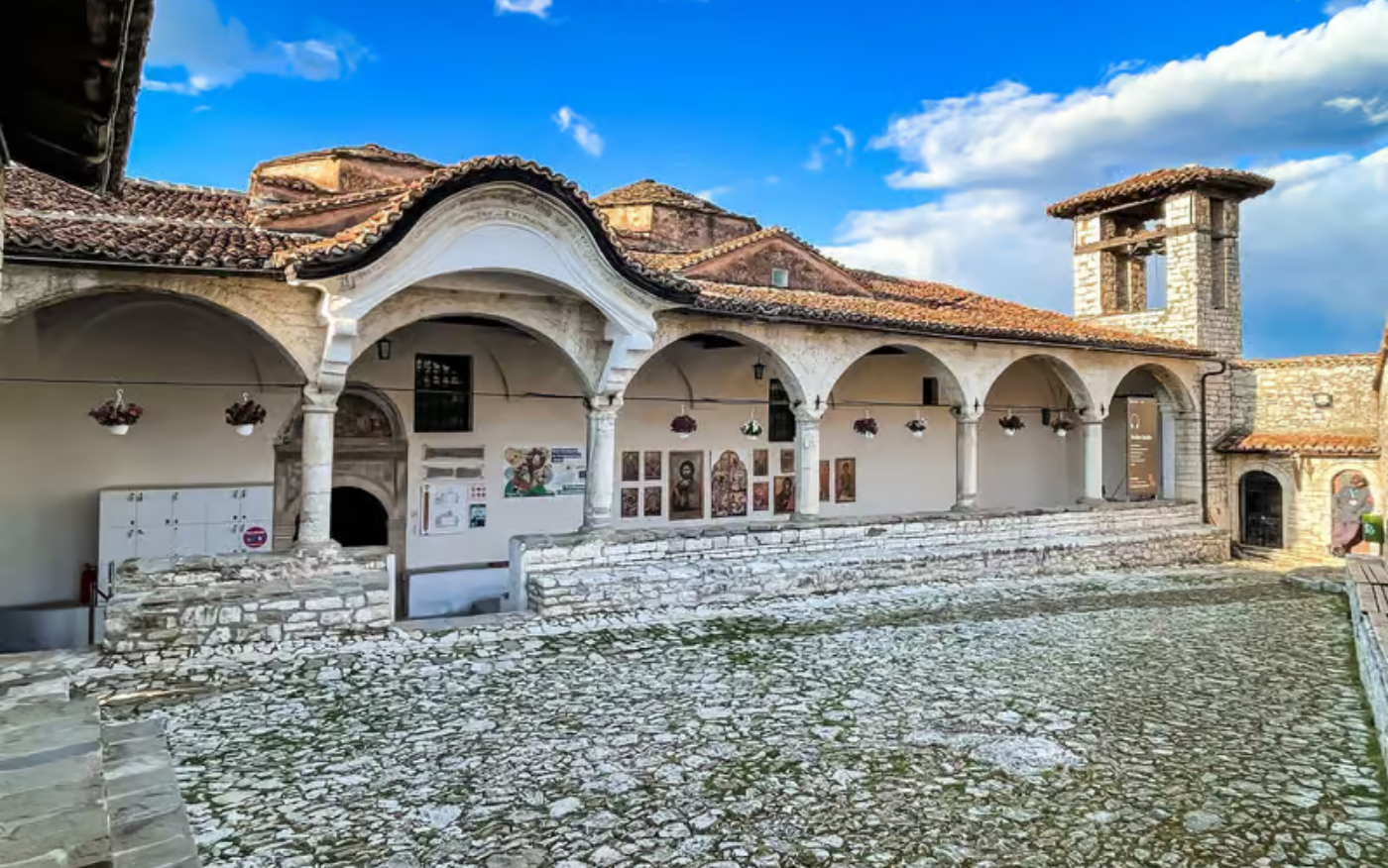
The Onufri National Iconographic Museum, housed in the Church of the Dormition of St Mary. Onufri was the 16th-century master icon painter whose luminous red pigment became his signature, a colour that later lent its name to a Berat wine.
The Holy Trinity Church (Kisha e Shën Triadhës), perched on the slope with the best framed view in the city.
The Red Mosque ruins and the cisterns, quiet corners most day-trippers walk straight past.
Practical note: the castle quarter itself is open around the clock because residents live there, and access to the grounds is generally free or costs only a few hundred lekë at the main gate depending on the season. Museums inside charge separately expect around 300 lekë for the Onufri Museum. Prices change, so carry cash in lekë. Wear real shoes: the approach road, Rruga Mihal Komneno, is steep and cobbled, and a taxi to the top is inexpensive if you'd rather save your legs for the walls.
Down in Mangalem, the streets narrow into stone staircases between houses that lean toward each other. This is where the "city of a thousand windows" nickname was born. Look for the King's Mosque (Xhamia e Mbretit) and the Halveti Teqe beside it, whose carved wooden ceiling is one of the finest interiors in the Balkans, and the Leaden Mosque (Xhamia e Plumbit) with its lead-sheathed dome.
Cross the Gorica Bridge, a stone arch from the 18th century, and the mood changes. Gorica is quieter, greener, more residential and it offers the definitive view back at Mangalem. Come at golden hour, then stay for dinner on the Gorica side, where terraces face the illuminated hillside.
The Ethnographic Museum, set in a restored 18th-century Berat merchant's house, is the fastest way to understand how these homes actually worked: the winter rooms, the summer rooms, the olive press, the storage for a family's year.
Berat sits in one of Albania's oldest wine areas, with grape growing in the valley traced back roughly to the 8th century BC. The hills between the Osum and Mount Tomorr are now dotted with family cellars that have gone from making rakia in the backyard to bottling seriously good wine.
Three names worth your afternoon:
Çobo Winery, near Ura Vajgurore, run by the same family since the early 1900s and bottling since 1996. Its outdoor wine garden looks straight at Mount Tomorr. Ask for Kashmer, "the red of Berat," named for Onufri's crimson.
Nurellari (Kantina Nurellari) in Fushë-Peshtan, founded in 1995, known for Montemeca and for a small guesthouse and restaurant using produce from surrounding farms.
Alpeta, an agritourism estate near Roshnik, where the tasting comes with a long lunch and a walk through the vines.
Look for the indigenous grapes, Shesh i Zi (black), Shesh i Bardhë (white), Pulës, Kallmet. They taste of somewhere, which is the whole point. Reserve ahead, and use a driver: Albania enforces a zero-alcohol limit behind the wheel.
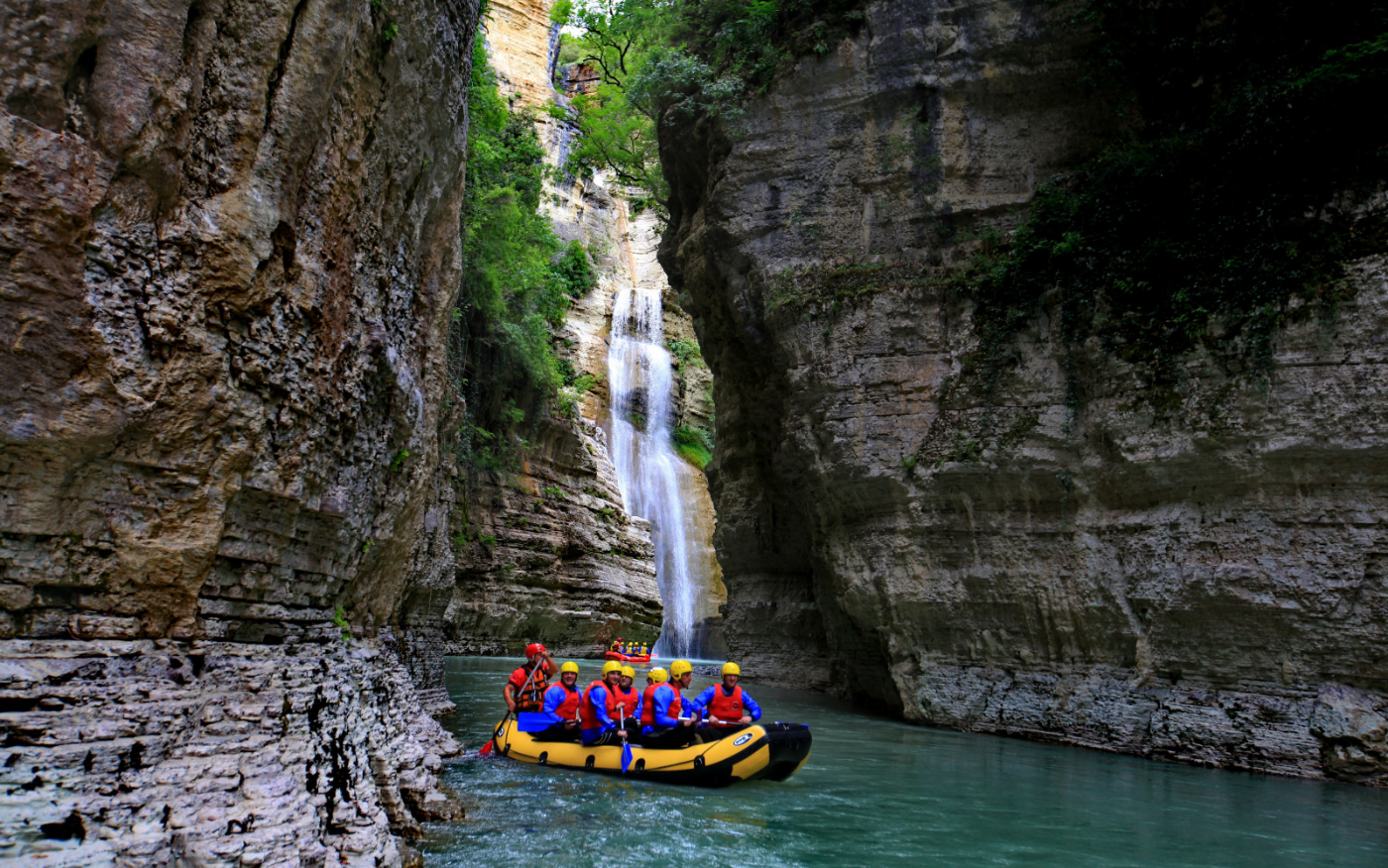
Osumi Canyon (Kanioni i Osumit) roughly 1 to 1.5 hours southeast of Berat via Çorovodë, and one of the most dramatic gorges in the Balkans, with walls rising as high as 80 metres and waterfalls spilling off the rim in spring. Rafting runs roughly February to mid-June, when the water is high; the rapids are Class II–III, gentle enough for beginners and families. Outside that window the canyon becomes a hiking, swimming, and river-walking destination.
Bogovë Waterfall — a cold, clear pool reached by a walk of about 1.6 km from the village, often combined with the canyon in one day.
Mount Tomorr (Tomorri National Park) — Albania's holy mountain, home to the Kulmak Teqe and, each August, one of the country's most significant Bektashi pilgrimages.
Belsh — a village of small lakes and olive groves, an easy stop on the Tirana–Berat road.
Ask for pispili, the local cornbread layered with leeks and herbs; fërgesë in its clay dish; lamb slow-cooked with yoghurt; and river trout. Finish with raki Skrapari, the fiery grape spirit from the district next door that Albanians will tell you correctly is the best in the country. Restaurants inside the castle walls and along the Gorica riverbank are the atmospheric choices; book in July and August.
April–June: the sweet spot. Green hills, waterfalls at full flow, rafting season, comfortable walking weather.
July–August: hot (regularly above 33°C) and busiest. Plan sightseeing for early morning and evening; the castle is punishing at midday.
September–October: grape harvest, warm light, thinner crowds. The best month for a wine-focused trip.
November–March: quiet and inexpensive, with occasional rain and a moody, cloud-wrapped castle. Many day-trippers skip it, which is part of the appeal.
From Tirana: about 120 km, 2 to 2.5 hours by car via the SH4/SH72. Regular buses and furgons run from Tirana's south terminal; a private transfer is the comfortable option and lets you stop in Belsh.
From Tirana International Airport (TIA): roughly 2.5 to 3 hours by private transfer.
From Durrës: about 1.5 hours. From Vlorë: about 2 hours. From Gjirokastër: about 3 hours, which makes Berat and Gjirokastër a natural two-UNESCO pairing.
Getting around town: on foot. The historic core is compact; taxis handle the castle climb and the wineries.
Mangalem puts you inside the postcard restored Ottoman houses turned boutique guesthouses, wooden ceilings, window seats over the river. Gorica is calmer, with the better view of the lit hillside at night. Inside the castle walls, a handful of small stone properties offer the rare experience of sleeping in a UNESCO citadel. For a slower, more luxurious base, the agritourism estates and winery guesthouses in the surrounding hills combine vineyard views with Mount Tomorr on the horizon.
One day (from Tirana): castle, Onufri Museum, Mangalem, Gorica Bridge, lunch, sunset view. Long but very doable.
Two days: add the Ethnographic Museum, the Halveti Teqe, an unhurried evening, and a winery afternoon.
Three days: add Osumi Canyon and Bogovë, or a hike toward Mount Tomorr.
We build private and small-group Berat itineraries year-round licensed local guides, hotel selection in Mangalem, Gorica, and the castle quarter, chauffeured winery days, and canyon excursions in season. [Browse our Albania tours] · [See Berat hotels] · [Request a custom itinerary]
Yes. Berat is one of two Albanian towns inscribed on the UNESCO World Heritage list, and it combines a living castle quarter, distinctive Ottoman architecture, a serious wine region, and easy access to the Osumi Canyon within a compact, walkable centre.
Because of the tiers of white Ottoman houses on the Mangalem hillside, each with rows of large windows facing the valley, which appear stacked one above the other when viewed from across the Osum River.
About 120 km, or 2 to 2.5 hours by car, bus, or private transfer.
Yes. A day trip covers the castle, the Onufri Museum, and both old quarters. Staying overnight is better if you want the sunset view or a winery visit.
The castle quarter is inhabited and generally accessible with free or minimal entry to the grounds; museums inside, including the Onufri Museum, charge separate tickets of roughly 300 lekë. Bring cash in lekë.
Roughly February to mid-June, when water levels are high enough. Outside that season the canyon is visited on foot.
April to June and September to October, for mild weather and lighter crowds. September adds the grape harvest.
Yes. Albania has low rates of crime against visitors. The main practical cautions in Berat are steep, uneven cobblestones and summer heat.
